
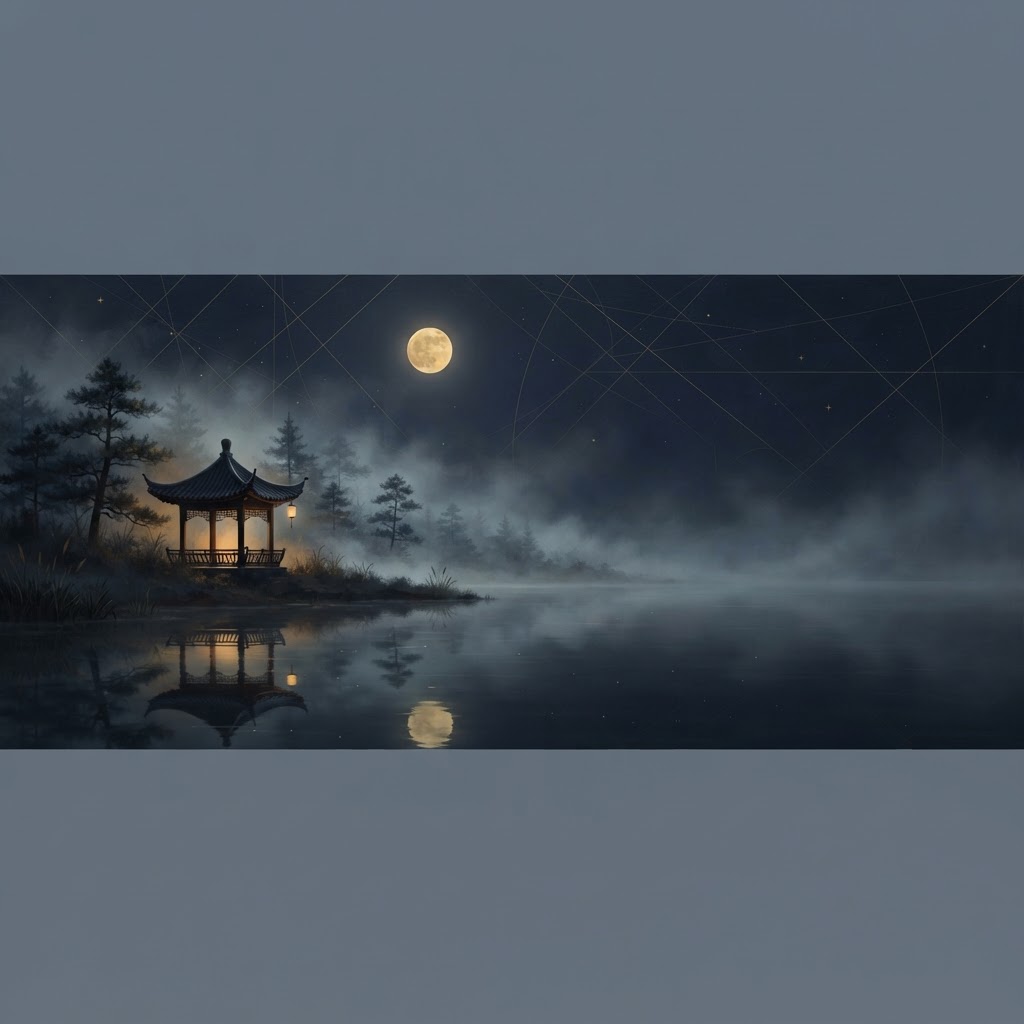
Most students enter my class believing that victory in Qi Men Dun Jia belongs exclusively to aggressive movement and relentless forward pressure. They glance at a chart, scan for the highest concentration of active force, and assume that every strategic decision must resemble a cavalry charge. When I point them toward Xiu Men, the Rest Door, they often look at me with mild suspicion. To an untrained practitioner, rest sounds like surrender, delay, or wasted time. In classical Qi Men Dun Jia, this assumption is a fatal misunderstanding. Resting is not the absence of action; in classical strategic warfare, it is the deliberate containment of force.
When you study the ancient military texts that birthed Qi Men Dun Jia, you quickly realize that an army that marches continuously without pitching camp will eventually collapse from exhaustion before it ever meets the enemy. The Rest Door represents the military camp pitched beside a clean water source, protected by mountain terrain, where soldiers mend their armor, feed their horses, tend to their wounded, and re-evaluate their battle strategy. In modern business, personal health, and institutional management, the Rest Door serves an identical purpose. It is the architectural pause that prevents structural collapse.
Among the Eight Doors of Qi Men Dun Jia, the Rest Door holds a privileged position as one of the Three Auspicious Doors, sitting alongside the Open Door and the Life Door. Yet while the Open Door initiates new enterprises and the Life Door expands wealth and vitality, the Rest Door governs recovery, consolidation, diplomacy, marital harmony, and the strategic cooling of high-stakes conflicts. If you try to build a commercial empire or restore a broken body using only aggressive expansion, you will burn through your reserves. Understanding how to deploy the Rest Door allows you to rebuild those reserves before your competitors even realize you have paused.
The Classical Origin and Philosophical Blueprint of Xiu Men
To understand the mechanics of the Rest Door, we must first examine its Chinese character: Xiu (休). The character is an elegant compound ideogram composed of two distinct parts. On the left side stands the radical for a person (亻), and on the right side stands the character for a tree (木). The literal visual representation is a human being leaning against a sturdy tree, taking shelter from the sun, laying down heavy burdens, and drawing strength from the earth. The ancient strategists did not design this symbol to represent laziness or permanent retirement. It depicts a brief, purposeful interlude during a long journey.
In the original military manual of Qi Men Dun Jia, compiled during the warring states period from 475 to 221 BCE and refined through the Han Dynasty, the Rest Door was designated as the primary gateway for peaceful negotiation, troop rotation, royal audiences, and diplomatic alignment. When an imperial army operated under the influence of the Rest Door, commanders stood down their offensive formations. They used the quiet hours to send emissaries, draft treaties, audit supply depots, and allow senior generals to rest. An offensive strike launched under a pure Rest Door would often stall, not because the energy was negative, but because the universal Qi during that period favored composure, reconciliation, and internal gathering rather than external conquest.
The Evolution of Xiu Men in Classical Strategist Literature
Throughout Chinese military history, great strategists recognized that victory required alternating between high-intensity strikes and deep periods of preservation. In Sun Tzu's Art of War, the concept of resting troops while the enemy exhausts themselves on the march is highlighted as a core tactical principle. Zhuge Liang, the legendary chancellor of Three Kingdoms fame who refined Qi Men Dun Jia field formations, utilized Xiu Men placements to establish impenetrable defensive camps. When his forces faced superior numerical odds, Zhuge Liang positioned his headquarters in the direction of the Rest Door, backing into the northern Water element. This posture neutralized enemy aggression, drained the opposing army's momentum, and allowed his troops to launch counter-offensives from a position of absolute composure.
During the Ming Dynasty, grand strategist Liu Bowen compiled the Heavenly Net Manual, which codified how civil administrators and merchants could apply battlefield door mechanics to governance and trade. Liu Bowen emphasized that while the Open Door creates new commercial pathways and the Life Door generates capital, Xiu Men preserves institutional longevity. He observed that merchant houses that expanded continuously without honoring Xiu Men timing inevitably suffered from internal betrayal, operational decay, and sudden bankruptcy. The Rest Door was established as the primary tool for auditing internal reserves, settling family inheritances, and managing executive health.
In the broader architecture of the Qi Men Dun Jia Eight Doors system, the Rest Door provides the essential counterbalance to the harsh, confrontational energies found in doors like the Injury Door or the Dispute Door. Without the Rest Door, the entire system would remain locked in perpetual friction. In my consultation files, whenever an executive or entrepreneur suffers from severe decision fatigue, chronic insomnia, or erratic corporate leadership, the underlying chart almost always reveals an ignored or suppressed Rest Door. They have been running offensive plays in an environment that desperately demands a cooling-off period.
"The beginner believes that progress only happens when wheels are turning publicly. The master knows that the most profitable strategic pivots occur in the quiet room while the machinery is turned off."
The philosophical blueprint of Xiu Men is rooted in the cyclical nature of Yin and Yang. In the classic I Ching tradition, peak Yang energy inevitably gives rise to Yin. After an intense push, such as a major product release, a corporate acquisition, or a grueling trial, the system enters a natural state of depletion. If you force the system to continue operating at peak Yang output without allowing Yin recovery to take place, you invite catastrophic failure. The Rest Door is the conscious cultivation of Yin energy: quiet, cool, receptive, and deeply restorative. It allows the water table of your personal and corporate Qi to replenish itself naturally.
Palace One North: The Elemental Origin of Rest Door Mechanics
Every door in Qi Men Dun Jia possesses a native home within the Nine Palaces of the Luoshu grid. For the Rest Door, that native home is Palace One in the North. In classical Chinese cosmology, Palace One is governed by the Kan Trigram (坎卦), which represents Water, deep winter, the midnight hour, and the northern cardinal direction. Understanding this elemental root is mandatory if you wish to read Rest Door charts with precision.
The Kan Trigram Architecture and Seasonal Vitality
The Kan Trigram is visually constructed as one solid Yang line sandwiched between two broken Yin lines (☵). This structural arrangement carries profound meaning. The central Yang line represents internal vitality, strategic clarity, and hidden power, while the outer Yin lines represent a calm, receptive, and quiet exterior. It depicts an underground spring flowing steadily beneath heavy soil, or core energy preserved beneath a winter frost. Kan Trigram energy is not dormant; it is concentrated.
Water is the ultimate symbol of adaptable strength. It flows into every crevice, assumes the exact shape of its vessel, settles into the lowest places without ego, and yet retains the power to carve through granite over time. Water is cool, reflective, and deep. In the Northern Palace, during the height of winter, the surface of the earth appears frozen and dormant. However, beneath that frozen crust, life is concentrating its core essence, preparing for spring. This is the exact temperament of the Rest Door. It operates quietly beneath the surface, consolidating resources and protecting the vital spark from harsh external exposure.
The seasonal strength of Water dictates how effectively the Rest Door functions across the 24 Solar Terms. During the winter solar terms such as Winter Solstice (Dōng Zhì), Little Cold (Xiǎohán), and Great Cold (Dàhán), Water is in Prosperity (Wàng 旺), giving the Rest Door maximum natural momentum to soothe, heal, and consolidate. In autumn solar terms like Autumn Equinox (Qiūfēn) and Cold Dew (Hándù), Metal produces Water, placing the door in Phase (Xiāng 相), which remains exceptionally supportive. During summer solar terms like Summer Solstice (Xiàzhì) and Great Heat (Dàshǔ), Fire is dominant and Water enters the Dead state (Sǐ 死), meaning that deliberate rest requires deliberate effort and environmental control rather than relying on ambient momentum.
When the Rest Door sits in its native home of Palace One North, it is in a state of perfect elemental equilibrium. The Water of the door matches the Water of the palace. This configuration is known as a harmonious native return. In divination and date selection, a native Rest Door in Palace One is exceptional for quiet strategic planning, recovering from long illness, conducting confidential marital discussions, or taking an extended sabbatical. It provides a peaceful sanctuary where external noise cannot easily penetrate.
Water Element Interactions Across All Nine Luoshu Palaces
In actual Qi Men Dun Jia practice, the Rest Door does not stay anchored in Palace One North forever. As the earth plate and heaven plate rotate across the 1,080 Ju cycles, the Rest Door travels through all nine palaces. When a Water door visits a palace governed by Metal, Wood, Fire, or Earth, the elemental relationship changes dramatically. A skilled practitioner must calculate whether the palace nourishes the door, exhausts the door, clashes with the door, or places the door under severe pressure.
Palace One North: Native Water Equilibrium
As established, when Xiu Men occupies Palace One North (Kan Trigram, Water), the door is at home. Here, the energy is quiet, reflective, and balanced. It supports deep mental rest, physical convalescence, and long-term strategic reflection. There is zero elemental tension between the door and the palace. It is the purest sanctuary in the entire system.
Palace Six Northwest: Metal Nourishing Executive Rest
When the Rest Door moves into Palace Six (Qian Trigram, Northwest, Metal), we observe the classical Wu Xing generation cycle: Metal produces Water. In this structural arrangement, the Qian Trigram represents leadership, executive authority, and grand strategy. Because the palace element (Metal) generates the door element (Water), the Rest Door is actively nourished and elevated.
This creates an atmosphere of dignified, high-level retreat. I often see this combination in corporate charts when a board of directors decides to pause aggressive expansion in order to perform an internal governance audit or restructure executive compensation. The pause is deliberate, well-funded, and fully backed by institutional authority. It is the premier placement for executive sabbaticals and high-stakes corporate restructuring.
Palace Seven West: Metal Producing Diplomatic Harmony
In Palace Seven (Dui Trigram, West, Metal), Metal again generates Water, nourishing the Rest Door. However, while Palace Six carries Qian's stern executive weight, Palace Seven carries Dui's qualities of communication, joy, social alignment, and artistic refinement.
When the Rest Door resides in Palace Seven West, it is exceptionally favorable for informal diplomatic dinners, marital reconciliation talks, contract cooling-off discussions, and defusing hostility among colleagues. The combination of Dui Metal nourishment and Xiu Men Water softness creates a pleasant, communicative atmosphere where rigid egos soften naturally.
Palace Three East: Exhausting Into Active Wood Movement
When the Rest Door enters Palace Three (Zhen Trigram, East, Wood), the elemental dynamic shifts to Water producing Wood. Here, the Water energy of the Rest Door is called upon to feed the rising Wood of the Zhen Trigram (representing thunder, rapid growth, and physical movement). The door is in a state of structural exhaustion.
In practical application, this means that recovery or consolidation requires physical effort, energy expenditure, or active participation. Recovery is not passive relaxation on a couch; it is physical therapy, active rehabilitation, or structured team workshops. If a patient undergoes recovery under a Rest Door in Palace Three East, their healing will succeed, but only through active physical exercise that draws upon their internal energy reserves.
Palace Four Southeast: Exhausting Into Gentle Wood Communication
Palace Four (Xun Trigram, Southeast, Wood) also represents Wood, resulting in Water producing Wood exhaustion. However, Xun Wood represents gentle wind, flexibility, trade, and written communication, contrasting with Zhen's thunderous shock.
Under Xiu Men in Palace Four, consolidation requires extensive written dialogue, legal drafting, mediation workshops, and administrative coordination. The rest is highly productive and defuses tension, but it drains the door's inherent stillness because constant communication is required to maintain the peace.
Palace Nine South: Clashing Fire and Public Steam
When the Rest Door flies into Palace Nine (Li Trigram, South, Fire), Water meets Fire in a direct elemental clash. Specifically, the Water of the Rest Door attacks and suppresses the Fire of Palace Nine. This scenario is categorized as Door Counters Palace (门克宫).
When a Water door strikes a Fire palace, quietness collides with high visibility, public scrutiny, and intense heat. If you attempt to take a low-profile sabbatical or conduct quiet settlement negotiations under this placement, external events will repeatedly drag you into the public spotlight. Your desire for peaceful retreat is disrupted by loud media inquiries, public demands, or sudden fires that need extinguishing. While the Rest Door retains its intrinsic power to quench the Fire, the process generates steam, friction, and emotional distress.
Palace Eight Northeast: Men Po Traps and Mountain Obstacles
The most challenging placements for the Rest Door occur when it enters Earth palaces. In Palace Eight (Gen Trigram, Northeast, Earth), Earth counters Water. When the palace element attacks the door element, the door enters a state known as Men Po (门迫), or Door Pressure.
Under Men Po in Palace Eight (representing mountains, hard stops, and institutional barriers), the favorable qualities of the Rest Door are severely restricted, trapped, or distorted. Instead of peaceful recovery, the individual experiences forced stoppage. You are compelled to halt your plans not by choice, but because an unyielding institutional wall or regulatory block has halted your path. Resting under Men Po in Palace Eight often leads to missed deadlines, mounting frustration, and financial penalties.
Palace Two Southwest: Men Po Traps and Muddy Stagnation
When the Rest Door falls into Palace Two (Kun Trigram, Southwest, Earth), Earth again counters Water, creating another severe Men Po structure. Palace Two represents maternal soil, routine operations, and heavy receptivity.
In Palace Two, the clash between Earth and Water creates a stagnant, muddy swamp. Planned rest turns into lethargy, depression, chronic physical fatigue, and administrative paralysis. The individual becomes stuck in routine tasks and loses the motivation to resume forward momentum. It is one of the most sluggish placements in the entire chart.
Palace Five Center: Central Storage and Governance Reset
Palace Five (Center, Earth) represents the central pivot of the Luoshu grid. When calculating chart movements, Palace Five energy carries heavy Earth characteristics, but it acts as a neutral distribution hub. When the Rest Door interacts with Palace Five dynamics (which nest into Palace Two Southwest), it signifies a complete central audit of corporate treasury and internal governance, requiring management to consolidate core reserves before redistributing authority across the remaining eight palaces.
| Palace & Location | Palace Element | Elemental Relationship | Tactical Meaning | Operational Result |
|---|---|---|---|---|
| Palace 1 (North) | Water | Native Harmony (Water = Water) | Pure sanctuary and natural rest | Deep physical repair, ideal sabbatical, quiet strategy |
| Palace 6 (NW) | Metal (Qian) | Palace Produces Door (Metal -> Water) | Dignified executive recovery | Executive retreat, institutional restructuring, board alignment |
| Palace 7 (West) | Metal (Dui) | Palace Produces Door (Metal -> Water) | Joyful communicative harmony | Smooth diplomacy, marital warmth, informal contract cooling |
| Palace 3 (East) | Wood (Zhen) | Door Produces Palace (Water -> Wood) | Exhausting active movement | Physical therapy, active rehabilitation, structured team movement |
| Palace 4 (SE) | Wood (Xun) | Door Produces Palace (Water -> Wood) | Exhausting written communication | Legal drafting, mediation workshops, administrative coordination |
| Palace 9 (South) | Fire (Li) | Door Counters Palace (Water -> Fire) | Public friction and steam | Rest interrupted by media, public demands, loud external noise |
| Palace 8 (NE) | Earth (Gen) | Palace Counters Door (Earth -> Water) [Men Po] | Door Pressure and mountain blocks | Forced stoppage, institutional walls, missed deadlines |
| Palace 2 (SW) | Earth (Kun) | Palace Counters Door (Earth -> Water) [Men Po] | Door Pressure and muddy stagnation | Administrative paralysis, severe lethargy, chronic physical fatigue |
| Palace 5 (Center) | Earth (Center) | Central Hub Interaction | Central storage and governance audit | Audit of corporate treasury and central redistribution of authority |
Seven Concrete Layered Combinations in Professional Divination
In classical Qi Men Dun Jia, a door never operates in isolation. To deliver an accurate reading or execute a precise date selection, you must synthesize all five layers sitting within the target palace: the Earth Plate Stem, Heaven Plate Stem, Eight Doors, Nine Stars, and Eight Deities. When the Rest Door combines with different stems, stars, and deities, its peaceful Water energy takes on distinct tactical dimensions.
Below are seven fully articulated combinations that I frequently analyze in my student case studies and high-level client consultations. Each combination demonstrates how the subtle influence of Xiu Men adapts to specific human, corporate, and medical circumstances.
Diplomatic Strategic Cooling: Rest Door with Ding Stem, Tian Xin, and Tai Yin
This is one of the most elegant and effective combinations in the entire Qi Men Dun Jia system for confidential negotiations, legal settlements, and high-level strategic restructuring. Here, the Rest Door sits alongside the Ding Stem (Yin Fire, representing precision, contracts, and refined strategy), Tian Xin (the Diplomat Star, governing medicine, execution, and broad institutional vision), and Tai Yin (the Darkness Deity, representing secret planning, quiet support, and understated protection).
When an entrepreneur or corporate executive presents a chart containing this structure, I advise them to step away from aggressive public posturing immediately. The presence of Ding Stem under Tian Xin brings sharp intellectual clarity, while Tai Yin ensures that negotiations remain strictly behind closed doors, away from public commentary. Combined with the cooling water of the Rest Door, this configuration allows parties to dismantle complex disputes with clinical precision. It is the gold standard for drafting out-of-court settlements, restructuring debt, or conducting confidential merger talks without alarming shareholders.
Hostile Interruption and Forced Stoppage: Rest Door with Geng Stem, Tian Peng, and Bai Hu
Not every combination involving an auspicious door produces a pleasant outcome. Beginners often see the Rest Door and assume all is well, ignoring the aggressive figures sitting in the same palace. Consider a chart where the Rest Door is paired with the Geng Stem (the Primary Opponent, representing obstacles, aggressive rivals, and hard metal), Tian Peng (the Bandit Star, governing financial risk, bold gambles, and asset hemorrhaging), and Bai Hu (the White Tiger Deity, representing fierce pressure, physical hazard, and legal enforcement).
In this turbulent configuration, the Rest Door no longer signifies peaceful, voluntary relaxation. Instead, it indicates a forced stoppage caused by external violence, unexpected regulatory raids, or severe financial theft. The presence of Geng Stem creates a hard wall that halts operations, while Tian Peng indicates that capital is leaking rapidly during the downtime. Bai Hu adds intense physical or legal pressure. When I see this combination during a corporate audit, I warn the client that their forced pause is actually an active crisis disguised as downtime. They must secure their treasury and audit their security protocols immediately before the leak destroys their balance sheet.
Marital Reconciliation and Organic Healing: Rest Door with Yi Stem, Tian Ren, and Liu He
When personal relationships, family disputes, or physical rehabilitation require urgent attention, this combination stands out as an extraordinary beacon of restoration. The Rest Door is layered with the Yi Stem (Yin Wood, representing flexibility, gentle adaptation, and medical herbs), Tian Ren (the Doctor Star), which governs physical endurance, mountain-like stability, and organic repair, and Liu He (the Partner Deity), representing contracts, marriage, and harmonious alliances.
The synergy here is remarkable. The Yi Stem provides gentle, bending growth that defuses rigid egos. Tian Ren acts as the master healer, stabilizing broken tissue, restoring depleted nervous systems, and anchoring emotional turbulence. Liu He brings human connection back into alignment, creating an atmosphere of mutual empathy. In marital consultations, I utilize this exact timing to schedule mediation sessions between estranged spouses. In medical date selection, it marks the optimal window for post-surgical recovery, holistic retreats, and nervous system reset.
Corporate Asset Consolidation: Rest Door with Wu Stem, Tian Fu, and Zhi Fu
For corporate treasurers, asset managers, and business owners seeking to protect capital during economic downturns, this combination represents maximum security. Here, the Rest Door aligns with the Wu Stem (Yang Earth, representing vault capital, massive reserves, and financial bedrock), Tian Fu (the Advisor Star, governing steady coordination, cultural authority, and institutional wisdom), and Zhi Fu (the Leader Deity), which provides absolute legitimacy, protection, and command authority.
When this combination appears in a company's financial forecast, it indicates that management should pause high-risk capital expenditure and consolidate existing holdings. The Wu Stem provides an unyielding vault for capital, while Tian Fu coordinates internal operational efficiencies. Zhi Fu shields the enterprise from hostile takeovers and predatory litigation. Deploying this combination in date selection allows corporations to execute quiet corporate buybacks, audit internal reserves, and establish secure foundation funds that will weather future market storms.
Chronic Lethargy and Misdiagnosed Fatigue: Rest Door with Gui Stem, Tian Rui, and Teng She
This configuration illustrates the shadow side of the Rest Door when contaminated by problematic atmospheric layers. Here, Xiu Men is accompanied by the Gui Stem (Yin Water, representing dark rain, hidden traps, and psychological fog), Tian Rui (the Problem Star, governing physical illness, operational flaws, and slow decay), and Teng She (the Serpent Deity), representing anxiety, hallucinations, shifting stories, and mental distress.
In medical divination, this structure points to chronic fatigue syndrome, misdiagnosed autoimmune conditions, or deep psychological exhaustion that conventional tests fail to capture. The combination of Gui Stem (rainwater) and Tian Rui (illness) under the Rest Door creates a stagnant swamp where energy cannot circulate. Teng She adds phantom symptoms and intense health anxiety. When a client presents this combination, resting in bed actually worsens their condition because the energy is stagnant and toxic. The correct protocol is gentle movement, active detoxification, and clearing the living environment rather than remaining trapped in passive isolation.
Confidential Executive Asset Storage: Rest Door with Bing Stem, Tian Fu, and Jiu Di
This subtle combination is employed by experienced strategists for long-term capital protection and confidential corporate storage. Here, the Rest Door is paired with the Bing Stem (Yang Fire, representing authority, solar illumination, and high-level patronage), Tian Fu (the Advisor Star), and Jiu Di (the Nine Earth Deity), which governs deep underground storage, physical real estate, unshakeable stability, and long-term holding ground.
The interaction between Bing Fire and Xiu Men Water creates a balanced thermal atmosphere, prevented from clashing by the stabilizing earth depth of Jiu Di. When an enterprise needs to place profits into long-term sovereign bonds, purchase strategic land reserves, or establish confidential trust structures that will remain untouched for decades, this combination provides absolute stealth and physical durability. Jiu Di buries the asset beneath deep soil, while the Rest Door ensures that no external creditor or rival can disturb its growth.
Forensic Audit and Leak Detection: Rest Door with Xin Stem, Tian Zhu, and Xuan Wu
In corporate governance and forensic accounting, this unique combination serves as a powerful investigative tool during quiet operational pauses. The Rest Door is layered with the Xin Stem (Yin Metal, representing small sharp edges, reform, and hidden flaws), Tian Zhu (the Destroyer Star, governing piercing examination, exposing errors, and cutting away waste), and Xuan Wu (the Black Tortoise Deity, representing hidden motives, theft, operational leaks, and deception).
When an enterprise pauses operations under this combination, management can uncover financial embezzlements, software backdoors, or confidential IP leaks that occurred while the company was expanding rapidly under prior Open Door phases. The cool reflective water of the Rest Door stills daily operational noise, allowing Xin Stem's sharp probe and Tian Zhu's destructive analysis to cut through Xuan Wu's deception. It is the premier configuration for conducting confidential forensic audits, internal compliance reviews, and cybersecurity sweeps.
| Combination Layers | Primary Domain | Strategic Meaning | Risk & Mitigation |
|---|---|---|---|
| Rest + Ding + Tian Xin + Tai Yin | Diplomacy & Restructuring | Confidential cooling, masterclass settlement, clinical clarity | Avoid public leaks; keep negotiations strictly behind closed doors |
| Rest + Geng + Tian Peng + Bai Hu | Crisis & Audit | Forced stoppage, hostile raids, financial theft during downtime | Audit treasury immediately; secure legal defense and asset locks |
| Rest + Yi + Tian Ren + Liu He | Health & Marriage | Organic physical repair, marital reconciliation, peaceful alliance | Ensure open communication; do not allow passive silence to linger |
| Rest + Wu + Tian Fu + Zhi Fu | Corporate Treasury | Vault capital protection, safe retreat, executive consolidation | Halt high-risk expansion; focus entirely on liquidity and governance |
| Rest + Gui + Tian Rui + Teng She | Medical & Mind | Chronic fatigue, stagnant water, phantom illness, health anxiety | Avoid total bed rest; implement gentle movement and environmental clearing |
| Rest + Bing + Tian Fu + Jiu Di | Asset Storage & Real Estate | Confidential capital protection, sovereign land reserves, long-term stability | Ensure legal ownership docs are sealed; maintain long holding horizons |
| Rest + Xin + Tian Zhu + Xuan Wu | Forensic Audit & Compliance | Exposing internal theft, software bug sweeps, detecting hidden financial leaks | Keep findings confidential until full audit proof is collected |
Four Core Operational Domains for Deliberate Pauses
Now that we have established the elemental mechanics and combination layers, we must examine how to apply the Rest Door across four primary real-world domains: health recovery, family harmony, contract cooling, and post-launch corporate consolidation.
Convalescence and Medical Recovery Timing
In classical Chinese medicine, healing is not an aggressive act forced upon the body; it is the restoration of proper Qi circulation when external stressors are removed. The Rest Door is the premier timing mechanism for scheduling non-emergency medical interventions, entering rehabilitation facilities, beginning sabbaticals for burnout, and initiating holistic recovery protocols.
When selecting a date for surgical recovery or retreat entry, you should look for a chart where the Rest Door falls in Palace One (North), Palace Six (Northwest), or Palace Seven (West). Avoid days where the Rest Door is subjected to Men Po in Palace Eight or Palace Two. By placing the patient under a nourished Rest Door, you align their nervous system with the cool, restorative Water element. Pain levels drop, inflammatory heat subsides, and sleep quality improves dramatically.
Environmental and directional alignment during medical recovery is equally critical. Position the patient's recovery bed so that their head points toward the cardinal direction corresponding to the Rest Door's palace in the selected chart. For example, if Xiu Men occupies Palace Six Northwest during the retreat entry hour, orienting the bed toward the northwest allows the patient to absorb Qian Metal Qi while sleeping, accelerating neurological repair and cellular regeneration.
Marital Reconnection and Family Friction Mediation
Domestic conflicts rarely resolve through shouting or aggressive confrontation. When tempers flare in a household, deploying the harsh energy of the Dispute Door or Injury Door only worsens the rupture. The Rest Door provides the ideal energetic container for defusing family tension and hosting sensitive marital discussions.
To use the Rest Door for relationship healing, choose an hour when Xiu Men aligns with gentle stems like Yi or Ding, and favorable deities like Liu He or Tai Yin. Sit in the direction of the Rest Door during the conversation, or host the meeting in the northern room of the home. The cool, receptive atmosphere reduces blood pressure, encourages active listening, and allows both parties to set aside defensive posturing. It turns a potential shouting match into a constructive, heartfelt dialogue.
Directional seating protocols during family mediation should be strictly enforced. When hosting a sensitive marital dialogue, the mediator or resolving spouse should sit in the northern or western sector of the room, facing inward toward the center. This physical positioning absorbs the cool Water Qi of Xiu Men, lowering vocal volume and preventing emotional outbursts from escalating into irreconcilable anger.
High-Stakes Contract Cooling-Off and Calm Negotiation
In commercial negotiations, aggressive posturing often leads to stalemate. When negotiations hit a brick wall under the influence of the Dispute Door or when communication becomes shrouded in the Obstruct Door, the most tactical move is to invoke a mandatory cooling-off period under the Rest Door.
By formally proposing a seven-day pause in negotiations under a Rest Door window, you accomplish two critical objectives. First, you drain the emotional heat out of the room, forcing both sides to evaluate the deal on its actual economic merits rather than ego. Second, you signal to the opposing party that you are prepared to walk away calmly without panic. This calm posture shifts the psychological leverage back into your hands. Negotiations conducted from a position of composure under the Rest Door consistently yield better terms than frantic last-minute bargaining.
Corporate meeting room layout during contract cooling periods should also align with QMDJ principles. Schedule formal settlement discussions in a north-facing conference room, or ensure your chief negotiator sits with their back to the direction occupied by the Rest Door in the hour chart. This absorbs Xiu Men's calm Water energy, allowing your team to remain unflappable while the opposing side tires itself out with aggressive demands.
Post-Launch Consolidation and Enterprise Stabilisation
Every successful commercial push began with the aggressive energy of the Open Door. However, once the initial product launch or expansion push concludes, continuing to push at maximum capacity creates operational chaos. Customer support teams become overwhelmed, software bugs accumulate, supply chains fracture, and key personnel experience burnout.
Smart executives transition their organization from Open Door mode to Rest Door mode immediately following a major milestone. During this consolidation phase, the company halts new feature releases for 30 to 60 days. The engineering team focuses entirely on fixing technical debt, the human resources team conducts wellness check-ins, and finance reconciles accounts. This deliberate consolidation builds a rock-solid foundation that allows the enterprise to execute its next growth push without risking internal collapse.
| Application Area | Recommended Chart Configurations | Favorable Stems & Deities | Unfavorable Conditions |
|---|---|---|---|
| Medical Surgery & Convalescence | Rest Door in Palace 1 (North) or Palace 6 (NW); Yang Dun charts preferred | Yi Stem, Ding Stem; Tian Ren (Doctor Star), Tai Yin, Liu He | Men Po in Palaces 2 or 8; presence of Geng Stem, Bai Hu, or Tian Rui |
| Marital Mediation & Family Healing | Rest Door in Palace 7 (West) or Palace 1 (North); gentle, balanced Ju | Yi Stem, Bing Stem; Liu He (Partner Deity), Tai Yin | Teng She (Serpent Deity), Dispute Door in clashing palace, Geng Stem |
| Contract Cooling-Off & Negotiation | Rest Door in Palace 6 (NW) or Palace 4 (SE); Metal nourishing Water | Ding Stem, Wu Stem; Tian Xin (Diplomat Star), Zhi Fu (Leader) | Door Counter Palace in Palace 9; Fan Yin reversal charts, Bai Hu pressure |
| Post-Launch Corporate Audit | Rest Door in Palace 1 (North) or Palace 6 (NW); solid earth plate support | Wu Stem, Gui Stem; Tian Fu (Advisor Star), Jiu Di (Nine Earth) | Fu Yin charts causing extreme stagnation; Tian Peng asset risk |
Date Selection Protocols for Healing, Sabbaticals, and Contract Cooling
Mastering Qi Men Date Selection (Zè Rì 择日) requires moving beyond general almanacs and calculating the exact 60-hour Ju cycles that govern atmospheric energy. When you select a date and time window using the Rest Door, you are choosing an hour where universal Qi actively supports cooling, reflection, and physiological repair.
The first step in Date Selection is determining whether the target date falls under Yang Dun (Winter Solstice to Summer Solstice) or Yin Dun (Summer Solstice to Winter Solstice). Yang Dun charts carry an expanding, outward momentum that makes Rest Door applications particularly effective for active physical healing and structured corporate sabbaticals. Yin Dun charts carry a contracting, inward momentum that favors quiet internal audits, private marital reconciliations, and confidential debt restructuring.
When filtering charts for a deliberate pause, you must verify that the Rest Door is not trapped in a Fu Yin or Fan Yin structure. In a Fu Yin chart, where the heaven plate duplicated the earth plate across all nine palaces, the energy is completely immobile. Using a Fu Yin Rest Door for a corporate cooling-off period will cause the pause to stretch indefinitely into permanent paralysis. In a Fan Yin chart, where the doors sit directly opposite their native homes, energy flips back and forth rapidly, destroying the calm atmosphere required for recovery.
For a complete breakdown of how date selection operates within the full system, consult our foundational reference on Qi Men Dun Jia principles and mechanics. The golden rule of date selection with the Rest Door is simple: ensure the door is elementally supported by its palace, free from Men Po pressure, and paired with at least one Noble Stem (Yi, Bing, or Ding) or gentle deity.
Worked Chart One: Executive Burnout and the April 2026 Sabbatical Reading
To demonstrate how the Rest Door functions in high-level consulting, let us examine a complete, fully worked reading from my client archives. The consultation took place on April 14, 2026, at 2:00 PM (14:00 local time). The client was a 48-year-old technology founder who was suffering from severe cardiovascular fatigue, chronic insomnia, and intense boardroom conflict over a prospective buyout offer.
Let us construct the structural parameters of the chart step by step according to classical rules:
Date: April 14, 2026, 14:00 (Yin Hour). Solar Term: Clear and Bright (Qīng Míng 清明). Clear and Bright is a spring solar term governed by Yang Dun. Day Pillar: Wu-Wu (戊午). To find the Fu Tou (block leader), we count backward from Wu-Wu to the nearest Jia stem, which gives us Jia-Yin (甲寅) on April 10, 2026. A Yin branch indicates Middle Yuan. Clear and Bright carries the solar term trio of Yang 4, Yang 1, and Yang 7. Middle Yuan selects the second number of the trio, which is 1. Therefore, the chart for this exact hour is Yang Dun 1 Ju.
When we cast the five-layer chart for Yang Dun 1 Ju during the Wei Hour (13:00-15:00), we examine the distribution of elements across the Luoshu grid:
1. Earth Plate: Stems are distributed across the grid starting with Wu at Palace 1 North, Ji at Palace 2 Southwest, Geng at Palace 3 East, Xin at Palace 4 Southeast, Ren at Palace 5 Center (nesting in Palace 2), Gui at Palace 6 Northwest, Ding at Palace 7 West, Bing at Palace 8 Northeast, and Yi at Palace 9 South.
2. Heaven Plate & Star Layer: The hour stem is Ji (sitting at Palace 2 on the Earth Plate). The value star (Zhi Fu) is Tian Peng, which rotates to sit over Palace 2 Southwest. The heaven plate stems rotate alongside their respective stars.
3. Door Layer: The value door (Zhi Shi) is Xiu Men, the Rest Door! Because this is Yang Dun 1 Ju and we are in the Wei Hour, the Rest Door steps through the grid and lands precisely in Palace 1 North, its native home!
4. Deity Layer: Zhi Fu (Leader) leads the deity rotation from Palace 2 Southwest, placing Tai Yin (Darkness Deity) directly into Palace 1 North alongside the Rest Door!
Let us analyze the complete distribution of all eight doors across the entire chart to understand the client's total environment:
- Palace 1 North: Rest Door (Xiu Men) in native home (Water = Water). Heaven Stem: Ding. Earth Stem: Wu. Star: Tian Xin (Diplomat Star). Deity: Tai Yin (Darkness Deity).
- Palace 8 Northeast: Life Door (Sheng Men) with Bing Stem, Tian Ren (Doctor Star), and Jiu Di (Nine Earth). High asset protection, but requiring quiet recovery.
- Palace 3 East: Injury Door (Shang Men) with Geng Stem and Bai Hu (White Tiger). Extreme pressure in operational execution.
- Palace 4 Southeast: Obstruct Door (Du Men) with Xin Stem and Teng She (Serpent). Severe miscommunication in public messaging.
- Palace 9 South: View Door (Jing Men) with Yi Stem and Tian Ying. Excessive public visibility causing heat and media glare.
- Palace 2 Southwest: Death Door (Si Men) with Ji Stem, Tian Peng (Bandit Star), and Zhi Fu (Leader Deity). Boardroom stalemate over buyout pricing.
- Palace 7 West: Dispute Door (Jing Men) with Ding Stem and Xuan Wu (Black Tortoise). Legal friction among advisors.
- Palace 6 Northwest: Open Door (Kai Men) with Gui Stem and Jiu Tian (Nine Heaven). Broad corporate pathways available, but requiring prior rest.
The diagnosis and strategic advice I gave the founder were crystal clear. His physical body (Wu Stem in Palace 1) was burning out because he was attempting to push through the Injury Door in Palace 3 and the Obstruct Door in Palace 4. Meanwhile, his buyout negotiations were stuck in Palace 2 Southwest under the Death Door and Tian Peng. However, his chart contained a magnificent, untainted Rest Door in its native home of Palace 1 North, paired with the Diplomat Star Tian Xin and protected by Tai Yin.
I told him: "You must execute a 90-day deliberate sabbatical immediately. Hand operational authority to your executive operating director, step off the public stage, and enforce a confidential cooling-off period with the buyout suitors under Tai Yin. Do not touch contract negotiations until mid-summer."
The outcome validated the chart completely. The founder entered a specialized medical recovery retreat, restored his cardiovascular health, and allowed his legal team to quietly restructure the acquisition terms behind closed doors. When he returned to the boardroom three months later, he signed an acquisition deal that was 20 percent higher than the original offer, while fully preserving his personal physical health.
Worked Chart Two: Misapplied Rest During Competitive Bidding in November 2026
To understand the shadow side of Xiu Men, we must study cases where practitioners misapply the door by using it in scenarios that demand aggressive, rapid execution. On November 18, 2026, at 10:00 AM (Si Hour), a commercial construction director consulted me after losing a major government infrastructure tender.
The director had taken a short weekend course in Qi Men Dun Jia and attempted to perform date selection himself. Seeing that November 18 contained a Rest Door, he deliberately chose that morning to submit his bid and then took his entire executive team out for a relaxed golf outing, believing that "Rest Door guarantees a peaceful, favorable outcome."
Let us cast the chart parameters for November 18, 2026, at 10:00 AM:
Solar Term: Beginning of Winter (Lì Dōng 立冬). Beginning of Winter falls after the summer solstice, governed by Yin Dun. Chart Structure: Yin Dun 6 Ju. Hour Pillar: Ji-Si (己巳).
When we examine the distribution of layers for this Yin Dun 6 Ju chart across all nine palaces, we locate the Rest Door sitting in Palace 8 Northeast (Gen Trigram, Earth Element). Sitting alongside the Rest Door in Palace 8 were the following layers:
- Palace 8 Northeast: Rest Door (Xiu Men) in Palace 8 Northeast (Earth Element). Earth counters Water: Men Po (Door Pressure)! Heaven Stem: Geng. Earth Stem: Gui. Star: Tian Zhu (Destroyer Star). Deity: Bai Hu (White Tiger).
- Palace 6 Northwest: Open Door (Kai Men) with Wu Stem, Tian Xin (Diplomat Star), and Zhi Fu (Leader Deity). Favorable execution energy!
- Palace 1 North: Life Door (Sheng Men) with Yi Stem and Liu He (Partner Deity). Excellent financial deal structuring.
- Palace 9 South: Dispute Door (Jing Men) with Bing Stem and Teng She (Serpent). Legal arguments and high-pressure negotiations.
Analyzing this chart reveals the catastrophic error the director made. First, the Rest Door was suffering from severe Men Po (Door Pressure) in Palace 8 Northeast. Earth clashes with Water, trapping the door's positive energy and turning rest into forced paralysis. Second, the door was contaminated by Geng Stem (the Primary Opponent), Tian Zhu (the Destroyer Star), and Bai Hu (White Tiger pressure).
While the director was relaxing on the golf course under a suppressed, hostile Rest Door, his primary commercial competitor was aggressively lobbying the government evaluation committee during an Open Door hour in Palace 6 Northwest under Zhi Fu. The rival modified their proposal in real time, addressed technical objections immediately, and secured the contract. The director's passive posture was interpreted by the client as arrogance and indifference.
When the Rest Door Is the Wrong Strategic Vehicle
A primary mark of an advanced Qi Men Dun Jia practitioner is knowing when NOT to use an auspicious door. Just because the Rest Door carries a benevolent classical reputation does not mean it is appropriate for every situation. Deploying the Rest Door in the wrong strategic context will actively undermine your objectives.
There are four specific operational scenarios where invoking or selecting the Rest Door is a critical error:
1. Product Launches and Sales Sprints: If your goal is to launch a software product, open a retail store, or drive maximum transaction volume during a flash sale, the Rest Door is completely inappropriate. Rest Door energy cools interest, slows transaction velocity, and encourages potential buyers to hesitate. For commercial launches and sales pushes, you must use the Open Door for structural opening or the Life Door for capital expansion.
2. Emergency Crisis Mitigation: When a corporate scandal breaks, a server network suffers a security breach, or an industrial facility experiences a physical emergency, taking a "deliberate pause" under the Rest Door will be perceived as incompetence or cowardice. Crisis response demands immediate, decisive action. You need the speed of the Impulse Star or the open execution of the Open Door to regain control before rumors solidify.
3. Offensive Court Litigation: If you are the plaintiff in a lawsuit seeking to cross-examine a hostile witness, enforce a patent infringement claim, or seize assets from a fraudulent counterparty, the Rest Door will neutralize your offensive edge. The Rest Door disarms tension and seeks compromise. If you need to break an unyielding opponent in court, you require the sharp cutting power of the Destroyer Star or the aggressive force of the White Tiger Deity under a structured Injury Door or Dispute Door.
4. Hard Deadline Bidding and Tenders: As demonstrated in our second worked chart example, submitting time-sensitive competitive proposals under the Rest Door often results in your bid being shelved, delayed, or overlooked while more energetic competitors capture the client's attention.
Four Critical Mistakes Practitioners Make with Xiu Men
Over decades of teaching students around the world, I have documented four recurring conceptual errors that practitioners commit when analyzing the Rest Door:
Mistaking Deliberate Rest for Total Passivity
The most widespread error is treating the Rest Door as a license to do nothing. Strategic rest is an active, conscious discipline. When a corporate leadership team executes a Rest Door pause, they are not sleeping; they are conducting deep operational audits, mending supply chains, retraining staff, and consolidating treasury reserves. If you use a Rest Door window to retreat into pure laziness, you miss the entire benefit of the alignment.
Ignoring Men Po Traps in Earth Palaces
Beginners frequently see Xiu Men on a chart and immediately declare the hour or direction favorable, failing to check which palace houses the door. When the Rest Door sits in Palace Eight Northeast or Palace Two Southwest, the Earth element of the palace suppresses the Water element of the door. This Door Pressure (Men Po) distorts the rest, turning peaceful recovery into stagnant delays, administrative paralysis, and financial leaks. Never select a Rest Door that suffers from Men Po without specific mitigating stems.
Overlooking Hostile Stems and Deities Layered Above the Door
A door represents the operational pathway, but the stems, stars, and deities define the atmosphere and specific actors. Pairing the Rest Door with Geng Stem (obstacles), Tian Peng (financial theft), or Bai Hu (fierce pressure) creates a situation where your attempted rest is violently interrupted. Always synthesize all five layers before giving advice or selecting an operational hour.
Attempting to Monetize Directly Through Rest Door Timing
The Rest Door governs resource preservation and cooling, not rapid wealth creation. Expecting a Rest Door date selection to generate immediate cash flow or high investment returns is an elemental mismatch. Cash flow generation belongs to the Life Door. Use the Rest Door to secure and store the wealth you have already created, rather than trying to force new speculative gains.
The Eight-Step Practitioner Decision Checklist for Rest Door Timing
Before deploying the Rest Door in date selection, personal planning, or strategic consulting, run your proposed chart through this mandatory eight-step diagnostic framework:
Step 1: Operational Alignment Check. Is the primary goal of your action to rest, recover, mediate, negotiate calmly, or consolidate capital? If the goal is aggressive sales expansion, stop immediately and select Open Door or Life Door instead. For example, if an e-commerce company attempts to launch a flash sale under Xiu Men, transaction volume will plummet because the environmental Qi encourages prospective buyers to reflect and deliberate rather than click the buy button.
Step 2: Home vs Travel Palace Verification. Identify the exact palace occupied by the Rest Door in your target hour chart. Note whether it resides in its native home (Palace 1 North) or is traveling through a Metal, Wood, Fire, or Earth palace. A Rest Door traveling through Palace Six Northwest receives generous Metal nourishment, whereas a Rest Door traveling through Palace Three East exhausts its Water energy into Wood growth, requiring active energy expenditure.
Step 3: Men Po (Door Pressure) Audit. Check if the Rest Door is sitting in Palace Eight Northeast or Palace Two Southwest. If it is in an Earth palace, Earth clashes with Water. Do not use this hour for crucial medical entries or sensitive marital talks unless strong noble stems are present to mediate. Operating under Men Po traps the peaceful energy, turning intended rest into administrative paralysis and financial leaks.
Step 4: Heavenly Stem Evaluation. Inspect the Heaven Plate and Earth Plate stems in the target palace. Ensure noble stems like Yi (Yin Wood), Ding (Yin Fire), or Wu (Yang Earth) are present. Verify that Geng Stem (obstacles) is absent or fully controlled. When Xiu Men is paired with Yi Stem, relationship reconciliation occurs organically, while pairing with Geng Stem introduces hard competitive friction into the downtime.
Step 5: Star Layer Synthesis. Identify the star residing with the Rest Door. Favorable stars like Tian Ren (Doctor Star), Tian Xin (Diplomat Star), or Tian Fu (Advisor Star) amplify healing and wisdom. Stars like Tian Peng (Bandit) or Tian Zhu (Destroyer) warn of financial leaks or harsh arguments during the pause. Never assume the door operates alone; the star defines the intellectual caliber of the hour.
Step 6: Deity Layer Inspection. Check the governing deity. Tai Yin (Darkness Deity) provides confidential protection, Liu He (Partner Deity) assists marital and contractual harmony, and Zhi Fu (Leader) gives institutional command. Beware of Teng She (Serpent anxiety) or Bai Hu (White Tiger pressure). If Bai Hu sits in the same palace, external emergencies will violently interrupt your attempted rest.
Step 7: Fu Yin / Fan Yin Filter. Confirm that the chart as a whole is not locked in Fu Yin (complete stagnation) or Fan Yin (erratic reversal). A Fu Yin Rest Door will turn a brief vacation into permanent operational paralysis, while a Fan Yin Rest Door causes agreement terms to reverse abruptly within weeks.
Step 8: Directional Positioning. If conducting a face-to-face negotiation, medical recovery session, or family dialogue during the chosen hour, position yourself physically in the cardinal direction corresponding to the Rest Door's palace location, backing into that direction to absorb its quiet Water Qi. Sitting with your back to the Rest Door direction aligns your personal magnetic field with the universal cooling energy of the chart.
Frequently Asked Questions on Rest Door Application
Below are detailed, honest answers to eleven frequent questions my students and corporate clients ask regarding the practical application of Xiu Men:
Is the Rest Door always favorable for medical treatments, or are there exceptions?
While the Rest Door is one of the premier timing indicators for recovery, it is not universally favorable for every medical situation. For post-surgical healing, chronic burnout, rehabilitation, and psychiatric care, the Rest Door is exceptional because it calms inflammation and restores depleted nervous systems. However, in emergency acute trauma, sudden cardiac arrest, or rapid arterial bleeding, using a Rest Door hour can slow down the necessary aggressive medical response. Acute emergency care requires the decisive speed of the Impulse Star or the structural execution of the Open Door.
What is the difference between Rest Door in Palace One North and Rest Door in Palace Six Northwest?
In Palace One North, the Rest Door resides in its native element (Water = Water). The energy is quiet, internal, deeply reflective, and secluded. It is ideal for personal sabbaticals, individual recovery, and private meditation. In Palace Six Northwest (Qian Trigram, Metal), Metal generates Water, meaning the palace actively feeds and dignifies the door. Here, the rest is elevated to an institutional or executive level. It is the preferred timing for corporate board restructurings, high-level diplomatic treaties, and executive retreats backed by corporate authority.
Can I use the Rest Door to handle divorce proceedings or legal separation?
Yes, provided your objective is an amicable out-of-court settlement rather than an aggressive litigation war. If both parties wish to divide assets equitably, minimize legal fees, and protect their children from court trauma, selecting a Rest Door hour paired with Liu He (Partner Deity) or Tai Yin (Darkness Deity) creates a calm, rational atmosphere. However, if your spouse is concealing assets or acting hostilely, using the Rest Door will leave you overly passive. In contested litigation, you must use more assertive structures to defend your legal rights.
"True mastery of date selection is not about finding a flawless chart. It is about matching the exact elemental temperament of the hour to the specific psychological posture required by your task."
How does the Rest Door behave when it falls into a Fu Yin chart?
A Fu Yin chart occurs when all doors, stars, and stems remain fixed in their earth plate positions. When the Rest Door appears in a Fu Yin chart, its inherent quietness is multiplied into severe immobility. What was intended as a brief two-week vacation can easily spiral into months of career paralysis, administrative stagnation, and inability to resume work. If you must use a Fu Yin Rest Door, set strict, unyielding alarm triggers and calendar deadlines before the period begins to prevent complete operational freeze.
What should I do if my Personal Destiny Palace contains the Rest Door alongside Geng Stem?
In Qi Men Dun Jia destiny reading, if your life palace contains the Rest Door paired with Geng Stem (the Primary Opponent), it indicates that your natural tendency to seek peace and avoid conflict will frequently be interrupted by unyielding external obstacles or aggressive rivals. Competitors may misinterpret your calm demeanor as weakness and attempt to encroach on your territory. To manage this destiny structure, you must cultivate clear, firm boundaries. You can maintain an internal posture of Rest Door composure, but your external actions must incorporate the sharp legal and operational structure of Metal.
Is the Rest Door suitable for academic studying, writing a book, or deep research?
The Rest Door is exceptionally suitable for the reflective phases of scholarly work, such as reviewing literature, organizing research notes, and revising early drafts. The cool Water Qi of Xiu Men calms mental chatter and fosters deep concentration. However, for the final intense writing push required to complete a dissertation or meet a publisher's deadline, switching to the View Door (governing documents, elegance, and public display) or Open Door will provide the necessary momentum to bring the project across the finish line.
How do I balance Rest Door timing with demanding corporate deadlines?
Modern corporate environments rarely tolerate long pauses. The secret to integrating the Rest Door into demanding corporate life is micro-timing. You do not need to take a six-month sabbatical to benefit from Xiu Men. You can utilize two-hour Rest Door windows during the week to conduct key 1-on-1 performance check-ins, execute quiet strategic audits, or clear email backlogs without interruption. By embedding micro-pauses under Rest Door timing into your weekly schedule, you prevent the buildup of systemic fatigue before it ever threatens your executive performance.
Can the Rest Door be utilized during real estate acquisitions or property negotiations?
Yes, specifically for residential home purchases where long-term domestic peace and family stability are the primary goals. Conducting final property inspections or signing sales agreements under a Rest Door hour in Palace One North or Palace Six Northwest ensures that the home atmosphere will remain calm and harmonious. However, if you are purchasing commercial real estate for speculative flip profit or rapid rental yield, you should select the Life Door in an Earth palace to maximize capital appreciation.
What occurs when the Rest Door is activated alongside the White Tiger Deity during date selection?
Combining the Rest Door with Bai Hu (the White Tiger Deity) creates a structural contradiction between peaceful Water and aggressive Metal pressure. Bai Hu demands immediate physical action, while the Rest Door seeks calm composure. When this combination appears, your attempt to rest will be disrupted by urgent physical demands, legal notices, or sudden health emergencies. If you observe this pairing in date selection, avoid taking a vacation or initiating a cooling-off period during that hour, as unexpected external pressures will force you back into active crisis management.
How does the Rest Door interact with the Ten Stems when Jia (the Leader) is hidden beneath Wu, Ji, or Geng?
Because Jia is hidden (Dun Jia) under six specific earth plate stems, the Rest Door's relationship with Jia depends entirely on which shield stem carries the Leader during that hour. When Xiu Men aligns with Wu Stem (carrying Jia-Zi), the rest is backed by massive capital reserves. When Xiu Men aligns with Ji Stem (carrying Jia-Xu), the rest operates through quiet mediation and land storage. When Xiu Men aligns with Geng Stem (carrying Jia-Shen), the rest is confronted by hard operational obstacles, requiring active boundary defense.
What is the protocol if my business partner wants to push for aggressive sales expansion while my chart indicates a mandatory Rest Door window?
This is a classic boardroom conflict between Open Door expansion and Rest Door consolidation. If your partner insists on launching a campaign during a Rest Door window, do not attempt to stop the launch entirely, as doing so creates bitter internal friction. Instead, apply structural bifurcation: allow your partner to run the marketing front end under their personal direction, while you use the Rest Door window to fortify supply chain logistics, secure treasury liquidity, and prepare customer support infrastructure. This ensures that when the launch hits operational friction, your consolidated backend will absorb the shock without collapsing.
What is the operational difference between deploying the Rest Door during Yang Dun versus Yin Dun cycles?
In Qi Men Dun Jia cosmology, Yang Dun cycles govern the half of the year from Winter Solstice to Summer Solstice when Yang Qi is actively rising. Deploying the Rest Door during Yang Dun carries an expanding, outward momentum. It is exceptionally effective for active physical healing, surgical recovery, structured corporate sabbaticals, and team building workshops where energy is being consolidated to prepare for immediate spring expansion. Conversely, Yin Dun cycles govern the half of the year from Summer Solstice to Winter Solstice when Yin Qi is contracting inward. Deploying Xiu Men during Yin Dun carries an internal, quiet momentum that favors confidential debt restructuring, private estate planning, out-of-court divorce settlements, and stealth corporate audits away from public scrutiny.
Consolidating Your Mastery of Deliberate Pauses
Mastering the Rest Door transforms how you navigate both strategy and life. In a culture that relentlessly fetishizes constant hustle and visible motion, Xiu Men stands as a profound reminder that true power requires periodic containment. By learning to recognize when the universal Qi demands a pause, you protect your physical health, safeguard your corporate capital, defuse bitter interpersonal conflicts, and build the deep reserves necessary for your next grand campaign.
Next time a complex chart or a high-stakes decision confronts you on your desk, do not instinctively search for the loudest, most aggressive door. Look for Xiu Men. Evaluate its palace, check its surrounding stems, ensure it is free from Men Po pressure, and deploy its quiet Water energy with absolute confidence. For comprehensive guidance on integrating Xiu Men into your broader professional practice, explore our complete library on Qi Men Dun Jia chart calculation and applications.
The quietest chart on your desk is often the one that saves your company.