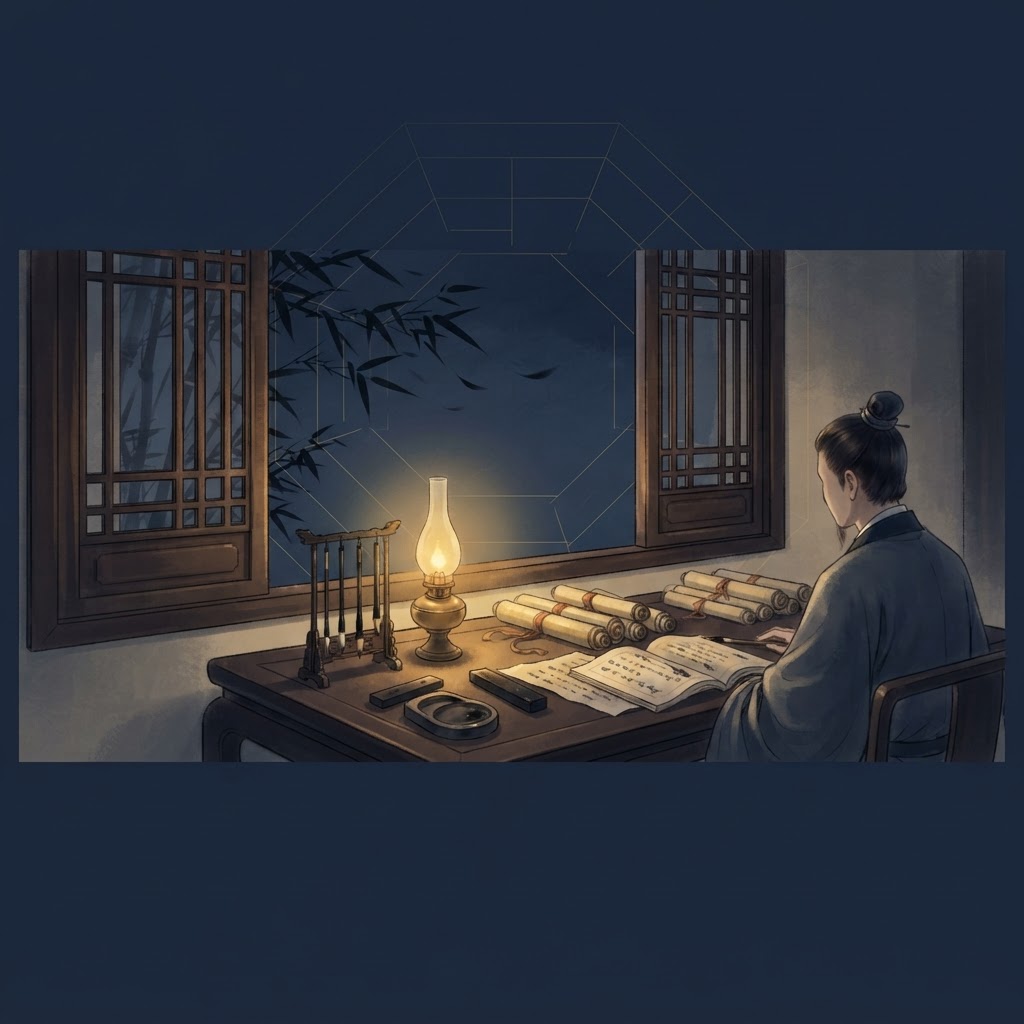
When two fierce negotiation teams enter a corporate boardroom with shouting, theatrical threats, and ultimatum deadlines, who actually walks away with the signed contract? In my decades of advising executives, business owners, and students around the world, the public assumption is almost always that the loudest voice wins. People watch high-stakes business dramas on television and imagine that strategy is built on aggressive pounding on tables. Yet when you inspect the real consultation files of major corporate mergers, complex legal settlements, or long-term educational institutions, a very different truth emerges. The party that secures the sustainable victory is rarely the one pounding the table. It is the party that brought the quietest, most thoroughly prepared advisor into the room.
In the ancient chart architecture of Qi Men Dun Jia, this quiet, formidable force is embodied by Tian Fu (天辅), known in our standard terminology as the Advisor Star. While aggressive stars like Tian Chong (Impulse Star) push for immediate physical breakthroughs and Tian Xin (Diplomat Star) applies cold, surgical legal precision, Tian Fu operates through steady coordination, scholarship, cultural authority, and gentle persuasion. It is the star of the master counselor, the university dean, the patient mediator, and the quiet strategist behind the throne. When you understand how to locate and activate Tian Fu within a chart, you stop relying on brute force to win your battles. You learn how to shape the environment so that agreements form naturally, knowledge is absorbed effortlessly, and opposing parties convince themselves that your solution was their own idea.
The Character, Name Origin, and Etymology of Tian Fu
To master the application of Tian Fu in practical Qi Men Dun Jia consultations, we must first examine the Chinese character itself and understand why we gloss it precisely as the Advisor Star. The character Tian (天) means Heavenly, signifying an intrinsic celestial energy or natural cosmic pattern within the nine-star layer of the chart. The character Fu (辅) carries deep historical and linguistic weight in classical Chinese governance and military literature.
In classical texts, 辅 (Fu) refers to the wooden cheek-pieces tied to the sides of a carriage wheel to reinforce the axle and prevent it from collapsing under heavy loads. From this physical metaphor of structural reinforcement, the character evolved to mean support, assistance, guidance, and the role of the senior minister or royal tutor who keeps the monarch on the path of wisdom and righteousness. A king cannot govern a territory without his Fu Chen (辅臣), his advising ministers. A general cannot deploy armies without his Fu Jiang (辅将), his supporting strategists.
In many modern English translations, beginners often encounter Tian Fu translated vaguely as the "Assistant Star" or the "Grass Star." These translations miss the strategic essence of the star. An assistant merely carries out tasks assigned by someone else. Tian Fu does not merely perform administrative chores. Tian Fu holds intellectual authority, historical knowledge, cultural refinement, and pedagogical skill. It is the archetype of the seasoned advisor whose counsel shapes policy long before the public decree is issued. This is why our academy standardizes Tian Fu as the Advisor Star across all instructional materials and consultation frameworks.
When Tian Fu appears in a Qi Men Dun Jia chart, it indicates a scenario where success depends on preparation, research, diplomatic coordination, educational alignment, and intellectual credibility. If you attempt to use a Tian Fu hour to force a hostile takeover or launch an aggressive public confrontation, you will misfire entirely. Tian Fu does not break doors down. It crafts the master key through patient study and presents it with such elegance that the door opens naturally from the inside.
Elemental Mechanics, Wind Physics, and Home Palace Dynamics
Every star in the Qi Men Dun Jia system possesses a native home palace within the nine-palace Lo Shu grid. Tian Fu resides natively in Palace 4 Southeast, which is governed by the Xun (巽) trigram and belongs to the Wood element. Understanding the physical mechanics of Xun Wood is essential for any serious practitioner who wants to read Tian Fu accurately.
In the I Ching and Wu Xing cosmology, Palace 4 represents Soft Wood or Gentle Wind (巽为风). Do not confuse this with the hard, explosive Wood of Palace 3 East, which represents Zhen (震) Thunder and governs Tian Chong (Impulse Star). Thunder strikes suddenly, shocks the landscape, and demands instant movement. Gentle Wind, by contrast, moves continuously and softly. It enters every crevice, flows around obstacles without colliding, and carries seeds across vast distances. Wind cannot be smashed with a hammer or cut with a sword. The harder you swing at the wind, the more effortlessly it flows past your blade.
This wind physics dictates how Tian Fu operates in human affairs. When Tian Fu influences a negotiation or an examination, its strategy is continuous, subtle penetration. It works through repeated quiet conversations, well-drafted briefing papers, thorough research dossiers, and gentle, persistent encouragement. Just as a steady breeze carries pollen across a valley until an entire forest blooms, Tian Fu spreads ideas, cultural standards, and contractual terms until they become the accepted reality of all parties involved.
The seasonal timing of a chart drastically alters how Tian Fu behaves in practice. Because Tian Fu belongs to Wood, its strength fluctuates across the four seasons according to standard Wu Xing principles:
During Spring (the months of Tiger, Rabbit, and Dragon), Wood energy is in its peak state (Wang). In Spring charts, Tian Fu carries immense vitality. Academic endeavors flourish, student uptake is rapid, and multi-party negotiations move forward with robust intellectual momentum. During Winter (the months of Pig, Rat, and Ox), Water is strong and generates Wood (Xiang). Here, Tian Fu is deeply nourished by background research, hidden strategic support, and scholarly reflection.
In Summer (Snake, Horse, Goat), Wood burns to feed Fire, placing Tian Fu in an exhausted state (Xiu). The advisor is giving away too much intellectual capital without adequate replenishment. In Late Summer or Earth months (Dragon, Goat, Dog, Ox), Wood controls Earth (Qiu), forcing the advisor to expend heavy energy battling bureaucratic inertia. Finally, in Autumn (Monkey, Rooster), Metal energy dominates and severely chops Wood (Si / Suo). When Tian Fu appears in Autumn charts, especially when stationed in Metal palaces like Palace 6 Northwest or Palace 7 West, the advisor faces harsh criticism, legal challenges, or structural suppression.
Tian Fu Across the Ten Heavenly Stems
To achieve mastery in reading Tian Fu, the practitioner must analyze how the Soft Wood energy of the Advisor Star interacts with each of the ten heavenly stems on the heaven and earth plates. Stem interaction dictates whether the advisor's counsel is received with enthusiasm, met with skepticism, or corrupted by conflict.
1. Tian Fu with Jia (Hidden Leader): Because Jia is hidden beneath the six instrument stems (Wu, Ji, Geng, Xin, Ren, Gui), Tian Fu paired with Jia indicates supreme, unassailable executive backing. The advisor acts as the direct personal representative of the chief executive or sovereign authority. Counsel provided under this pairing carries royal weight and cannot be overridden by mid-level managers.
2. Tian Fu with Yi (Yin Wood / The Diplomat Stem): Soft Wood meets Soft Wood in total elemental harmony. This is the ultimate pairing for diplomatic negotiation, gentle persuasion, and partnership formation. The advisor speaks with empathy and grace, making opponents feel respected while quietly steering them toward agreement.
3. Tian Fu with Bing (Yang Fire / The Solar Flame): Soft Wood generates Yang Fire, creating a brilliant, highly visible illumination of intellect. This combination excels in public lecturing, keynote speeches, book releases, and international press conferences. The advisor's words illuminate complex issues with total clarity.
4. Tian Fu with Ding (Yin Fire / The Cultural Candle): Wood generates Yin Fire, representing deep scholarly research, fine editing, spiritual wisdom, and cultural refinement. It is the premier combination for academic writing, technical auditing, and sitting for difficult board examinations.
5. Tian Fu with Wu (Yang Earth / The Solid Shield): Wood gently penetrates Earth. Tian Fu with Wu Stem represents institutional endowment, university real estate, and solid financial backing for educational programs. Soft Wood roots into heavy Earth, ensuring long-term financial stability.
6. Tian Fu with Ji (Yin Earth / The Nurturing Soil): Soft Wood cultivates garden soil. This combination governs corporate training programs, mentorship, employee onboarding, and human resource development. Knowledge is planted like seed in fertile soil, yielding steady organizational growth.
7. Tian Fu with Geng (Yang Metal / The Chief Opponent): Hard Metal chops Soft Wood. This is a difficult, antagonistic pairing. Geng Stem introduces legal obstacles, aggressive opposition, and hostile audits. The advisor's recommendations will be challenged by litigators or aggressive competitors.
8. Tian Fu with Xin (Yin Metal / The Sharp Blade): Yin Metal clips Soft Wood branches. This pairing indicates small, sharp contractual flaws, editorial nitpicking, or unexpected bureaucratic delays. While less destructive than Geng, Xin Stem requires meticulous proofreading and legal re-verification.
9. Tian Fu with Ren (Yang Water / The Moving River): Yang Water nourishes Soft Wood. This combination represents dynamic strategy, international educational expansion, and cross-border knowledge transfer. The advisor's reach expands across geographical boundaries like water carrying seeds downstream.
10. Tian Fu with Gui (Yin Water / The Dew and Rain): Yin Water quietly saturates Soft Wood. This pairing governs private study, confidential research and development, non-disclosure agreements, and secret strategic caucusing. Growth occurs quietly without attracting public attention.
Primary Strategic Applications and Operational Domains
When you scan a Qi Men Dun Jia chart during an executive consultation or personal audit, seeing Tian Fu positioned favorably tells you immediately what strategic tools should be deployed. Let us break down the four primary operational domains where the Advisor Star delivers extraordinary results.
1. Scholarship, Examination Preparation, and Skill Mastery: Tian Fu is the premier star for academic success, professional licensing, technical training, and complex research. Whenever a client asks about passing a medical board exam, completing a legal bar qualification, or designing a university curriculum, we look directly to the palace containing Tian Fu. It governs memory retention, conceptual understanding, pedagogical clarity, and test-taking composure. In my global masterclasses, I always remind students that studying under a Tian Fu hour allows the brain to organize complex information into structured, permanent mental models rather than fleeting rote memorization.
2. Multi-Party Contract Coordination and Strategic Mediation: In modern commerce, agreements rarely involve just two simple entities. Major deals require aligning legal teams, technical auditors, tax specialists, regulatory agencies, and board members. When you try to push such deals using aggressive force, one of the parties inevitably feels cornered and pulls out. Tian Fu excels at multi-party synthesis. It creates an atmosphere of mutual respect, thorough documentation, and deliberate pacing. When paired with Liu He (Partner Deity), Tian Fu becomes virtually unstoppable in drafting ironclad partnership agreements that satisfy all stakeholders.
3. Cultural Publishing, Content Creation, and Educational Authority: Whether you are writing a technical textbook, launching an international educational portal, or drafting corporate policy manuals, Tian Fu provides the refinement and clarity required for high-level cultural impact. It governs the written word, editorial precision, intellectual property, and public credibility. Products and publications released during a Tian Fu star window carry a natural air of authority that commands respect from industry peers and regulatory bodies alike.
4. Gentle Leadership and Consensus Management: True leadership is not merely giving orders from a corner office. In modern knowledge-work organizations, top engineers, legal scholars, and creative directors do not respond well to authoritarian mandates. Tian Fu represents leadership through mentorship, intellectual superiority, and moral authority. A CEO utilizing Tian Fu energy does not threaten employees with dismissal; she presents a compelling, impeccably researched vision and mentors her executive team until they willingly execute the plan with excellence.
"Force can compel temporary compliance, but only steady coordination and genuine instruction can build an institution that outlasts its founder. The Advisor Star does not conquer territory; it educates the people until the territory manages itself."
To understand why this distinction matters so deeply in practical chart analysis, we must contrast Tian Fu with its sibling stars across the nine-star universe. While stars like Tian Peng (Bandit Star) thrive on high-risk speculation and financial arbitrage, Tian Fu demands structural integrity and intellectual verification. A deal built under Tian Peng may yield a sudden speculative windfall, but a deal built under Tian Fu creates a legacy asset that yields dividends for decades.
Tian Fu in Executive Coaching, Mentorship, and Organizational Culture
Beyond individual examination success and contract mediation, one of the most profound commercial applications of Tian Fu resides in organizational development, executive coaching, and corporate culture transformation. When I advise fast-growing corporations and family offices around the world, leaders frequently complain that despite offering competitive salaries, their companies suffer from high executive turnover, fragmented team alignment, and poor knowledge retention.
When we inspect the Qi Men Dun Jia charts of these troubled organizations, we almost always find an environment dominated by aggressive, short-term stars like Tian Peng or volatile doors like Dispute Door. The company operates in a constant state of fire-fighting, where employees are driven purely by quarterly quotas and fear of reprimand. Knowledge is hoarded rather than shared, and senior executives leave after eighteen months, taking critical institutional memory with them.
To build an organization that survives market downturns and scales across decades, leadership must consciously introduce Tian Fu energy into its operational fabric. Let us examine the three core mechanisms through which Tian Fu transforms corporate culture:
1. Structured Knowledge Architecture and Documentation: In a Tian Fu culture, operational procedures are not kept informally inside individual employees' heads. Tian Fu governs systematic documentation, standard operating procedure (SOP) manuals, technical wikis, and training curricula. When a senior engineer or sales director leaves a Tian Fu-aligned organization, their methodology remains fully documented in the corporate knowledge base, allowing new hires to onboard rapidly without operational disruption.
2. Structured Mentorship Programs over Authoritarian Management: Authoritarian management relies on top-down commands and punitive measures. Tian Fu management operates through mentorship, skill transfer, and intellectual empowerment. Senior executives are measured not merely by their personal output, but by the performance and advancement of the junior leaders they mentor. This Soft Wood growth model creates a self-replenishing talent pipeline within the enterprise.
3. Moral Authority and Psychological Safety: Soft Wood wind energy creates an atmosphere of psychological safety where employees feel comfortable admitting technical errors, asking clarifying questions, and proposing innovative solutions without fear of public humiliation. When employees know that leadership evaluates issues with the analytical, pedagogical mindset of Tian Fu, workplace anxiety evaporates, leading to higher creative productivity and deep loyalty.
The Shadow Side of the Advisor Star
No element or star in Qi Men Dun Jia is purely beneficial. Every energy carries a shadow side that emerges when the component is overdeveloped, poorly supported, or misunderstood by the practitioner. Because Tian Fu is associated with intellectual refinement, gentle persuasion, and thorough research, its negative expression does not manifest as violent destruction or sudden fraud. Instead, the shadow side of Tian Fu manifests as silent paralysis, endless procrastination, and bureaucratic over-consultation.
In consultation practice, the most common trap associated with Tian Fu is paralysis by analysis. When a client operates under a heavily afflicted Tian Fu star, they become obsessed with gathering one more piece of data, conducting one more survey, or obtaining one more expert opinion before making a commercial decision. I have observed technology founders delay product launches for twelve months because their technical advisors kept insisting on minor refactoring. The market opportunity closed, competitors entered, and the company folded despite having superior underlying intellectual property. The advisor knew everything about the subject except how to take action.
A second shadow manifestation is over-consultation. A leader who falls into the negative trap of Tian Fu abdicates executive authority by setting up endless advisory committees, working groups, and task forces. Rather than making a definitive decision, the leader asks ten different consultants for guidance. Because each consultant brings a distinct perspective, the recommendations conflict, resulting in strategic confusion. The organization spends millions of dollars paying advisory fees while the operational core of the business remains completely stalled.
Furthermore, Tian Fu can foster a subtle form of intellectual arrogance. Because Soft Wood moves softly and subtly, individuals influenced by an unhealthy Tian Fu star may look down on partners who favor directness, speed, or financial pragmatism. They view operational urgency as uncouth or unrefined. In corporate disputes, an afflicted Tian Fu can lead to passive-aggressive resistance, where an advisor nod politely in meetings but quietly undermines execution behind the scenes by raising endless legal and academic objections.
When Tian Fu collides with aggressive stems like Geng Stem or disruptive doors like Dispute Door, this shadow side hardens into legal deadlock and bureaucratic interrogation. Instead of facilitating consensus, the advisor becomes the primary source of procedural delay, hiding behind complex regulations to block organizational progress.
Five Concrete Combinations with Stems, Doors, and Deities
To read Tian Fu accurately in a real chart, you must never evaluate the star in isolation. Qi Men Dun Jia is a multi-layered system where stars interact with earth plate stems, heaven plate stems, eight doors, and eight deities. Below are five detailed combinations that appear frequently in commercial and personal consultations, detailing their exact mechanics and operational outcomes.
Combination 1: Tian Fu + Yi Stem + Life Door + Partner Deity (The Master Mediator)
This is one of the most harmonious combinations in the entire Qi Men Dun Jia system for contractual negotiations, business restructuring, and multi-party alliances. Tian Fu provides gentle intellectual authority, Yi Stem brings flexible diplomacy, Life Door ensures commercial growth and profit, and Liu He (Partner Deity) acts as the ultimate binder of covenants. When this combination lands in a strong palace (such as Palace 1 North or Palace 4 Southeast), complex disputes resolve smoothly. Both parties feel respected, financial terms are fair, and the resulting contract stands up to legal scrutiny for years.
Combination 2: Tian Fu + Ding Stem + View Door + Leader Deity (The Academic and Cultural Vanguard)
Here, Tian Fu pairs with the brilliant fire of Ding Stem, the illuminating visibility of View Door, and the supreme authority of Zhi Fu (Leader). This structure represents peak educational and cultural achievement. It is the ideal combination for launching major educational initiatives, publishing masterworks, submitting high-level research grants, or sitting for national licensing examinations. Ding Stem acts as the steady flame of intellect, View Door ensures public recognition, and Zhi Fu confers institutional legitimacy. When clients time their academic submissions under this combination, approval rates are exceptionally high.
Combination 3: Tian Fu + Wu Stem + Rest Door + Nine Earth (The Institutional Foundation)
In this combination, Tian Fu meets Wu Stem (representing substantial capital and solid earth assets), Rest Door (governing stability, recuperation, and steady flow), and Nine Earth (Jiu Di, governing permanent physical structures and long-term storage). This alignment is used primarily when establishing permanent educational facilities, purchasing commercial real estate for corporate headquarters, or setting up university endowment funds. The Soft Wood of Tian Fu gently roots into the heavy Earth of Wu and Nine Earth, creating an institution that grows steadily over generations with low volatility and secure financial backing.
Combination 4: Tian Fu + Geng Stem + Dispute Door + Serpent (The Paralysis Trap)
This represents a highly problematic alignment where the gentle advisory nature of Tian Fu is corrupted. Geng Stem introduces hard obstacle and conflict, Dispute Door brings vocal disagreement and legal panic, while Serpent (Teng She) injects paranoia, shifting terms, and deceit. When a client attempts to negotiate under this combination, consultations descend into accusations, advisors give conflicting legal opinions, and small contractual ambiguities spin out into active litigation. When encountering this structure in a consultation, I advise clients to halt meetings immediately, audit their legal counsel, and wait for the star pattern to shift.
Combination 5: Tian Fu + Ren Stem + Obstruct Door + Darkness Deity (The Hidden Counsel)
This complex combination pairs Tian Fu with Ren Stem (flowing water and active strategy), Obstruct Door (representing concealment, obstacles, and closed doors), and Darkness Deity (Tai Yin, governing quiet back-room preparation and secret strategy). While Obstruct Door prevents open public announcements, the presence of Tian Fu and Darkness Deity creates an ideal environment for confidential strategy sessions, proprietary software development, or non-disclosure agreement drafting. The public sees no movement, but behind closed doors, a master blueprint is being crafted in total secrecy.
Combination 6: Tian Fu + Bing Stem + Life Door + Nine Heaven (The Global Educational Launch)
In this high-energy combination, Tian Fu pairs with the brilliant fire of Bing Stem, the commercial vitality of Life Door, and the vast reach of Nine Heaven (Jiu Tian). This structure is deployed specifically when an educational institution, online academy, or corporate consulting firm expands internationally. Bing Fire illuminates the curriculum, Life Door generates global course revenue, while Nine Heaven broadcasts the marketing message across international borders. Publications and programs launched under this window achieve rapid global recognition and high student enrollment.
Combination 7: Tian Fu + Xin Stem + Injury Door + White Tiger (The Corrupted Advisory)
Here, the gentle nature of Tian Fu is heavily damaged by Xin Stem (sharp metal flaw), Injury Door (伤门, governing friction, injury, and resentment), and White Tiger (Bai Hu, representing physical pressure, harsh contact, and acute danger). In consultation practice, encountering this combination in a client's chart warns that their current legal or financial advisors are providing dangerous, flawed advice that could lead to severe regulatory penalties or physical workplace injury. The advisor is either incompetent or acting under duress. When this structure appears, immediate independent third-party auditing is required.
Combination 8: Tian Fu + Ji Stem + Open Door + Leader Deity (The Institutional Charter)
This represents a magnificent alignment for institutional founding and corporate governance. Tian Fu (scholarship and counsel) joins Ji Stem (nurturing earth), Open Door (official business launch and administrative transparency), and Zhi Fu (Leader). This combination is ideal for registering new universities, incorporating non-profit research foundations, or issuing corporate charters. It grants immediate administrative approval, strong regulatory goodwill, and long-term institutional prestige.
| Combination Components | Core Element Mechanics | Primary Strategic Application | Risk Profile & Key Warning |
|---|---|---|---|
| Tian Fu + Yi + Life Door + Liu He | Wood-Wood harmony nourishing Earth profit; Deity binds agreement | Multi-party contract mediation, equity joint ventures, merger terms | Low risk; ensure financial figures match real cash flow |
| Tian Fu + Ding + View Door + Zhi Fu | Wood generates Fire flame; Leader confers institutional protection | Academic publishing, bar exams, accreditation, brand authority | Very low risk; avoid arrogance or skipping preliminary proofreading |
| Tian Fu + Wu + Rest Door + Jiu Di | Wood roots into heavy Earth; Rest Door maintains calm operational pace | School founding, university endowments, headquarters property acquisition | Moderate delay risk; growth is slow but exceptionally stable |
| Tian Fu + Geng + Dispute Door + Teng She | Metal chops Wood while Dispute Door creates legal noise and paranoia | Exposing flawed legal advice, identifying bad-faith negotiations | High risk; severe legal deadlock, conflicting advisory opinions |
| Tian Fu + Ren + Obstruct Door + Tai Yin | Water nourishes Wood behind closed doors; quiet strategic development | Covert R&D drafting, patent strategy, confidential executive caucusing | Do not launch publicly under this window; keep operations strictly hidden |
Comparative Analysis with Sibling Stars
To deepen your diagnostic skills when analyzing a Qi Men Dun Jia chart, you must understand how Tian Fu compares directly to other prominent stars in the nine-star matrix. Each star possesses a distinct operational philosophy. Placing the wrong star in a strategic role leads to total operational failure. Let us compare Tian Fu with three of its key sibling stars: Tian Chong (Impulse Star), Tian Xin (Diplomat Star), and Tian Rui (Problem Star).
Tian Fu versus Tian Chong (Advisor Star vs Impulse Star): Both Tian Fu and Tian Chong belong to the Wood element, but their physical expressions are polar opposites. Tian Chong is Palace 3 East Hard Wood (Zhen Thunder). It acts with explosive speed, physical force, and aggressive momentum. Tian Chong is the shock trooper who breaches the wall. Tian Fu, by contrast, is Palace 4 Southeast Soft Wood (Xun Gentle Wind). Tian Fu does not shock or breach; it persuades, educates, and coordinates. If you send Tian Chong into a delicate contract mediation, he will smash the table and destroy the relationship. If you send Tian Fu onto a chaotic battlefield that requires instantaneous physical reflexes, he will call a committee meeting while the fort burns. You must match the star to the nature of the crisis.
Tian Fu versus Tian Xin (Advisor Star vs Diplomat Star): Beginners often confuse the Advisor Star with the Diplomat Star because both deal with high-level strategy and executive counsel. However, their underlying mechanics are fundamentally different. Tian Xin resides natively in Palace 6 Northwest (Qian Metal). It represents surgical calculation, legal frameworks, medical precision, and systemic control. Tian Xin is cold, objective, and unflinching. Tian Fu resides in Palace 4 Wood and is warm, pedagogical, cultural, and relational. Tian Xin drafts the strict legal clause that punishes default; Tian Fu builds the personal trust and educational consensus that prevents default from happening in the first place.
Tian Fu versus Tian Rui (Advisor Star vs Problem Star): Tian Rui resides natively in Palace 2 Southwest (Kun Earth) and is known as the Problem Star or Illness Star. In a chart, Tian Rui points directly to where defects, chronic weaknesses, operational bottlenecks, and physical ailments reside. While Tian Rui uncovers the disease, Tian Fu provides the educational curriculum and structural guidance necessary to train staff out of bad habits. When Tian Fu and Tian Rui appear in opposite palaces, we see a classical dynamic of Diagnosis (Tian Rui) versus Education and Rehabilitation (Tian Fu).
| Dimension | Tian Fu (Advisor Star) | Tian Chong (Impulse Star) | Tian Xin (Diplomat Star) |
|---|---|---|---|
| Native Palace & Element | Palace 4 Southeast (Soft Wood) | Palace 3 East (Hard Wood) | Palace 6 Northwest (Hard Metal) |
| Operational Mode | Gentle persuasion, education, coordination | Rapid initiative, force, physical impulse | Surgical execution, law, system design |
| Ideal Scenario | Exams, mediation, curriculum, alliances | Emergency rescue, competitive sprint, defense | Contract enforcement, litigation, surgery |
| Failure State | Analysis paralysis, endless consultation | Reckless damage, premature conflict | Cold bureaucracy, lack of human empathy |
Worked Chart Example 1: The Professional Licensing Examination Timeline
To demonstrate how Tian Fu is deployed in professional practice, let us examine a real client consultation from my files. A senior candidate in financial engineering approached me after failing her professional actuary licensing examination twice. She was deeply discouraged, facing severe career pressure, and had only one final attempt remaining before her credentials would expire.
She wanted to know two things: first, why her previous study sessions had yielded poor retention despite working twelve hours a day; and second, how to structure her final study calendar and exam submission using Qi Men Dun Jia date selection to maximize her pass probability.
We cast a chart for the date of our initial consultation: April 14, 2026, at 2:00 PM (14:00 hours). The solar term was Clear and Bright (Qing Ming), which falls under the Yang Dun cycle. The day pillar was Wu-Wu (戊午). To establish the correct Ju number, we identified the Fu Tou (block leader) as Jia-Yin (甲寅) on April 10, 2026. Because Yin is a middle-yuan branch and Clear and Bright carries the solar trio of 4, 1, 7, the middle yuan selects Yang Dun 1 Ju. The chart was constructed as a Yang Dun 1 Ju hour chart.
Let us inspect the five layers of the chart to evaluate the client's educational prospect:
1. Day Stem (The Asker): The day stem Wu (戊) represents the client. In this Yang Dun 1 Ju chart, Wu was located in Palace 8 Northeast (Gen Earth). Wu in Gen Earth is in a stable, grounded state, indicating that the candidate possessed solid fundamental intellect, but was physically and mentally exhausted from chronic overwork.
2. Hour Stem (The Matter / Examination): The hour stem Ji (己) represents the examination outcome and study process. Ji was stationed in Palace 4 Southeast, which is the native home of Tian Fu. Sitting right beside Ji in Palace 4 was the Advisor Star (Tian Fu), paired with View Door (景门, governing legal documents, examinations, and official certificates) and Zhi Fu (Leader).
3. Star Layer (Tian Fu): Tian Fu was vibrant and active in Palace 4. Soft Wood in its home palace in Spring carries supreme vigor. This confirmed immediately that her failure was not due to a lack of intelligence. Rather, her previous preparation methods had relied on brute-force memorization under aggressive, stressful hours, which clashed with her natural cognitive processing style.
4. Door Layer (View Door): View Door represents the exam paper itself. In Palace 4 Southeast (Wood generating Fire), View Door was bright and illuminated. This indicated that the exam questions were fair and well-structured, but required elegant synthesis rather than mechanical formula dumping.
5. Deity Layer (Leader Deity): Zhi Fu sitting on the hour palace provided immense institutional backing and high-level protection. The examining board was non-hostile.
Based on this inspection, the diagnostic conclusion was clear: the candidate needed to stop her twelve-hour cramming sessions and switch to a structured Tian Fu study rhythm. We designed a four-week preparation timeline aligned specifically with Advisor Star hours and days.
The tactical instructions provided to the candidate were as follows:
1. Study Window Selection: She was instructed to study strictly during Si (09:00 - 11:00) and Chen (07:00 - 09:00) hours on days where Tian Fu was active in the upper palaces. Rather than studying twelve chaotic hours, she studied four concentrated hours during peak Advisor Star energy.
2. Pedagogical Method: She abandoned passive reading and adopted the Advisor Method: after reviewing a complex actuarial concept, she spoke out loud as if explaining the topic to a junior student. This activated the Soft Wood wind energy of Tian Fu, forcing her brain to synthesize the material effortlessly.
3. Exam Day Activation: On the morning of the exam, she entered the examination hall facing Southeast (the native home of Tian Fu) during a Si hour, absorbing the steady, composed intellect of Xun Wood before receiving the paper.
The result was remarkable. She completed the four-hour actuarial examination with forty-five minutes to spare, reporting total mental clarity throughout the test. When official results were released six weeks later, she had passed in the 88th percentile, securing her professional license after years of failure.
Environmental Qi Alignment for Examination Success: In addition to timing study hours, the candidate was instructed to align her physical study environment with Palace 4 Southeast mechanics. She moved her study desk away from the North sector of her home (which was experiencing heavy Metal clash during that month) and relocated to the Southeast corner of her residence. A fresh green potted plant was placed on the left side of her desk to symbolize growing Soft Wood, while a soft warm desk lamp was kept illuminated during revision sessions to nourish View Door Fire. When sitting for mock examinations, she wore dark blue or green apparel to reinforce Water generating Wood. This environmental alignment, combined with Advisor Star hour timing, eliminated the physiological anxiety that had sabotaged her previous two examination attempts.
Worked Chart Example 2: Corporate Partnership Mediation Resolved Through Deliberate Delay
A second case from my executive consultation archives illustrates how Tian Fu can resolve commercial deadlocks that appear completely intractable to legal teams. The case involved a regional cold-chain logistics firm with twelve million dollars in annual revenue. The two co-founders, each holding fifty percent equity, had reached a state of total relational breakdown after ten years of operation.
Founder A wanted to sell the company to an international logistics conglomerate for immediate cash liquidity. Founder B refused to sell, believing the acquisition price undervalued their proprietary technology stack and warehouse real estate. Both founders had hired aggressive litigation attorneys who issued immediate buyout demands and threatened court injunctions that would freeze operational bank accounts within fourteen days. At this critical junction, the company's chief financial officer requested an emergency Qi Men Dun Jia consultation to evaluate whether mediation was possible or if total court liquidation was inevitable.
We cast a Qi Men Dun Jia chart for the consultation session: July 28, 2026, at 10:00 AM (Si hour). The solar term was Great Heat (Da Shu), placing the chart inside the Yin Dun cycle. The day pillar was Ren-Zi (壬子). The Fu Tou was Jia-Shen on July 26, a Shen branch, selecting the lower yuan of Great Heat (trio 4, 5, 6). The chart was constructed as Yin Dun 6 Ju.
Let us analyze the five structural layers of this Yin Dun 6 Ju chart:
1. Host Palace (Founder A / Seller): Founder A was represented by the Day Stem Ren (壬), located in Palace 3 East (Wood element). Ren in Palace 3 was active and volatile, paired with Tian Chong (Impulse Star) and Dispute Door. This confirmed that Founder A was reacting emotionally, pushing for explosive movement, and making aggressive legal threats that he did not actually want to execute.
2. Guest Palace (Founder B / Retainer): Founder B was represented by the Hour Stem Yi (乙), located in Palace 1 North (Water element). Yi Stem in Palace 1 was supported by Tian Fu (Advisor Star), Liu He (Partner Deity), and Rest Door (休门).
3. Elemental Harmony (Water generating Wood): Palace 1 North (Water, containing Tian Fu and Liu He) naturally generates Palace 3 East (Wood, containing Founder A). This elemental generation proved that Founder B held the key to satisfying Founder A's financial concerns, provided the negotiation was moved away from courtrooms and into quiet, structured advisory sessions.
4. Star Mechanics (Tian Fu): Tian Fu in Palace 1 Water was in a Xiang state (highly nourished by Water). Soft Wood absorbing Water energy signifies deep strategic wisdom, patient listening, and thorough document preparation. The presence of Liu He confirmed that contractual partnership harmony was fully recoverable.
5. The Obstacle (Geng Stem in Palace 7 West): Geng Stem (representing litigating attorneys and court injunctions) sat in Palace 7 West (Metal element). Palace 7 Metal controls Palace 3 Wood (Founder A). The aggressive litigation tactics were terrifying Founder A into hasty action.
The strategic recommendation I provided to the CFO was counter-intuitive to the corporate attorneys: refuse to engage in rapid legal battles. Force a deliberate cooling-off period and schedule four quiet, three-hour caucus sessions held strictly under Tian Fu hours.
The mediation protocol was executed systematically over a three-week period:
1. Isolation of Litigators: The CFO instructed both founders to bar their litigation attorneys from attending the mediation sessions. Legal counsel was relegated to reviewing final documents, stripping the emotional conflict and high-billing pressure from the negotiation table.
2. Tian Fu Hour Selection: All four caucus sessions were held during Si (09:00 - 11:00) and Hai (21:00 - 23:00) hours on days governed by Soft Wood stems (Yi and Ji). These hours activated the gentle, analytical energy of Tian Fu, allowing both founders to express their core financial fears without triggering defensive hostility.
3. Restructuring the Equity Purchase: During the second caucus session, under the quiet guidance of a neutral senior accountant (acting as the physical embodiment of Tian Fu), a novel restructuring option emerged: Founder B would purchase forty percent of Founder A's equity over a three-year structured buyout funded by operational cash flow, while Founder A retained ten percent non-voting dividend equity.
"When litigation attorneys threaten total destruction, fast action plays into their hands. By deploying the Advisor Star, you introduce deliberate slow coordination. Slowing down the conversation dissolves emotional panic and allows structural solutions to emerge from the noise."
The final contract was signed twenty-two days after our initial consultation. Court litigation was completely avoided, the company saved an estimated $600,000 in legal fees, and operational cash flow remained entirely uninterrupted. Today, six years later, the logistics company continues to operate profitably under Founder B's leadership, while Founder A receives substantial quarterly dividend checks. This is the power of steady coordination under Tian Fu.
Post-Mediation Governance Oversight and Contractual Longevity: To ensure that the newly negotiated buy-out terms remained stable over the three-year payment schedule, the mediation agreement embedded mandatory quarterly review caucuses timed specifically under Tian Fu hours. Rather than allowing small operational disagreements between Founder A and Founder B to escalate into legal threats, the contract stipulated that any interpretation ambiguity in the payout clauses must be submitted to a designated neutral advisory auditor before court filings could be initiated. This structural safeguard utilized Tian Fu's capacity for steady, continuous coordination, ensuring that all twenty-four quarterly payments were completed on time without a single legal motion being filed.
Date Selection Protocol for Tian Fu Operations
In Qi Men Dun Jia date selection (Ze Ji), identifying and timing Advisor Star hours is one of the most effective tools a practitioner can provide to business leaders, students, and negotiators. When an important meeting, exam, or contract signing takes place under a well-supported Tian Fu hour, the entire ambient energy of the room shifts toward intellectual alignment, clear communication, and mutual respect.
To select an optimal Tian Fu hour, you must follow a systematic three-step filtering protocol:
Step 1: Locate the Palace of Tian Fu in the Hour Chart
Calculate the Qi Men Dun Jia chart for the proposed hour. Locate which palace receives Tian Fu on the heaven plate. Ensure that Tian Fu lands in an upper or harmonious palace (Palace 1 North, Palace 3 East, Palace 4 Southeast, or Palace 9 South). Avoid hours where Tian Fu falls into Palace 6 Northwest or Palace 7 West (Metal palaces that chop Wood) unless supported by strong Water stems on the earth plate.
Step 2: Verify Door and Deity Support
A star cannot operate in a vacuum. Check the door and deity accompanying Tian Fu in the selected palace. The ideal door pairings for Tian Fu are Life Door (commercial profit), Rest Door (peaceful agreement), View Door (examinations and publicity), or Open Door (business launches). Ensure the deity is either Zhi Fu (Leader), Liu He (Partner), Tai Yin (Darkness), or Jiu Di (Nine Earth). Avoid hours where Tian Fu is paired with Death Door or White Tiger deity.
Step 3: Directional Activation (Qi Men Directional Positioning)
When conducting the meeting, exam review, or contract signing, seat yourself so that your back faces the direction of the palace containing Tian Fu. By positioning your back toward the Advisor Star, you tap into its ambient mental clarity and diplomatic authority during the conversation.
Seasonal Branch Selection and Hour Nuances in Ze Ji: When selecting a Tian Fu hour, advanced practitioners pay close attention to the hour branch (Shi Zhi) in relation to the solar term. During Spring months (Tiger, Rabbit, Dragon), selecting a Chen hour (07:00 - 09:00) or Si hour (09:00 - 11:00) combines peak seasonal Wood vigor with the native Southeast direction of Xun Wood, generating an extraordinary surge of intellectual clarity and diplomatic influence. In Winter months (Pig, Rat, Ox), choosing a Zi hour (23:00 - 01:00) or Hai hour (21:00 - 23:00) brings deep Water energy to nourish Soft Wood, making these hours unmatched for quiet, late-night strategic planning, deep thesis drafting, and confidential contract revisions. Conversely, during Autumn months (Monkey, Rooster), avoid scheduling critical negotiations during Shen (15:00 - 17:00) or You (17:00 - 19:00) hours, as strong Metal energy during these hours chops Soft Wood, causing advisory proposals to be rejected by tough executive opponents.
| Target Objective | Optimal Tian Fu Pairing | Directional Orientation | Action Protocol during Hour |
|---|---|---|---|
| Examination Prep & Revision | Tian Fu + View Door + Zhi Fu | Face or back to Southeast / East | Review complex formulas; teach concepts out loud |
| Multi-Party Contract Negotiation | Tian Fu + Life Door + Liu He | Back to North or Southeast | Table detailed terms; present pre-drafted compromise clauses |
| Book & Course Launch | Tian Fu + View Door + Jiu Tian | Back to South or Southeast | Publish sales page; release press announcements |
| Executive Advisory & Coaching | Tian Fu + Rest Door + Tai Yin | Back to North or West | Conduct 1-on-1 strategic review; audit organizational roadmap |
Practical Diagnostic Checklist for Qi Men Practitioners
When you sit across from a client during a live Qi Men Dun Jia consultation, you must follow a disciplined, methodical inspection sequence. Relying on vague intuition or isolated component lookups leads to inaccurate readings and flawed advice. Below is the ten-point diagnostic checklist I require all advanced students to run whenever Tian Fu appears as a primary factor in a reading.
1. Verify the Seasonal Vigor of Soft Wood (Wang, Xiang, Xiu, Qiu, Si):
Before examining palace positions, look at the solar term and month branch of the chart. In Spring (Tiger, Rabbit, Dragon), Tian Fu is Wang (Peak Vigor). In Winter (Pig, Rat, Ox), Tian Fu is Xiang (Strongly Nourished). In Summer (Snake, Horse, Goat), it is Xiu (Exhausted). In Late Summer (Earth months), it is Qiu (Imprisoned). In Autumn (Monkey, Rooster), it is Si (Dead/Suppressed). A Tian Fu star operating in Winter or Spring possesses immense natural authority, whereas in Autumn, its advice will struggle against heavy resistance.
2. Inspect the Native Home Palace versus Current Chart Position:
Tian Fu's native home is Palace 4 Southeast (Wood). Locate where Tian Fu has rotated on the heaven plate of the hour chart. If it sits in Palace 1 North (Water generating Wood), the advisor receives exceptional intellectual support. If it sits in Palace 9 South (Wood generating Fire), the advisor's energy is being spent enlightening others. If it sits in Palace 6 Northwest or Palace 7 West (Metal chopping Wood), the advisor faces severe managerial suppression or legal challenge.
3. Evaluate Heaven Plate and Earth Plate Stem Interactions:
Examine the heavenly stems accompanying Tian Fu. Friendly stems like Yi (乙), Ding (丁), or Wu (戊) enhance Tian Fu's capacity for gentle negotiation, academic brilliance, and financial stability. Problematic stems like Geng (庚) introduce heavy obstacles, while Xin (辛) causes sharp contractual flaws or unexpected legal reversals.
4. Assess Door Compatibility and Operational Alignment:
Which door shares the palace with Tian Fu? The four optimal doors for Tian Fu are Life Door (commercial growth and profit), Rest Door (peaceful agreement and recovery), View Door (examinations, licensing, and public authority), and Open Door (institutional launch). If Tian Fu is paired with Obstruct Door, consultation must remain strictly hidden behind closed doors. If paired with Dispute Door, legal anxiety will corrupt the advisory process.
5. Inspect Deity Backing and Intent:
The deity layer reveals the unseen spirit or atmospheric condition surrounding the matter. Zhi Fu (Leader) grants supreme institutional legitimacy. Liu He (Partner) ensures binding contractual consensus. Tai Yin (Darkness) supports private strategy. Nine Earth (Jiu Di) establishes permanent operational foundations. Conversely, Serpent (Teng She) indicates deceitful advice, while Black Tortoise (Xuan Wu) warns of intellectual property theft or hidden financial leaks.
6. Check for Fu Yin or Fan Yin Structural States:
Determine if the star layer is in Fu Yin (stationary, heaven plate identical to earth plate) or Fan Yin (opposite palace rotation). In a Fu Yin chart, Tian Fu indicates that consultation will be slow, repetitive, and delayed. The client must be patient and avoid rushing the process. In a Fan Yin chart, advisory opinions will undergo rapid, unexpected reversals, requiring constant contractual revisions.
7. Audit for Door Pressure (Men Po) and Void (Kong Wang):
Check if the palace containing Tian Fu suffers from Men Po (Door Pressure, where the door element clashes with the palace element) or falls into a Void (Kong Wang) hour branch. If the palace is in Void, fifty percent of Tian Fu's positive energy is temporarily drained, indicating that the advisor's advice will be ignored or misunderstood until the Void clears.
8. Identify Signs of Analysis Paralysis (The Shadow Side):
If Tian Fu is accompanied by excessive Earth stems, weak doors, or passive deities, warn the client explicitly against over-consultation. Check whether the client is using research as an excuse to avoid making a firm commercial commitment.
9. Determine Directional Orientation for Action:
Identify the physical direction of the palace containing Tian Fu. Instruct the client to face or position their back toward this direction during critical negotiations, study sessions, or board presentations to absorb the ambient Xun Wood energy.
10. Synthesize Host versus Guest Palaces:
Finally, compare the palace containing the Asker (Day Stem) with the palace containing Tian Fu and the Opposing Party (Hour Stem). Ensure that the elemental relationship supports a win-win outcome rather than an imbalanced extraction of value.
11. Assess Historical Precedent and Retrospective Learning:
Before finalizing your recommendation, review the client's past history with similar matters. Tian Fu is deeply tied to historical memory, institutional experience, and scholarly precedent. Ask the client what past mistakes or previous consultation reports were ignored. An advisor operating under Tian Fu must learn from previous cycles so that the new strategy rectifies past errors permanently rather than repeating old patterns under a different name.
Comprehensive Practitioner FAQ
Over my decades of practice, students and professional consultants have brought hundreds of specific operational questions regarding Tian Fu. Below are seven of the most critical questions, answered with full technical rigor.
Question 1: What happens when Tian Fu appears in a Fu Yin (stationary) chart?
In a Fu Yin chart, all stars remain in their native home palaces. Tian Fu sits quietly in Palace 4 Southeast. When this occurs, the advisory and educational process becomes exceptionally slow and methodical. It signifies that no sudden breakthroughs or fast contractual resolutions will occur. Attempts to force rapid signatures will fail completely. However, Fu Yin with Tian Fu in Palace 4 is outstanding for deep historical research, writing comprehensive textbooks, building long-term academic curricula, and establishing institutional policies that are meant to remain unchanged for decades. Advice given under this structure is permanent and deeply rooted.
Question 2: Is Tian Fu always favorable for commercial sales, or can it slow down revenue conversion?
While Tian Fu is classified as one of the three auspicious stars in Qi Men Dun Jia (alongside Tian Xin and Tian Ren), it is not always ideal for fast-moving consumer sales or aggressive transactional pitching. Tian Fu operates through Soft Wood wind energy, which takes time to penetrate and convince. If your business model relies on high-volume, impulse e-commerce purchases, deploying a Tian Fu hour may cause potential buyers to pause, request more product information, consult their spouses, and delay checking out. For transactional cash flow, Tian Chong or Open Door is far more effective. Tian Fu excels in high-value, enterprise-level B2B sales where buyers require extensive trust, technical documentation, and multi-stage committee approvals.
Question 3: How do you handle a scenario where Tian Fu lands in Palace 6 Northwest or Palace 7 West (Metal palaces that chop Wood)?
When Tian Fu (Soft Wood) rotates into Palace 6 (Qian Metal) or Palace 7 (Dui Metal), we encounter a classic Wu Xing clash where Metal chops Wood. In practical consultations, this indicates that the advisor's recommendations will face fierce pushback from senior management, board directors, or legal authorities. The advisor's authority is clipped, and their reports may be dismissed as impractical or overly academic. To overcome this clash, you must introduce a Water element bridge on the earth plate or time your action for a Water hour (such as Zi or Hai hours). Water absorbs the harshness of Metal and nourishes Wood, transforming legal criticism into constructive editorial refine.
Question 4: Can Tian Fu be deployed effectively in active courtroom litigation or criminal defense?
Tian Fu is rarely used as the primary attacking star in aggressive court trials; for courtroom battles, practitioners prefer Tian Xin (Diplomat Star) or Tian Ren (Doctor Star). However, Tian Fu plays a crucial behind-the-scenes role in litigation defense and pre-trial settlement negotiations. When positioned with View Door or Rest Door, Tian Fu allows legal teams to draft flawless legal briefs, expert witness affidavits, and amicus curiae submissions that systematically dismantle the opposing party's arguments through superior documentation rather than courtroom drama.
Question 5: What is the operational distinction between consulting under Tian Fu (Advisor Star) versus consulting under Zhi Fu (Leader Deity)?
This is a fundamental point that every student must understand. Tian Fu is a Star (representing celestial talent, intellectual quality, and psychological style), whereas Zhi Fu is a Deity (representing supreme spiritual authority, institutional legitimacy, and executive protection). Tian Fu provides the wisdom, research, and drafted proposal; Zhi Fu provides the executive stamp of approval and top-cover protection. You can think of Tian Fu as the brilliant chief strategist, while Zhi Fu is the sovereign monarch who signs the decree. When both components land in the same palace, you have an invincible alignment of intellectual brilliance and executive legitimacy.
Question 6: What should a practitioner advise if a client's birth year stem aligns with Tian Fu alongside a Obstruct Door?
When a client's birth year stem (Destiny Palace) contains Tian Fu paired with Obstruct Door (杜门), it reveals a person with immense intellect, deep scholarly talent, and refined strategic capabilities, but who operates entirely in the shadows or behind closed doors. They may struggle with public self-promotion or feel uncomfortable speaking on loud public stages. As a consultant, you should not force this individual to become a charismatic front-line salesperson. Instead, advise them to position themselves as a high-paid confidential strategic advisor, chief research officer, or behind-the-scenes consultant. Working behind closed doors under Obstruct Door allows their Tian Fu intellect to shine without triggering public friction.
Question 7: How do you balance Tian Fu's gentle persuasion with the decisive execution required by Open Door or Life Door?
The secret to balancing gentle persuasion with decisive commercial execution lies in timing the transition between phases. Use Tian Fu hours and days for the preparation, research, draft-review, and initial caucus phases of a project. Once the advisory phase has produced complete consensus and ironclad documentation, switch date selection to an Open Door or Life Door window supported by aggressive stars like Tian Chong or Tian Peng to execute the public launch, wire the capital, or sign the binding corporate charter. Consultation builds the foundation; execution opens the door.
Question 8: How does Tian Fu influence personal relationship compatibility and marriage chart readings?
In relationship and marriage consultations, Tian Fu plays a deeply stabilizing, intellectual role. When Tian Fu falls into the palace governing the spouse or relationship state, it indicates a partnership built on mutual respect, shared intellectual values, deep conversations, and continuous personal growth. Both partners act as advisors and mentors to each other. However, if Tian Fu is accompanied by Obstruct Door or Void, the relationship may suffer from emotional reticence: both partners talk about intellectual topics, schedules, and career plans while avoiding deep emotional vulnerability. To resolve this, emotional doors like Rest Door or Life Door must be conscious activated.
Question 9: How do you deploy Tian Fu in Qi Men Dun Jia Feng Shui for home study rooms and corporate research labs?
In Qi Men Feng Shui (environmental Qi activation), Tian Fu represents the Southeast sector (Palace 4 Wood). To activate academic success, focus, and research clarity for children preparing for exams or executives drafting strategy, locate the Southeast sector of the residence or office. Ensure this sector is clean, well-lit, and contains natural Wood elements, such as tall green plants, wooden bookshelves, or framed academic diplomas. Placing a study desk in the Southeast sector facing East or North allows the occupant to tap directly into ambient Xun Wood energy, dramatically increasing study concentration and analytical retention.
Question 10: How should a business leader use Tian Fu when facing an urgent 24-hour crisis deadline?
When a business leader faces an immediate 24-hour operational crisis (such as a public relations breach or sudden supply chain failure), the temptation is to panic and deploy aggressive, hasty measures. However, if the chart indicates that the solution lies in Tian Fu, the leader must not act impulsively. Even within a tight 24-hour window, the leader should set aside one dedicated "Tian Fu Hour" (a 120-minute block during Si, Chen, or Hai hours) to gather key technical advisors, review raw data calmly, draft a precise statement, and coordinate the response team. That single hour of deliberate, thorough preparation will produce a response so impeccably structured that it neutralizes the crisis far more effectively than ten hours of panicked, reactive tweeting.
Question 11: How does a person's BaZi Day Master interact with Tian Fu during Qi Men Dun Jia date selection?
When selecting a Tian Fu hour for a client, you must cross-reference their BaZi Day Master element to ensure elemental alignment. If a client is a weak Wood Day Master (such as weak Jia or Yi Wood), scheduling a crucial negotiation or exam review under a Tian Fu (Soft Wood) hour acts as an extraordinary peer support mechanism (Bi Jie), boosting their mental stamina and confidence. If a client is a strong Fire Day Master (Bing or Ding), Tian Fu Wood serves as Resource (Yin) energy, feeding their intellect and composure. However, if a client is a heavy Earth Day Master struggling with excessive Wood pressure, ensure the Tian Fu hour palace contains a Fire stem on the earth plate to bridge Wood generating Fire generating Earth, preventing the client from feeling overwhelmed by advisory demands.
Question 12: How can software architecture teams and technical project managers deploy Tian Fu during complex software development sprints?
In technology companies, software projects frequently fail due to scope creep, poor documentation, and uncoordinated code bases. Deploying Tian Fu in technical project management involves dedicating specific Tian Fu hours (such as Chen or Si hours) exclusively to code reviews, architectural documentation, sprint planning, and non-disclosure agreement drafting. Technical teams that run their sprint planning caucuses under Tian Fu windows report fewer logic bugs, clearer API specifications, and significantly smoother cross-team integration between frontend developers, backend engineers, and quality assurance auditors.
Strategic Summary and Closing
Throughout this comprehensive guide, we have explored the profound mechanics, elemental physics, and practical applications of Tian Fu (天辅), the Advisor Star of Qi Men Dun Jia. We have seen how its native home in Palace 4 Southeast infuses it with the soft, penetrating wind energy of the Xun trigram. We have examined how it operates in scholarship, professional examinations, multi-party contract coordination, cultural publishing, and gentle leadership. We have investigated its shadow side of analysis paralysis and over-consultation, and analyzed five concrete combinations with stems, doors, and deities.
We have walked step-by-step through two fully worked real-world chart examples: an actuarial student who transformed exam failure into an 88th percentile triumph through structured study blocks, and a twelve-million-dollar corporate partnership dispute saved from legal destruction through deliberate, slow caucus sessions under Tian Fu hours. Furthermore, we established a rigorous date selection timetable, a ten-point diagnostic checklist, and answered seven high-level practitioner questions.
In a commercial world obsessed with short-term noise, theatrical conflict, and aggressive dominance, the Advisor Star stands as a timeless reminder that true strength resides in intellectual depth, thorough preparation, and steady coordination. When you master the deployment of Tian Fu in your personal life and consultation practice, you step beyond the realm of brute force. You learn how to shape circumstances quietly, build institutions that endure, and guide decisions with quiet authority.
To deepen your mastery of the nine stars, eight doors, and eight deities within our complete classical system, explore our foundational master guide on Qi Men Dun Jia, or inspect our detailed sibling guides on the nine stars in depth, including Tian Chong (Impulse Star), Tian Xin (Diplomat Star), and Tian Rui (Problem Star). When the shouting fades and the contracts are signed, remember that the quiet advisor in the corner was the one who actually built the room.