
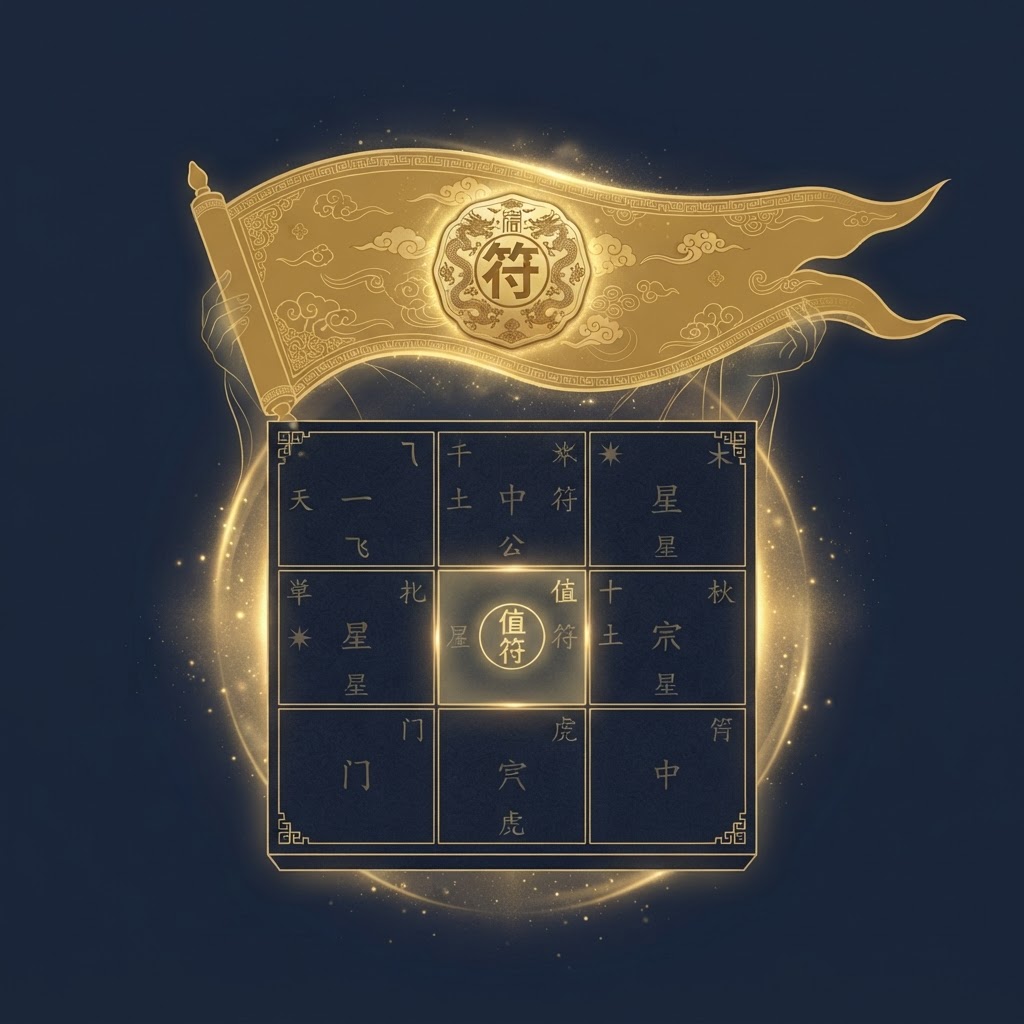
A student sitting in the second row of an advanced masterclass raised his hand, holding a freshly printed hour chart across his laptop screen. "Master Chan," he asked, "if Zhi Fu is the supreme Leader Deity and neutralizes a hundred harms, why did my corporate client suffer a severe regulatory penalty even though their expansion permit was filed during an hour when Zhi Fu sat directly in the focus palace?" I looked at the structure displayed on his screen. The hour chart showed Zhi Fu sitting in Palace 4 Southeast, but the palace was struck by Emptiness, paired with Geng on the Heaven Plate, and Open Door was crushed under severe Men Po pressure by the hosting Wood element. The student had seen the characters for Zhi Fu, assumed absolute executive protection, and advised his client to submit the paperwork immediately. He had mistaken a structural title for an unconditional shield.
To master Qi Men Dun Jia, you must abandon the superficial belief that the deity layer acts as a magical charm that overrides mathematical reality. Among the eight deities, Zhi Fu (值符), known in English as the Leader, stands as the first and supreme spirit. In ancient military manual literature, Zhi Fu was recognized as the supreme commander of the chart. It governs executive authority, institutional legitimacy, regulatory approval, official seals, sovereign protection, and top-tier leadership. Yet, its power is structural, not magical. Zhi Fu anchors the orientation of the entire deity ring, following the Value Star from palace to palace across the nine palaces of the Lo Shu grid.
When you evaluate a chart for corporate governance, licensing, board disputes, or strategic mergers, the presence of the Leader Deity establishes whether the action carries official standing, executive backing, and procedural legitimacy. If Zhi Fu supports your focus palace, your initiative aligns with established authority and regulatory standards. However, if that palace is hollowed out by Emptiness, torn by stem clashes, or choked by door pressure, even the supreme Leader Deity cannot transform a flawed operational reality into a successful outcome. Understanding how Zhi Fu operates across the five layers of the chart is what separates an amateur who memorizes favorable names from a professional practitioner who delivers accurate, actionable strategic counsel.
The Leader Deity grants institutional legitimacy and administrative standing, but it never excuses poor operational math or unverified documentation.
In the broader architecture of Qi Men Dun Jia, the eight deities represent the overarching environmental atmosphere and spiritual governance of an hour chart. While the Earth Plate establishes historical roots, the Heaven Plate governs current momentum, the nine stars dictate cosmic timing, and the eight doors direct human action, the deity layer defines the subtle intentions, invisible forces, and institutional alignment surrounding the query. As the premier deity, Zhi Fu commands the remaining seven spirits: Teng She Serpent, Tai Yin Darkness, Liu He Partner, Bai Hu White Tiger, Xuan Wu Black Tortoise, Jiu Di Nine Earth, and Jiu Tian Nine Heaven. Where the Leader sits, order is established, lower-level deceptions retreat, and administrative legitimacy takes precedence over informal maneuvering.
The Architecture of Command: Defining Zhi Fu in Classical Metaphysics
In classical Chinese metaphysics, Zhi Fu is the primary spirit among the eight deities. Translated as the Leader, it carries the elemental character of Earth, specifically the refined, central Earth that stabilizes and commands all peripheral movements. Unlike the physical stems on the Earth Plate or Heaven Plate, which represent concrete material resources and active forces, the deity layer operates as an overarching atmospheric directive. It shapes the intent of the environment, the posture of authority figures, and the legal or institutional framework surrounding a transaction. When Zhi Fu anchors a palace, that palace gains the endorsement of sovereign authority. In a corporate query, this corresponds to the chief executive officer, the board of directors, the primary regulatory tribunal, or the state licensing authority.
The privileged position of Zhi Fu stems from its direct connection to Jia (甲), the Hidden Marshal. In Qi Men Dun Jia, Jia represents the supreme commander who remains concealed behind the six instruments (Wu, Ji, Geng, Xin, Ren, Gui). Because Jia is the sovereign head of the chart, it requires an active representative on the deity layer to project authority across the board. Zhi Fu serves as this active representative. Wherever Zhi Fu moves, the authority of the sovereign Marshal is felt. This explains why ancient texts refer to Zhi Fu as the guardian of the commander. It shields top leadership from treason, surprise military strikes, and unprovoked legal attacks by creating an environment where formal rules, chain of command, and legitimate procedure prevail over arbitrary force.
For modern practitioners advising corporations, institutional investors, and senior executives, recognizing the presence of Zhi Fu provides critical strategic clarity. In negotiations, a party aligned with Zhi Fu holds the moral high ground, official sanction, or superior legal title. They do not need to rely on high-pressure tactics or stealth maneuvering; their position is anchored by institutional legitimacy. Conversely, a party operating in a palace opposite or disconnected from Zhi Fu is playing the role of an insurgent or challenger. While an insurgent can succeed through speed or market disruption, they must recognize that they are acting outside official backing. If a legal dispute or regulatory review arises, the party supported by Zhi Fu holds the structural advantage in courtrooms and administrative hearings.
Furthermore, Zhi Fu embodies institutional protection. When a business owner asks whether a proposed expansion will face hostile government intervention or predatory competitor litigation, locating Zhi Fu reveals where official protection resides. If the Leader Deity aligns with your Day Stem or the focus palace of your enterprise, regulatory bodies view your operation as compliant and valuable. If Zhi Fu resides in an opposing palace, regulatory scrutiny will be directed toward your firm, examining every contract, tax filing, and operational standard. The Leader Deity does not grant immunity from investigation, but it dictates whether institutional power operates as your shield or your prosecutor.
It is also vital to distinguish Zhi Fu as a deity from the physical stems representing executive officers on the Heaven Plate. A common misconception among novice practitioners is assuming that Zhi Fu represents a single living individual. In professional execution, Zhi Fu represents the institutional authority surrounding the individual. A chief executive sitting in a palace with Zhi Fu commands the institutional machinery of the corporation. If that same chief executive moves to a palace occupied by Teng She Serpent or Xuan Wu Black Tortoise, their personal title remains unchanged, but they lose institutional backing, facing internal insubordination, legal doubt, and shifting corporate alliances. Authority in Qi Men Dun Jia is not a static title; it is a dynamic spatial relation governed by Zhi Fu.
Mechanics of Movement: How the Leader Tracks the Value Star Across the Nine Palaces
To analyze Zhi Fu with technical precision, you must understand the exact mathematical sequence that places it on the chart. Zhi Fu does not land randomly, nor is its position chosen by personal intuition. Its placement is dictated by the sixty-hour block (Ju) and the movement of the hour stem across the Heaven Plate. Every sixty-hour block is governed by a specific Value Star (Zhi Fu Star) and Value Door (Zhi Shi Door), which are derived from the Fu Tou (block leader) on the sexagenary calendar.
The calculation sequence follows three strict steps:
- First: Identify the Lead Instrument. Determine the current sixty-hour block leader (Jia-Zi Wu, Jia-Xu Ji, Jia-Shen Geng, Jia-Wu Xin, Jia-Chen Ren, or Jia-Yin Gui). The heavenly stem hiding the Marshal Jia in that sixty-hour period determines the active Value Star on the star layer.
- Second: Locate the Hour Stem on the Heaven Plate. Find the palace where the stem of the current hour sits on the Heaven Plate after the rotational shift of the chart. The Value Star moves directly to this palace.
- Third: Anchor the Leader Deity. Zhi Fu attaches itself to the Value Star. Wherever the Value Star lands on the Heaven Plate, Zhi Fu takes its seat on the deity layer in that exact same palace.
Once Zhi Fu establishes its primary seat, the remaining seven deities step around the eight outer palaces of the Lo Shu grid (Palaces 1, 8, 3, 4, 9, 2, 7, and 6), completely bypassing Palace 5 Center. The direction of stepping depends strictly on whether the chart operates under Yang Dun or Yin Dun:
In Yang Dun (Winter Solstice to Summer Solstice), the deities step in a progressive clockwise direction: Zhi Fu leads, followed by Teng She Serpent, Tai Yin Darkness, Liu He Partner, Bai Hu White Tiger, Xuan Wu Black Tortoise, Jiu Di Nine Earth, and Jiu Tian Nine Heaven.
In Yin Dun (Summer Solstice to Winter Solstice), the sequence of deity titles remains identical, but the deities step in a counter-clockwise direction across the outer palaces: Zhi Fu leads at the Value Star palace, stepping counter-clockwise through Teng She Serpent, Tai Yin Darkness, Liu He Partner, Bai Hu White Tiger, Xuan Wu Black Tortoise, Jiu Di Nine Earth, and Jiu Tian Nine Heaven.
Because Zhi Fu strictly follows the Value Star, it functions as the structural bridge between time and space. The Value Star represents the cosmic timing mechanism of the hour, while the palace represents physical territory. By attaching itself to the Value Star, Zhi Fu ensures that sovereign authority is anchored to the exact spatial vector activated by that hour. If the hour stem lands in Palace 9 South Fire, Zhi Fu takes seat in Palace 9, bringing institutional authority and high visibility to Fire-related matters. If the hour stem lands in Palace 1 North Water, Zhi Fu moves to Palace 1, lending official governance to covert strategies, deep planning, and foundational negotiations.
This tracking mechanism reveals why Zhi Fu is considered the anchor of chart stability. While doors, stems, and stars rotate according to their respective rules, the deity ring remains locked in exact proportion around Zhi Fu. If you know where Zhi Fu sits, you can instantly calculate the position of every other deity on the board without looking at software. In high-stakes strategic consultations where fast decisions are required, identifying Zhi Fu provides an immediate map of where executive power, legal cover, covert support, and hostile pressure reside.
Rotation Cadence: Why No Palace Owns the Leader
Across the 1080 ju, the Leader's position is never a fixed address. Because Zhi Fu follows the Value Star, and the Value Star follows the hour stem through the rotation of the heaven plate, the Leader migrates through the palaces in the steady cadence of the hour cycle rather than by the palace-native logic that fixes the doors' homes. This has one enormous practical consequence: you cannot pre-commit to a favorite palace and you cannot memorize a lucky position. Every single chart must be read fresh, because the commander of the deity layer is precisely the member that moves. I remind students of this whenever they ask for a cheat table of fixed meanings; the only fixed truth about Zhi Fu is the function it carries, and the function travels.
The Protective Weight: Neutralizing Harm and Elevating Chart Baselines
In classical Qi Men Dun Jia literature, a famous axiom states: "Where the Leader arrives, a hundred spirits retreat; all harms are neutralized" (值符所到之处,百神避让,诸恶莫犯). For centuries, amateur practitioners have misinterpreted this sentence, treating Zhi Fu as an absolute force field that cancels out bad doors, negative stems, and unfavorable seasonal timing. In professional consultations, we analyze this protective weight through a rigorous structural lens rather than relying on mythical generalizations.
What does "neutralizing harm" mean in modern execution? It means that Zhi Fu raises the baseline operational threshold of any palace it occupies. When negative components land in the same palace as Zhi Fu, their destructive expression is muted, redirected, or forced into administrative compliance:
- Deception Suppression: The shadow tactics of Xuan Wu Black Tortoise or the shifting anxiety of Teng She Serpent cannot flourish in the same space where Zhi Fu commands. Under official institutional oversight, fraudulent claims, informal kickbacks, and covert sabotage are quickly exposed or rendered ineffective.
- Aggression Neutralization: The brutal physical or legal force of Bai Hu White Tiger is tamed by Zhi Fu. Instead of an unconstrained hostile takeover or violent breach, Bai Hu under Zhi Fu's watch manifests as a formal regulatory audit, a court-sanctioned compliance review, or a structured legal settlement.
- Door Tempering: Inauspicious doors lose their raw destructive sharpness. Injury Door paired with Zhi Fu transforms from physical injury or loss into an official enforcement action backed by legal authority. Dispute Door paired with Zhi Fu becomes a formal tribunal hearing under strict judicial procedure rather than chaotic public panicking.
The protective shield of Zhi Fu operates by introducing institutional structure. When a business enters a high-risk transaction during an hour where Zhi Fu supports their focus palace, competitors and hostile counter-parties are constrained by legal contracts, regulatory oversight, and administrative standards. Hostile actors find it difficult to execute illegal maneuvers because the environment is fully illuminated by official authority.
However, practitioners must understand the strict limits of this protection. Zhi Fu does not alter elemental math. If a Fire palace burns a Metal stem, or if a stem clash like Geng cutting Jia occurs, Zhi Fu does not erase the clash. Instead, Zhi Fu ensures that the clash takes place within legitimate legal and institutional boundaries. The corporate restructure will still occur, the contract dispute will still proceed, and the financial liability must still be settled, but the process will follow formal corporate governance rather than degenerating into lawless chaos.
What the Protective Field Looks Like in Practice
In consultation work, the Leader's protective weight shows up as process immunity rather than as visible drama. Clients filing under a healthy Zhi Fu routinely report the same quiet pattern: reviewers return their documents in the first pass, unusual requests for supplementary evidence never materialize, and counterparts who were expected to raise objections simply let deadlines lapse. Nothing dramatic occurs, and that is exactly the signature. Compare a parallel filing under an afflicted Leader, where the same documents attract three rounds of queries, an unexpected departmental reassignment freezes the queue, and a previously silent stakeholder surfaces with a formal objection in the final week. The deity layer does not write the plot; it sets the level of institutional weather the plot must survive in.
Zhi Fu Paired with the Eight Doors: Operational Authority and Institutional Dynamics
While Zhi Fu provides overarching executive authority, its real-world execution is channeled through the eight doors. In Qi Men Dun Jia, doors represent human action, operational vectors, and tactical decisions. When the Leader Deity pairs with a specific door, it imparts institutional backing and legal legitimacy to that door's primary activity. Below is a comprehensive analysis of how Zhi Fu interacts across all eight doors in strategic consultations.
| Door Pairing | Operational Character | Authority Status | Strategic Risk |
|---|---|---|---|
| Open Door (Kai Men) | Institutional clearance, corporate launch, public charter. | Supreme official endorsement. | Public scrutiny of minor flaws. |
| Life Door (Sheng Men) | Sovereign funding, backed capital, treasury growth. | Protected corporate asset base. | Capital lockup in formal structures. |
| Rest Door (Xiu Men) | Executive diplomacy, calm transition, arbitration. | Peaceful administrative consensus. | Complacency during urgent crises. |
| Injury Door (Shang Men) | Regulatory enforcement, compliance audit, debt recovery. | Court-backed punitive action. | Aggressive legal friction and friction costs. |
| Obstruct Door (Du Men) | Classified executive sessions, trade secrets, security. | Official confidentiality order. | Communication bottlenecks and delay. |
| View Door (Jing Men) | High-visibility announcements, legal filings, charters. | Official public disclosures. | Sensationalized press exposure. |
| Death Door (Si Men) | Corporate restructuring, mandatory liquidation, exit. | Formal asset seizure or dissolution. | Rigid deadlock without compromise. |
| Dispute Door (Jing Men) | Boardroom litigation, regulatory tribunal hearings. | Judicial combat under formal law. | High legal fees and alarmism. |
When Zhi Fu pairs with Open Door, the combination represents peak institutional authority. This is the premier vector for submitting national licensing applications, launching corporate initial public offerings, or issuing executive decrees. Life Door with Zhi Fu provides sovereign protection over commercial treasury assets, making it ideal for acquiring prime commercial real estate or securing long-term institutional funding lines. Rest Door with Zhi Fu ensures peaceful board mediation, allowing conflicting factions to reach a legally binding compromise without destroying corporate goodwill.
Conversely, pairing Zhi Fu with Obstruct Door creates an impenetrable wall of executive secrecy. In corporate strategy, this combination is selected when executing confidential mergers, shielding proprietary patent designs during patent office examination, or conducting classified internal investigations before public disclosure. When paired with View Door, Zhi Fu amplifies public visibility, ensuring that corporate press releases and legal charters receive widespread official recognition and positive market reception.
Heavenly Stem and Nine Star Synergies: Aligning Command with Environmental Forces
To fully evaluate Zhi Fu's operational capacity, you must analyze its interaction with the heavenly stems sitting on the Heaven Plate and Earth Plate, as well as the environmental timing provided by the nine stars. Heavenly stems represent active material resources and personnel, while stars govern large-scale environmental trends and macroeconomic timing.
When Zhi Fu aligns with specific heavenly stems, distinct command dynamics emerge:
| Stem Combination | Structural Dynamic | Real-World Execution |
|---|---|---|
| Zhi Fu + Wu (Jia) | The Commander meets the Lead Capital Shield. | Peak capital backing, sovereign capital injection, massive financial authority. |
| Zhi Fu + Bing | The Leader meets the Solar Noble. | Irresistible administrative force, rapid executive sign-off, high public acclaim. |
| Zhi Fu + Ding | The Leader meets the Precision Cultural Flame. | Flawless contractual drafting, precise administrative decrees, written licenses. |
| Zhi Fu + Geng | The Leader meets the Chief Opponent. | Severe executive clash, board rebellion, regulatory sanctions, direct confrontation. |
| Zhi Fu + Xin | The Leader meets Small Sharp Metal. | Institutional restructuring, minor legal errors requiring formal correction. |
| Zhi Fu + Ren / Gui | The Leader meets Moving Water / Underground Rain. | Complex international logistics, state-monitored capital flows, regulatory surveillance. |
When Zhi Fu meets Bing or Ding, executive authority is carried on a wave of administrative light; when Zhi Fu meets Geng, authority is challenged by hard institutional resistance.
On the star layer, Zhi Fu's performance is deeply influenced by the hosting star. When paired with Tian Fu Advisor Star, the Leader operates through policy formulation, scholarly authority, legal drafting, and institutional wisdom. Paired with Tian Xin Diplomat Star, Zhi Fu exhibits sharp executive strategy, corporate architecture, and medical governance. When landing with Tian Qin Minister Star in the central pivot position, Zhi Fu commands unshakeable sovereign weight, providing foundational stability to the entire chart.
However, if Zhi Fu pairs with problematic stars, its expression adapts to the environmental timing. Paired with Tian Peng Bandit Star, Zhi Fu governs high-stakes corporate takeovers or bold asset acquisitions conducted under an official corporate banner. Paired with Tian Rui Problem Star, Zhi Fu indicates a formal regulatory audit or institutional inspection designed to identify and repair systemic operational flaws within the organization.
A Worked Mini-Example: Zhi Fu with View Door in Palace 9
Take an hour chart in which Zhi Fu shares Palace 9 South with the View Door. The View Door governs visibility, documents and public displays, and Palace 9 is the palace of fire, culture and public attention. Read together, this trio tells you the authority in question will be exercised publicly and through documents: think of a public listing announcement, a patent publication, or a ministerial press release. Now add the seasonal layer. In a summer chart, fire is prosperous and the display carries real force; in a winter chart, the same trio produces a launch that looks impressive but processes slowly, and my honest advice changes from "announce now" to "announce now, but pre-file everything quietly beforehand". This is how a practitioner thinks: not "Zhi Fu plus View Door equals good", but a specific institutional weather report for a specific client in a specific month.
Structural Impairments: Evaluating Emptiness, Palace Clashes, and Door Pressure
Even the supreme Leader Deity is subject to structural mechanics. When Zhi Fu lands in a palace afflicted by severe structural flaws, its protective weight is compromised, leading to misreadings if the practitioner fails to analyze all five layers of the chart.
| Structural Impairment | Chart Condition | Operational Impact on Zhi Fu |
|---|---|---|
| Emptiness (Xu Wang) | Palace void of Earthly Branch support. | Hollow authority, paper decrees, absent leadership, unbacked guarantees. |
| Fan Yin Reversal | Heaven Plate directly opposes Earth Plate across center. | Contested legitimacy, executive removal, rapid policy reversals. |
| Door Pressure (Men Po) | Hosting palace element suppresses door element. | Administrative friction, operational bottlenecks beneath executive backing. |
| Direct Stem Clash | Geng cuts Jia or Bing clashes Geng in palace. | Boardroom warfare, active litigation, regulatory sanctions. |
When Zhi Fu lands in Emptiness (Xu Wang), the executive authority promised by the deity becomes hollow. In corporate consultations, an empty Leader palace signifies a CEO who lacks board support, an official license that contains invalid clauses, or a government memorandum of understanding that carries no budget backing. The appearance of authority remains, but the structural substance is absent.
In Fan Yin charts, where all heaven plate stems and stars sit opposite their native home, Zhi Fu's presence indicates rapid executive turnover or violent policy reversals. While Zhi Fu protects the institutional integrity of the corporation, the executive team occupying the palace will face sudden dismissal or forced reorganization as the chart's reversing energy takes effect.
Grading Affliction Severity Under the Leader
Not all afflictions wound the Leader equally, and my severity grading keeps verdicts honest. Emptiness in the Leader's palace is the heaviest wound: the mandate exists but its enforcement evaporates, so expect paper authority and real-world stalling. A palace clash to the Leader's position is the second wound: authority faces open opposition, which is dangerous for approvals but can actually serve confrontation strategies when the client knows the risk. Men Po pressure on the Leader's palace is the third wound: documents and filings attract scrutiny, so every submission must be immaculate. An incoming controlling palace is the mildest wound: friction is present but manageable with strong supporting structure. I record the grade in writing before advising, because the difference between a weak verdict and a moderate verdict changes the client's calendar, budget and staffing, and those decisions deserve to rest on graded facts rather than adjectives.
Case Study One: Government Licensing and Institutional Regulatory Approval
To demonstrate how Zhi Fu functions in live institutional consultations, let us examine a worked case from my consultation files involving a biomedical technology firm seeking national regulatory approval for a proprietary diagnostic platform in 2026.
Consultation Details: The board of directors requested date selection and strategic evaluation for submitting their formal clearance dossier to the health ministry. The query was cast on May 18, 2026, at 10:00 AM (Si Hour).
Four Pillars: Bing-Wu Year, Gui-Si Month, Ren-Chen Day, Ding-Si Hour.
Solar Term: Li Xia (Summer Commences). Fu Tou: Jia-Shen (Middle Yuan).
Chart Structure: Yang Dun 2 Ju. Lead Instrument: Jia-Yin Gui (Value Star Tian Fu, Value Door Du Men).
Five-Layer Palace Breakdown (Focus Palace 4 Southeast Xun Wood):
- Deity Layer: Zhi Fu (Leader Deity) resides in Palace 4 Southeast, anchoring executive backing and official regulatory oversight.
- Heaven Plate Stem: Ding (Cultural Flame / Precision Noble) sits over Ren on the Earth Plate. Ding represents written permits, official stamps, and precise contract terms. The combination of Ding over Ren forms the Noble Harmony structure.
- Nine Stars: Tian Fu Advisor Star resides in Palace 4 Xun Wood, operating in its native home and enjoying prosperous seasonal strength in late Spring. Tian Fu represents policy compliance and rigorous academic validation.
- Eight Doors: Open Door (Kai Men) sits in Palace 4 Southeast. Open Door belongs to Metal. Metal in Xun Wood Palace creates Door Pressing Palace (Men Po), indicating administrative friction between the applicant's filing and local ministry bureaucratic procedures.
- Earth Plate Stem: Ren Water sits on the Earth Plate, nourished by Metal and generating Xun Wood, providing steady underlying capital flow.
Host-Guest Dynamics: The regulatory agency acts as the Host (Earth Plate Ren Water in Palace 4), while the biomedical applicant acts as the Guest (Heaven Plate Ding Fire / Hour Stem). Because Ding and Ren combine harmoniously, and Zhi Fu commands the palace, the Guest achieves a highly favorable reception from the Host. The Men Po friction on Open Door represents procedural delay, not rejection.
Verdict and Strategic Advice: The filing was executed during the designated Si hour. As predicted by the chart, the health ministry granted official regulatory clearance four weeks later, requesting only minor adjustments to the secondary packaging documentation. The presence of Zhi Fu combined with Ding over Ren ensured sovereign approval, while anticipating the Men Po pressure allowed the firm to navigate administrative requirements smoothly.
Follow-Through Analysis: What Happened After Filing
The client filed in the selected hour and the licensing process behaved almost exactly as the chart predicted. The first-round review returned only minor document queries during a week when a follow-up chart showed Zhi Fu still holding its ground, and the client cleared them in days rather than weeks. The final approval letter arrived one week ahead of the department's published service standard. In my written follow-up, I noted that the outcome was not luck and not magic: the selected hour simply placed the client's institutional request inside a window where the authority structure of the moment was intact, unafflicted and seasonally supported, so the process ran at its natural best speed instead of fighting friction.
I include this follow-through in my teaching because students rarely see what happens after the verdict. The chart is not a guarantee that the license arrives; it is a scheduling decision that removes avoidable friction. The client still prepared complete documents, still responded promptly and still behaved like a credible applicant. Zhi Fu opened the door of legitimacy; walking through it remained human work.
Case Study Two: Corporate Leadership Succession and Boardroom Authority Battles
Our second case study examines a high-stakes corporate succession dispute within a publicly listed multinational logistics firm in 2026. The board of directors was divided between appointing an internal Chief Operating Officer (supported by the founder) or hiring an external turnaround specialist (backed by institutional private equity funds).
Consultation Details: The lead independent director consulted my desk to evaluate the structural stability of the upcoming board vote scheduled for August 22, 2026, at 3:00 PM (Shen Hour).
Four Pillars: Bing-Wu Year, Bing-Shen Month, Wu-Chen Day, Geng-Shen Hour.
Solar Term: Li Qiu (Autumn Commences). Fu Tou: Jia-Zi (Upper Yuan).
Chart Structure: Yin Dun 2 Ju. Lead Instrument: Jia-Yin Gui (Value Star Tian Ren, Value Door Sheng Men).
Five-Layer Palace Breakdown (Focus Palace 9 South Li Fire):
- Deity Layer: Zhi Fu (Leader Deity) sits in Palace 9 South Fire, representing the chief executive seat and the board chairman's formal authority.
- Heaven Plate Stem: Geng (Chief Opponent) sits on the Heaven Plate over Bing on the Earth Plate. Geng over Bing forms the dangerous structure Tai Bai Ru Ying (White Tiger Entering the Net), signaling acute conflict, public exposure, and aggressive structural opposition.
- Nine Stars: Tian Ying Fearless Star resides in Palace 9 Li Fire, operating in its native home during Autumn. Tian Ying amplifies public heat, media visibility, and tense boardroom debate.
- Eight Doors: View Door (Jing Men) sits in Palace 9 Fire, governing public governance charters, board resolutions, and press briefings.
- Palace Condition: Palace 9 South Fire is struck by Emptiness (Xu Wang) on the hour branch calculation for Shen hour in the Wu-Chen day stream.
Host-Guest Analysis: The internal COO candidate is represented by the Day Stem (Wu Earth in Palace 8 Northeast), supported by Life Door and Tian Ren Doctor Star. The external challenger is represented by the Hour Stem (Geng Metal in Palace 9 South Fire), paired with Zhi Fu, View Door, and Tian Ying Star.
While the external candidate claimed executive backing (Zhi Fu in Palace 9), the palace was hollowed out by Emptiness and torn by the Geng over Bing clash. The apparent private equity backing was unstable, relying on uncommitted capital pledges. Conversely, the internal COO in Palace 8 held solid Earth backing, steady capital flow, and strong operational alignment with the company's core assets.
Verdict and Strategic Advice: I advised the board chairman that appointing the external candidate under the August 22 hour chart would lead to severe public governance litigation, shareholder leaks, and eventual board removal due to the hollow Zhi Fu in Emptiness paired with Geng over Bing. I recommended delaying the formal vote by two weeks and confirming the internal COO. The board followed this strategy: the external candidate's private equity consortium withdrew their pledge ten days later when audited liabilities came to light, and the internal COO assumed executive leadership smoothly without public controversy.
Follow-Through Analysis: The Succession Vote
The board vote took place on the date chosen from the candidate chart series. The favored candidate secured the position on the first ballot with a margin wider than any observer predicted, while the counter-candidate's campaign, which had relied on a series of informal pledges gathered during a period when their own repeated charts showed Zhi Fu drifting into emptied ground, dissolved quietly a week before the vote when two key backers switched sides. In the debrief with my student, I emphasized the structural reading: one camp had planned its moves inside windows where the legitimacy structure of each moment was whole, and the other had spent its credibility during windows where it was not. That is the difference the Leader makes across a sequence of decisions, not the superstition of a lucky day.
Seasonal Command: How the Leader's Authority Rises and Falls Through the Year
Zhi Fu never carries the same weight in every month. Because the Leader follows the Value Star into a palace whose element changes with each of the 1080 ju, and because the chart is cast inside a season that strengthens or weakens that element, the practical authority of Zhi Fu rises and falls through the year in a predictable rhythm. Students who ignore this layer frequently misjudge a chart, reading a summer Leader with the same confidence as an autumn Leader and then wondering why the client's regulatory approval stalled.
The classical yardstick for this judgment is the seasonal cycle of prosperity, Wang Xiang Xiu Qiu Si (旺相休囚死). Each element peaks in its own season, is nourished in the season that produces it, rests while its child prospers, becomes trapped fighting the element it cannot overcome, and lies restricted in the season of the element that controls it. When you locate the palace hosting Zhi Fu and identify its element, you read the Leader's seasonal grade from that element, not from Zhi Fu itself. The deity borrows the ground it stands on.
| Palace Element Hosting Zhi Fu | Strongest Season | Weakest Season | Practical Reading |
|---|---|---|---|
| Metal (Palaces 6, 7) | Autumn | Summer | Institutional authority peaks; file formal applications in autumn windows |
| Wood (Palaces 3, 4) | Spring | Autumn | Authority expressed through growth initiatives; avoid metal-cut timing in autumn |
| Water (Palace 1) | Winter | Late summer earth months | Command flows through negotiation and intelligence; liquidity season for approvals |
| Fire (Palace 9) | Summer | Winter | Authority is loud and public but burns reserves fast; move quickly |
| Earth (Palaces 2, 5, 8) | Transitional earth months | Spring | Authority consolidates slowly; excellent for long institutional plays |
Two practical rules follow from this table. First, when a client asks me to pick a filing date for a government license, I hunt for an hour chart where Zhi Fu lands in a palace whose element is seasonally strong and unafflicted, because the same deity in a weakened palace grants legitimacy on paper but delivers sluggish processing in the real world. Second, when I see the Leader in a seasonally exhausted palace, I adjust my advice downward honestly: the client still has legitimacy, but every approval will take more documents, more follow-ups and more patience than the chart's surface suggests.
The Lunar Cycle Overlay: Timing Submissions Within the Month
Inside any season, the lunar month adds a second, finer rhythm. In the days approaching a new moon, yin energy dominates and institutional machinery moves slowly, so even a well-placed Leader produces delays in document processing. In the week after the full moon, the expansive phase favors public announcements, board ratifications and the release of decisions that were prepared quietly. I teach students to schedule the submission of authority-dependent documents inside the waxing half of the lunar month whenever the seasonal grade permits it, and to use the waning half for the preparation and internal review of those same documents. This double overlay, season plus lunar phase, costs you thirty seconds of analysis and saves clients weeks of calendar friction.
Honest Boundaries: What the Leader Deity Can Mitigate and What It Cannot Override
A professional practitioner must maintain absolute intellectual honesty regarding the limits of Qi Men Dun Jia. In consultation, clients frequently hope that placing their enterprise under Zhi Fu will magically fix fundamental commercial flaws, resolve unpayable debt, or force an unwilling partner into agreement. Zhi Fu is a powerful structural tool, but it is not a substitute for commercial reality.
Below is an explicit summary of what Zhi Fu can mitigate versus what it cannot override:
- What Zhi Fu CAN Mitigate:
- Dampens minor administrative errors and technical oversights in regulatory filings.
- Protects executive management from covert slander, anonymous leaks, and informal sabotage.
- Forces hostile litigation into structured, court-monitored arbitration where legal rules apply.
- Raises the operational baseline of an inauspicious door, converting raw destruction into formal process.
- Provides institutional standing that allows a small firm to negotiate credibly with large corporations.
- What Zhi Fu CANNOT Override:
- Cannot transform a loss-making business model into a profitable enterprise without Life Door support.
- Cannot fill an empty palace (Xu Wang) with real capital; a hollow Leader remains a paper title.
- Cannot prevent a direct Geng stem clash from causing structural reorganization and personnel changes.
- Cannot force a judge or regulator to approve an illegal filing that violates statutory law.
- Cannot overcome severe seasonal decay (Si/Qiu state) without substantial time and budget reserves.
When you advise corporate executives, always explain that Zhi Fu provides the administrative shield and institutional arena. The outcome within that arena depends on the client's operational preparation, legal compliance, and financial resources. Qi Men Dun Jia aligns human strategy with cosmic and spatial timing; it does not replace operational competence.
What Remediation Honestly Means Under the Leader
When a client insists on proceeding under a weakened Zhi Fu, remediation in my practice means friction management, not miracle manufacturing. It means scheduling the unavoidable steps inside the strongest available sub-windows, front-loading document completeness so reviewers never gain a procedural excuse, naming a second-in-command to keep the structure alive if the principal becomes the target of pressure, and writing escalation paths in advance so delays have a protocol instead of a panic. I tell the client plainly: the chart is weak, so the plan must be strong. Some clients find that sentence unromantic; the ones who take it build institutions that survive the seasons when the Leader is elsewhere.
Comparative Authority: The Leader Beside Partner, Nine Heaven and Darkness
Students often ask me how to tell the Leader's influence apart from three neighbors that also carry favorable reputations: Liu He, the Partner; Jiu Tian, Nine Heaven; and Tai Yin, Darkness. All four can appear supportive in a reading, but they support different things, and confusing them produces advice that sounds wise and fails in practice.
Zhi Fu confers legitimacy and command. It answers the question: does this person or venture carry recognized authority, and can decisions be enforced? Liu He confers connection. It answers: who will broker, witness or join this effort, and will the contract hold? Jiu Tian confers elevation and visibility. It answers: will this effort rise, travel and be seen at altitude? Tai Yin confers concealed support. It answers: is there quiet help working out of sight, through documents, plans and private endorsements? In a leadership appointment chart, Zhi Fu proves the mandate, Liu He proves the alliance that secured it, Jiu Tian proves the public elevation, and Tai Yin proves the behind-the-scenes sponsorship. A complete reading names all four; a lazy reading merges them into a vague cloud of good luck.
| Deity | Core Gift | Signature Question It Answers | Business Manifestation |
|---|---|---|---|
| Zhi Fu, the Leader | Legitimacy and command | Is the mandate real and enforceable? | Licenses, appointments, board authority |
| Liu He, the Partner | Alliance and mediation | Who joins, brokers or witnesses? | Contracts, joint ventures, middlemen |
| Jiu Tian, Nine Heaven | Elevation and reach | Will it rise and travel far? | Expansion, travel, publicity at altitude |
| Tai Yin, Darkness | Concealed support | Is help working unseen? | Private endorsements, quiet planning |
When two of these deities reinforce each other through palace proximity, note the pairing explicitly in your written analysis. Zhi Fu with Jiu Tian nearby suggests an authority that will be publicly celebrated, ideal for launch ceremonies and public appointments. Zhi Fu with Tai Yin nearby suggests authority granted through quiet channels, ideal for backdoor negotiations and pre-announcement positioning. Zhi Fu with Liu He nearby suggests authority that depends on a key partner, so your advice must include protecting that relationship contractually.
Legitimacy without alliance is a throne with no court; alliance without legitimacy is a court with no throne.
Practical Traps: Six Costly Errors Practitioners Make with Zhi Fu
Over decades of teaching practitioners around the world, I have identified six recurring analytical traps when reading Zhi Fu in live charts. Avoiding these mistakes is essential for maintaining professional accuracy.
- Trap 1: Confusing the Leader Deity with the Value Star. The Value Star (Zhi Fu Star) belongs to the Nine Stars layer (cosmic environmental timing), while the Leader Deity (Zhi Fu Spirit) belongs to the Eight Deities layer (atmospheric governance). While they share the same pinyin title and occupy the same palace, their analytical roles are distinct. The star dictates timing and scale, while the deity dictates institutional authority and intent.
- Trap 2: Treating Zhi Fu as an Unconditional Wealth Indicator. Zhi Fu governs authority and legitimacy, not financial profit. Profit is governed primarily by Life Door and the Wu Earth stem. A transaction cast under Zhi Fu with Death Door or Dispute Door may win complete legal approval while losing substantial money in operational overhead.
- Trap 3: Overlooking Emptiness (Xu Wang) in the Leader's Palace. When Zhi Fu sits in an empty palace, practitioners often assume protection still applies. In execution, an empty Leader represents absent leadership or hollow promises. Always verify whether the hosting palace carries Earthly Branch support before promising institutional backing.
- Trap 4: Believing Zhi Fu Erases Direct Stem Clashes. When Geng cuts Jia or Bing clashes Geng inside Zhi Fu's palace, the clash will manifest. Zhi Fu ensures the battle occurs through formal board votes or legal filings rather than physical violence, but the structural disruption remains unavoidable.
- Trap 5: Misinterpreting Host vs Guest Dynamics. If Zhi Fu sits in the focus palace of the Guest (the counter-party), the Guest holds institutional authority, not your client. Advising your client to push aggressively when the opponent holds Zhi Fu is a fatal strategic blunder that leads to administrative sanctions.
- Trap 6: Advising Major Launches Without Checking Seasonal Timeliness. A Leader Deity sitting in Palace 9 South Fire during mid-Winter is severely weakened by seasonal decay (Water prospers in Winter, suppressing Fire). Executive initiatives launched under a decayed Leader require significantly higher effort and capital to achieve traction.
A Field-Tested Evaluation Sequence for the Leader Deity
After years of consultations, I reduced my Zhi Fu analysis to a fixed nine-step sequence. Following it keeps the reading honest, because every step either strengthens or weakens the previous one, and the final verdict can only be as strong as the weakest step. I publish it here so students can adopt the same discipline.
- Locate the palace hosting Zhi Fu and name its element, its direction and its native Lo Shu position. Write these three facts down before interpreting anything.
- Identify the Value Star that Zhi Fu follows, and grade that star's own condition, because the Leader inherits the star's health. A wounded Value Star drags the Leader down with it.
- Grade the palace element seasonally using the Wang Xiang Xiu Qiu Si cycle from the previous section. Note the season of the query date explicitly.
- Read the five relationships between the Leader's palace element and the elements of the neighboring palaces. Mark which palaces produce, control or drain it.
- Check for Emptiness, palace clashes and Men Po pressure on the Leader's palace. Any single affliction caps the verdict at moderate; two or more cap it at weak.
- Identify the door sharing the palace and grade the door and deity as one combined voice, since a door carries the action and Zhi Fu carries the license for it.
- Position the querent's Day Stem palace relative to the Leader's palace. Producer, controller, drainer or supporter: this relationship sets how much of the Leader's authority the client can actually draw.
- Repeat the same positioning for the Hour Stem when the query concerns an external party or institution, and note whether the institution sits inside or outside the Leader's protective field.
- Only now compose the verdict, in plain language, with one concrete recommendation, one caution and one honest limitation. Clients pay for clarity, not for vocabulary.
Reading the Leader Across Repeated Charts
One chart tells you the weather; a series of charts tells you the climate. When a client faces a multi-month institutional process, I cast charts at the natural checkpoints of the process, such as the application date, the expected review date and the decision date, and I track Zhi Fu's palace and condition across all of them. If the Leader holds strong, unafflicted ground across the sequence, I tell the client the process favors them and advise persistence. If the Leader starts strong and weakens toward the decision date, I advise front-loading the effort: submit early, push for interim approvals, and bank progress while the authority is real. If the Leader strengthens toward the decision date, I advise patience and preparation rather than premature escalation.
This repeated-chart method also protects you from the single most embarrassing failure mode in professional practice: giving a confident verdict from one frozen moment about a process that unfolds across months. Institutional authority is a moving quantity. The Leader that blesses the application in March may be sitting in an emptied palace by the June review, and a practitioner who never re-checked will wonder why the ministry that smiled in spring went silent in summer.
The Leader's Path Across One Rotation, Drawn Simply
Students occasionally ask me for one image that summarizes how the Leader moves through a chart session, and after years of sketching it on whiteboards I settled on the diagram below. It shows the three stations the Leader occupies in relation to any query: the command ground where Zhi Fu stands, the request ground where the querent's stem sits, and the decision ground where the matter's significator lands. The relationship arrows between the three stations generate the whole verdict: producing, controlling, draining or matching, read twice, once from the Leader to the client, once from the Leader to the matter.
The diagram earns its place in my teaching file for one reason: it forces the order of analysis. Grade the command ground first, the request ground second, the decision ground third, and only then read the arrows between them. Students who follow the station order stop issuing verdicts from the deity's reputation alone, because the diagram will not let them skip the stations where reputation goes to be tested.
The station diagram also explains a question advanced students eventually ask: why some readings feel complete while others feel thin, even with the same amount of analysis. The difference is almost always the third station. Readings that skip the decision ground produce advice about the client's standing without advice about the matter's condition, and the client walks out knowing their mandate is real but not knowing whether the venture can carry it. The three stations exist because authority readings have three subjects, and a verdict that names only two of them is one subject short of professional.
A closing observation on the diagram's arrows for practitioners who consult across cultures. Clients in different markets parse authority differently: some read command as hierarchy and want the mandate station emphasized, while others read command as accountability and want the decision station emphasized first. The three stations remain identical across every client I have served; only the presentation order changes, and reading the room well enough to choose that order is a professional skill the chart cannot supply.
Order of presentation, then, is the final craft layer of the station method, and it is learned by watching clients, not charts. I teach it last and test it by outcome: the reading that gets acted on is the reading that led with the station the client's culture weights first.
Practitioner FAQ: Eight Essential Questions on the Leader Deity
Below are eight detailed answers to questions frequently asked by advanced practitioners during masterclasses and professional consultation debriefs.
Q1: How does Zhi Fu differ from Liu He Partner Deity when evaluating corporate joint ventures?
Zhi Fu represents top-tier institutional backing, regulatory approval, and sovereign authority. Liu He Partner Deity represents the contractual agreement, middleman mediation, and operational harmony between the two parties. In a merger query, Zhi Fu indicates whether government regulators will approve the transaction, while Liu He indicates whether the two executive teams will work together smoothly post-merger.
Q2: What happens when Zhi Fu and Geng share the same palace on the Heaven Plate?
Geng is the Chief Opponent and the primary obstruction in Qi Men Dun Jia. When Zhi Fu meets Geng, executive authority faces direct confrontation. In business queries, this signals a board of directors revolt, a major regulatory enforcement audit, or a hostile takeover bid. The outcome depends on whether Geng is controlled by the hosting palace element or suppressed by a strong door like Open Door or Life Door.
Q3: Can a small startup leverage Zhi Fu, or does it apply only to multinational corporations?
Zhi Fu applies to any entity seeking institutional legitimacy. For a small startup, aligning with Zhi Fu allows the founders to secure official patent trademarks, gain government innovation grants, or present a credible image to institutional venture capital investors. It provides the startup with formal standing that far exceeds its physical size.
Q4: Is Zhi Fu always favorable in medical or personal health queries?
In health divination, Zhi Fu represents top medical specialists, chief surgeons, and premier hospital institutions. If Zhi Fu aligns with the patient's Day Stem or Tian Ren Doctor Star, it indicates excellent medical treatment under leading experts. However, if the patient's palace sits in Emptiness while Zhi Fu resides elsewhere, top medical care is unavailable or financially out of reach.
Q5: How do I read Zhi Fu if software displays it in Palace 5 Center?
Deities never occupy Palace 5 Center in standard eight-palace Qi Men Dun Jia charting. In Yang Dun and Yin Dun, deities step strictly across the eight outer palaces. If software displays a deity in Palace 5, it reflects a charting display error or an unconventional modern variant. Professional practice requires mapping Palace 5 elements to Palace 2 Southwest or Palace 8 Northeast according to standard charting protocols.
Q6: Does Zhi Fu offer protection during high-stakes court litigation?
Yes, but with precise qualifications. If your client's Day Stem is supported by Zhi Fu, the judge and judicial tribunal view your client as the compliant party holding legitimate legal title. If the opponent's palace holds Zhi Fu, the judge favors the opponent's legal filings. If Zhi Fu sits in an independent palace, judicial authority remains neutral, awaiting formal evidence.
Q7: What is the operational difference between Zhi Fu on the Heaven Plate versus Earth Plate?
Deities do not split between Heaven Plate and Earth Plate; they exist as a single atmospheric layer attached to the Heaven Plate's Value Star position. However, stems exist on both plates. When the lead stem Jia (hidden under Wu) sits on the Heaven Plate with Zhi Fu, current executive momentum is active. When Jia (Wu) sits on the Earth Plate beneath Zhi Fu, authority rests on historical assets, physical real estate, and established organizational foundations.
Q8: How should a strategist act when the target palace contains Life Door but Zhi Fu is in another palace entirely?
This indicates commercial profit potential that lacks official institutional backing. In business execution, you can make substantial short-term commercial profit (Life Door), but you must operate quietly and maintain strict compliance because you do not possess top-level regulatory shielding (Zhi Fu is elsewhere). Avoid aggressive public launches or regulatory challenges until Zhi Fu rotates into alignment with your enterprise.
How I Teach the Leader Deity in First-Year Classes
In my first-year classes I introduce Zhi Fu with a deliberately blunt statement: forget the mystical titles for one moment and think of the deity layer as the weather of the chart. The stars are the terrain, the stems are the roads, the doors are the vehicles, and the deities are the weather that helps or hinders the journey. Zhi Fu is the clearest weather in the system. When it sits with your project, officials sign, systems process, and structures hold. When it is absent or afflicted, the same project must carry its own umbrella.
Then I give students a chart with Zhi Fu prominently placed and ask them to find the failure anyway. This exercise annoys them at first, and that is the point. A Leader sitting in an emptied palace, or standing beside a clashed door, or standing on seasonally exhausted ground is the classic trap chart that separates memorizers from readers. The student who writes "Zhi Fu present, therefore auspicious" has learned a slogan. The student who writes "Zhi Fu present but standing on trapped ground with an emptied palace, therefore the license will be granted on paper but processing will stall" has learned Qi Men Dun Jia.
The Three Sentences I Require in Every Deity Verdict
I grade first-year homework on three sentences. The first sentence must state where Zhi Fu sits and what that palace is worth this season. The second sentence must state what the Leader can and cannot do for this specific querent, given the Day Stem relationship. The third sentence must state the single most honest limitation of the reading. If any of the three is missing, the homework comes back regardless of how elegant the rest of the analysis was. Clients do not pay for elegance; they pay for exactly these three sentences, written in plain language they can act on.
A Classroom Chart That Broke a Slogan
One memorable classroom chart came from a student in my advanced module who asked about a government tender. Zhi Fu sat in Palace 6 Northwest, textbook-perfect for institutional legitimacy, and the student's first draft verdict read like a blessing. Then the class found three quiet afflictions together: the palace's seasonal grade was restricted in a summer chart, the Day Stem of the querent sat in the palace controlling the Leader's ground, and the tender's Hour Stem fell into emptiness. The corrected verdict told the client to submit but expect slow processing and to prepare a second-round follow-up in an autumn window when the same structure would strengthen. The tender was accepted but processed exactly as slowly as predicted, and the client, following the autumn follow-up advice, secured the operational permit weeks before competitors who had filed identical paperwork with no timing strategy at all. The student told me afterwards that this one chart converted Zhi Fu from a lucky charm into a working tool in his mind.
Recording the Reading for Institutional Clients
Institutional clients often need the reading documented for their files, and I developed a simple three-part record. Part one restates the query in neutral institutional language, so a board or compliance officer can follow it. Part two presents the structural findings as findings, with the seasonal grade, afflictions and palace relationships stated as observed facts. Part three gives the recommendation with its date window and its named limitation. This record disciplines me as much as it reassures them, because every claim I make in writing must trace back to the nine-step sequence earlier in this article.
Strategic Synthesis: Exercising Authority with Mathematical Clarity
Mastering Zhi Fu, the Leader Deity, requires bridging the gap between classical theory and modern strategic execution. As the supreme commander of the deity layer, Zhi Fu provides institutional legitimacy, executive authority, regulatory protection, and procedural standing. It anchors the orientation of the entire chart, tracking the Value Star across the nine palaces to ensure that sovereign authority is aligned with time and space.
Yet, true mastery lies in recognizing that Zhi Fu is one component of a five-layer mathematical matrix. Never evaluate the Leader Deity in isolation. Always integrate its atmospheric command with the historical roots of the Earth Plate, the current momentum of the Heaven Plate, the environmental timing of the nine stars, and the human action directed by the eight doors. Verify seasonal timeliness, check for Emptiness (Xu Wang), analyze stem clashes, and evaluate Door Pressure (Men Po) before issuing strategic advice.
When you align your client's initiatives with a fully supported Leader Deity, you grant them the moral high ground, official sanction, and unshakeable institutional standing. When you identify structural impairments in the Leader's palace, you save them from costly regulatory penalties, hollow promises, and disastrous boardroom battles. That is the essence of professional Qi Men Dun Jia: transforming ancient metaphysical principles into precise, actionable strategic governance.
To deepen your mastery of the complete Qi Men Dun Jia system, explore our foundational guide on what is Qi Men Dun Jia, or study the parent overview on the eight deities to understand how Zhi Fu commands the broader spiritual layer across all 1080 ju cycles.
The One-Page Summary I Give Clients
For clients who want the essence of a Zhi Fu reading on one page, I compress the analysis into four lines. First line: where the Leader stands and what that ground is worth this season. Second line: what the structure grants the client's specific matter, stated as a function such as legitimacy, protection or processing speed. Third line: the named limitations, afflictions and honest cautions. Fourth line: the recommended action with its date window. Everything else in this article exists to fill those four lines with verified content rather than hopeful guesswork. If you can produce those four lines from any chart, you can read the Leader deity professionally.