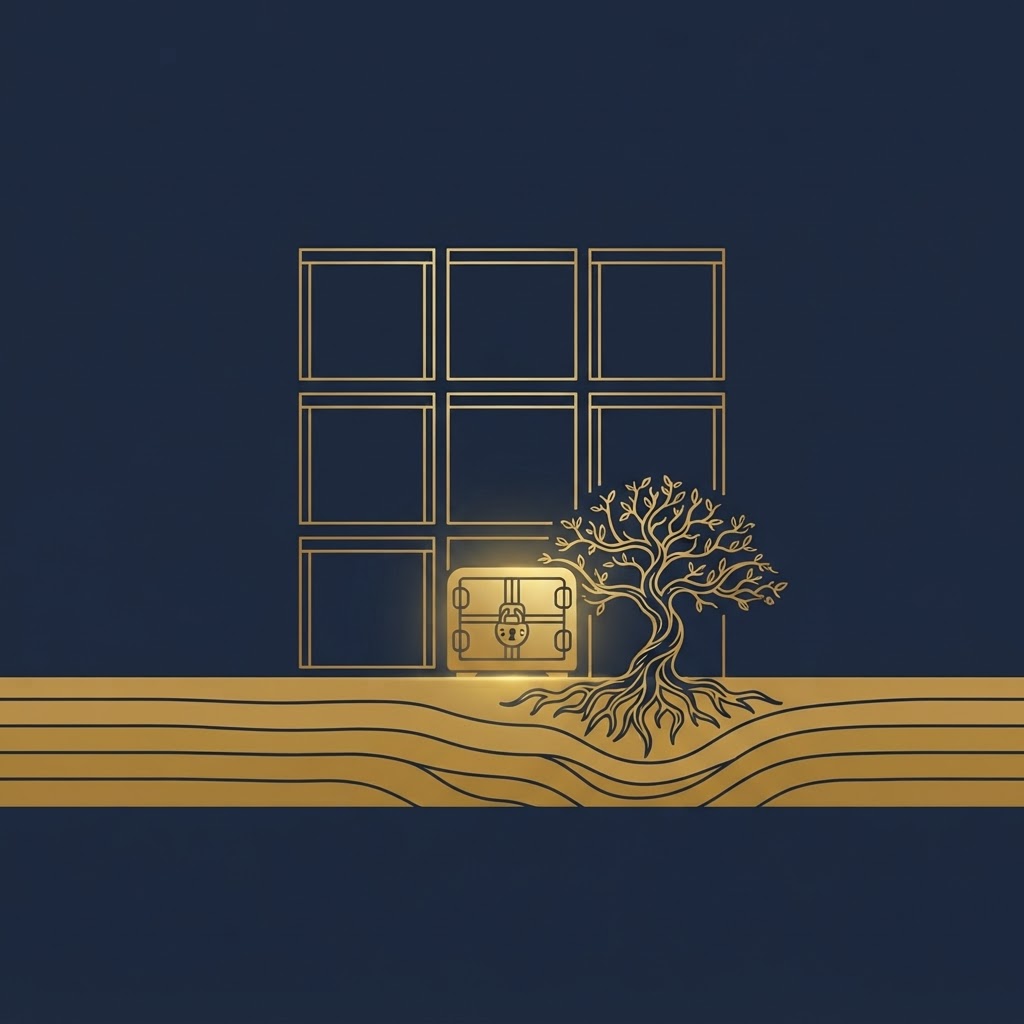
A quiet stillness settled over the ancient stone courtyard as rain dripped steadily from the heavy tiled eaves of the mountain tea storehouse. Outside, storm winds rattled the high bamboo groves, but inside the deep granite vault, the air remained cool, dry, and entirely undisturbed. Century-old wooden beams rested on deep basalt footings, anchoring thousands of kilograms of aging tea bricks in complete darkness. Nothing shifted. Nothing rushed. While the storm reshaped the surface landscape outside, the storehouse held its ground, preserving value that would only deepen with each passing year.
When corporate leaders and private investors first approach Qi Men Dun Jia, their initial questions almost always center on speed, expansion, and aggressive breakthroughs. They want to identify the exact hour to launch a public marketing campaign, execute a hostile acquisition, or outmaneuver a commercial competitor on the open field. Yet, in my decades of advising executives, property developers, and institutional asset managers across international markets, I have observed that long-term survival is rarely determined by how fast an organization runs during a market boom. Survival depends on how firmly an enterprise can hold its ground when economic winter arrives, and how quietly it can store capital beneath the surface before market turbulence strikes.
This patient, unyielding capacity for defense, storage, and quiet endurance is governed by Jiu Di (九地), the Nine Earth Deity. In classical Chinese metaphysics, Jiu Di is known as the one who stays. It is the celestial force of deep stability, underground storage, non-active defense, and long-term asset accumulation. While other deities drive high-visibility performance or rapid movement, Nine Earth operates below the horizon line of public awareness. It provides the heavy, unshakeable foundation without which any rapid expansion inevitably collapses under its own weight.
Understanding Jiu Di requires a fundamental shift in strategic mindset. In a modern business culture that glorifies hyper-activity, constant pivoting, and high-burn expansion, holding position is often misdiagnosed as stagnation or indecision. The classical strategists who developed Qi Men Dun Jia understood a deeper reality: true strength is not always expressed through movement. Sometimes, the most decisive move a leader can make is to drop anchor, close the gates, fortify cash reserves, and refuse to be drawn out onto unfavorable ground.
Throughout this guide, we will analyze the classical essence of Jiu Di, its operational behavior across the nine palaces, its strategic pairings with doors and heavenly stems, its crucial contrast with Nine Heaven, and how practitioners evaluate its presence in real-world consultations. By examining two fully worked 2026 hour charts, we will see precisely how Nine Earth transforms raw market pressure into unshakeable institutional stability.
The Classical Essence of Jiu Di: Underground Depth and Unyielding Anchors
In Sun Tzu's Art of War (孙子兵法), the chapter on strategic dispositions contains one of the most famous military maxims in classical Chinese literature: "Those who excel at defense conceal themselves beneath the Nine Earth; those who excel at offense strike from above the Nine Heaven." (善守者,藏于九地之下;善攻者,动于九天之上). This classical foundation directly informs the role of Nine Earth within the system of Qi Men Dun Jia eight deities. Nine Earth is not merely a symbolic label for land or dirt; it represents the ultimate operational posture of absolute concealment, deep structural grounding, and non-reactive defense.
Classically, the eight deities represent overarching environmental atmospheric conditions and subtle force fields that shape the five-layer chart. Unlike heavenly stems, which indicate concrete entities and resources, or eight doors, which govern human tactical actions, deities indicate the implicit climate in which an operation unfolds. When Jiu Di governs a palace, the environmental climate is heavy, dense, slow, and resistant to external disturbance. It is the energetic equivalent of deep bedrock. Water flows over bedrock, fire burns above it, and winds sweep across its surface, yet the bedrock remains intact, unmoved, and unchanged.
In terms of elemental nature, Jiu Di carries the intrinsic frequency of Yin Earth (阴土). Unlike Yang Earth (Wu Earth 戊土), which resembles massive mountain ridges and heavy defensive stone ramparts, Yin Earth represents deep soil, rich underground aquifers, hidden mineral deposits, and subterranean vaults. It possesses infinite capacity to absorb shock, dampen vibration, and swallow kinetic impact. When an aggressive competitor launches a hostile campaign against a company protected by Jiu Di, the attack does not crash against a hard wall; it sinks into deep mud. The aggressive energy is absorbed, dispersed, and neutralized without the defender expending precious capital.
To understand the mechanics of Yin Earth within Qi Men Dun Jia, one must appreciate the distinction between active resistance and passive containment. Active resistance involves meeting force with force, matching an opponent's aggressive energy with equal counter-force. Passive containment, by contrast, relies on density and depth. When a heavy stone is dropped into deep water or soft earth, the water and soil yield temporarily, absorbing the object's kinetic energy before settling back into stillness. The stone is contained, immobilized, and rendered powerless without the earth ever striking a blow. This is the precise strategic mechanism of Nine Earth in corporate warfare.
True defense is not a loud display of shields; it is the quiet art of becoming so deeply rooted that the adversary exhausts his resources searching for a vulnerability you have already buried.
Because of its Yin Earth affiliation, Jiu Di governs all real-world assets and activities that rely on physical earth, containment, storage, and long-term gestation. In corporate and personal consultations, Nine Earth specifically signifies:
- Physical Real Estate and Land Holdings: Prime land parcels, agricultural estates, industrial warehousing, commercial real estate portfolios, and sub-surface mining rights.
- Asset Storage and Vaults: Treasury reserves, gold bullion holdings, physical inventory warehouses, escrow accounts, and long-term trust funds.
- Defensive Strategy and Restraint: Non-engagement protocols, price-holding strategies during market slumps, confidential research preservation, and refusal to participate in speculative bubbles.
- Institutional Heritage and Legacy: Multi-generational family businesses, foundation holdings, historical archives, and core operational infrastructure that spans decades.
- Patience and Gestation: Agricultural cultivation, long-term research and development pipelines, multi-year clinical trials, and strategic waiting periods.
When a practitioner sees Jiu Di in a focus palace during a consultation, the immediate baseline reading is stillness and durability. The situation is not moving quickly, nor should it be forced to move. Any attempt to rush an initiative governed by Nine Earth disrupts its natural strength and exposes hidden vulnerabilities to external scrutiny.
Furthermore, Jiu Di represents the historical memory and ancestral roots of an enterprise. While high-speed market expansions exist entirely in the immediate present and future projections, Nine Earth carries the weight of past experience, established protocols, and proven operational formulas. It reminds the strategist that an organization without historical roots is vulnerable to every passing trend, whereas an enterprise anchored by Jiu Di draws strength from decades of accumulated institutional wisdom.
Nine Earth Behavior Across the Nine Palaces
To evaluate Jiu Di with master-level precision, a practitioner must analyze how its Yin Earth frequency interacts with the native elemental element of the hosting palace. As Nine Earth rotates across the nine palaces during the 1080 ju cycles, its capacity to provide stability, storage, and defensive concealment undergoes five distinct elemental transformations:
- Palace 1 North (Kan Water): Earth Controls Water (Restrained Flow). When Jiu Di lands in Palace 1 North, Yin Earth creates a subterranean channel or natural dam around Water. This combination prevents liquid capital from leaking away through reckless spending, while providing a quiet, restorative environment for long-term operational recovery. It strongly favors private treasury storage and confidential family governance.
- Palace 2 Southwest (Kun Earth) & Palace 8 Northeast (Gen Earth): Earth Meets Earth (Supreme Structural Stacking). Landing in native Earth palaces represents peak intrinsic strength for Jiu Di. In Kun Palace 2, Nine Earth provides infinite patience, maternal nourishment, and deep agricultural cultivation. In Gen Palace 8, Nine Earth forms an unshakeable mountain fortress, making it the premier alignment for commercial real estate acquisition and multi-generational trust holdings.
- Palace 3 East (Zhen Wood) & Palace 4 Southeast (Xun Wood): Wood Controls Earth (Restrained Depth). When Jiu Di lands in Wood palaces, Wood roots penetrate Earth. In Zhen Palace 3, the explosive impulse of Wood is dampened by heavy soil, requiring higher executive discipline to execute moves. In Xun Palace 4, Wood roots stabilize soil, creating an ideal climate for stealth research, confidential trade secrets, and Obstruct Door defensive fortresses.
- Palace 6 Northwest (Qian Metal) & Palace 7 West (Dui Metal): Earth Generates Metal (Nourishing Foundation). Landing in Metal palaces creates a smooth generative flow where Earth nourishes Metal. In Qian Palace 6, Nine Earth provides solid material backing to executive leadership and sovereign legal authority. In Dui Palace 7, Nine Earth stabilizes commercial contract negotiations and prevents verbal disputes from escalating into public litigation.
- Palace 9 South (Li Fire): Fire Generates Earth (Warm Gestation). When Jiu Di moves into Palace 9 South, Fire naturally generates Earth, warming the subterranean soil. This alignment creates a highly productive environment for long-term cultural initiatives, proprietary technology patent development, and academic research pipelines that require both public legitimacy and quiet internal gestation.
When Holding Beats Moving: The Strategist's Discipline of Restraint
One of the hardest lessons for modern executives to absorb during a Qi Men Dun Jia consultation is the tactical power of doing nothing. In contemporary management culture, leadership is routinely conflated with visible action: launching new product lines, expanding into new geographical territories, re-branding, or restructuring operations. Yet, military history and corporate records demonstrate that more organizations fail from ill-timed over-expansion than from patient consolidation. When an hour chart reveals Jiu Di in a commanding position, the universe is issuing a clear strategic directive: hold ground, protect core capital, and let time work in your favor.
The discipline of restraint under Nine Earth is particularly vital during periods of macro-economic contraction or sector-wide disruption. Consider a scenario where a major industry player initiates an aggressive price war, cutting margins to predatory levels in an attempt to force smaller competitors out of the market. An inexperienced executive's knee-jerk reaction is to match the price cuts immediately, burning profit margins and draining balance sheet reserves. However, if the executive casts an hour chart and discovers Jiu Di paired with strong defensive indicators in their home palace, the strategic advice is radically different: do not match the price cuts. Maintain price integrity, fortify customer relationships through superior service, reduce unnecessary overhead, and rely on balance sheet liquidity.
Holding ground requires psychological fortitude because stillness is easily mistaken for weakness by external observers, media analysts, and aggressive rivals. When an enterprise stands firm under Jiu Di, competitors may interpret the silence as vulnerability and redouble their offensive efforts. This is precisely the trap Sun Tzu described. As the rival extends their supply lines, burns capital, and over-commits resources to break an unshakeable position, their own structure grows fragile. When their offensive momentum inevitably flags, the defender holding Jiu Di remains completely intact, sitting on untouched reserves and controlling the core terrain.
Furthermore, Jiu Di provides the ideal atmospheric climate for internal fortification. While an organization is holding ground externally, it can quietly repair internal operational inefficiencies, upgrade core technology infrastructure, train key personnel, and streamline supply chains. This internal work is conducted without public fanfare or media attention. By the time market conditions shift and expansion becomes viable again, the organization operating under Jiu Di emerges not merely restored, but structurally superior to rivals who spent the crisis chasing superficial market share.
Consider the physical analogy of an oak tree during a winter gale. Above ground, the branches remain bare and motionless, offering no leaves for the wind to catch. Beneath the surface, the taproot continues to draw nutrients from deep soil, storing starches in the root system for the coming spring. To an unobservant passerby, the tree appears dead. To the forester, the tree is engaged in its most critical survival phase. Executives who master the discipline of Nine Earth learn to embrace these quiet winter phases in their business cycles, knowing that deep roots produce the most bountiful harvests when warm weather returns.
In competitive sports and martial arts, this restraint is known as taking the center ring. A fighter who rushes around the perimeter spending energy on wild, un-aimed strikes quickly tires. The veteran fighter stands in the center, pivot-stepping efficiently, maintaining high guard, and letting the challenger wear himself out against solid defensive positioning. When the challenger's guard drops from fatigue, a single deliberate counter-punch finishes the match. Nine Earth gives you the center ring in commercial strategy.
In supply chain governance, holding position under Jiu Di allows an organization to audit vendor relationships, eliminate single-source failure points, and build strategic stockpiles of critical raw materials. When global logistics channels freeze or shipping rates spike, companies that utilized quiet Jiu Di periods to store inventory operate smoothly, while unprepared competitors face immediate production shutdowns. Stillness is not passivity; it is preparation for the next cycle.
Strategic Door Pairings: Defense, Storage, and Consolidation
While Jiu Di provides the overarching atmospheric climate of underground stability, its practical expression in an hour chart is dictated by the eight doors attached to the same palace. In Qi Men Dun Jia, doors govern human tactical actions, operational channels, and immediate decisions. When the celestial deity Jiu Di aligns with specific doors, it creates powerful operational synergies that dictate whether a strategy should focus on defensive fortifying, asset accumulation, or internal recovery.
Among the eight doors, three specific pairings with Nine Earth produce exceptionally clear, high-signal strategic postures: the Obstruct Door pairing for defensive fortresses, the Life Door pairing for long-term wealth storage, and the Rest Door pairing for operational consolidation.
Obstruct Door Synergy: Defensive Fortresses and Confidential Assets
When Jiu Di pairs with Obstruct Door (Du Men 杜门), the chart creates an absolute defensive fortress. Obstruct Door natively belongs to Palace 4 Southeast (Xun Wood) and carries the primary function of blocking, concealing, protecting, delaying, and keeping information confidential. When this blocking mechanism is backed by the deep, heavy Yin Earth energy of Jiu Di, the combination produces an unbreachable operational shield.
This pairing is the supreme configuration for protecting core intellectual property, managing sensitive trade secrets, enduring aggressive regulatory audits, and resisting hostile corporate takeovers. If a corporation is facing a malicious lawsuit, a tax investigation, or a predatory smear campaign, an hour chart showing Obstruct Door paired with Jiu Di indicates that the organization should adopt a complete information blackout. Refuse public commentary, issue no emotional press releases, seal internal documentation, and let legal counsel conduct all communication behind closed doors. The combination ensures that external hostile probes find no entry points, no loose threads, and no operational leverage.
In research and development environments, Obstruct Door with Jiu Di indicates a period of confidential innovation. It is the ideal time to develop stealth technology, file patent applications before public disclosure, and conduct sensitive clinical trials away from competitor intelligence gathering. The heavy Earth environment ensures that proprietary knowledge remains buried safely within the organizational vault until the legal shield is fully solidified.
Life Door Synergy: Physical Asset Storage and Compound Wealth
The combination of Jiu Di with Life Door (Sheng Men 生门) represents the single most auspicious chart configuration for physical real estate acquisition, capital storage, and long-term asset accumulation. Life Door naturally resides in Palace 8 Northeast (Gen Earth) and represents commercial growth, sustainable profit, asset creation, and financial vitality. When Life Door's profit-generating energy is anchored by Jiu Di's deep subterranean stability, commercial gains are permanently locked into tangible assets.
In wealth management and corporate strategy consultations, Jiu Di paired with Life Door signals that capital should be converted immediately from volatile, speculative paper instruments into physical, low-beta holdings. This is the ideal chart alignment for purchasing commercial real estate, securing industrial logistics hubs, acquiring agricultural land, or establishing long-term gold and silver reserves. Profit generated under this pairing is not meant for rapid re-investment into high-risk ventures; it is meant to be banked, stored, and allowed to compound quietly over multi-year horizons.
Furthermore, Life Door paired with Nine Earth governs institutional legacy planning. When high-net-worth families evaluate estate structures under this pairing, it indicates that wealth should be transferred into private land trusts, family foundations, or illiquid capital vehicles designed to protect assets across multiple generations. The Earth-on-Earth alignment ensures that family capital resists the corrosive effects of inflation, taxation, and speculative erosion.
Rest Door Synergy: Strategic Consolidation and Internal Recovery
When Jiu Di aligns with Rest Door (Xiu Men 休门), the chart mandates a deliberate, structured pause for operational healing, team recovery, and family consolidation. Rest Door natively belongs to Palace 1 North (Kan Water) and governs relaxation, recuperation, family affairs, and harmonious communication. When paired with Nine Earth, this recovery is not a fleeting weekend break; it is a deep, foundational restoration that stabilizes the entire organization or household.
For executive teams recovering from an exhausting corporate merger, an intense product rollout, or a prolonged crisis, Jiu Di with Rest Door indicates that management must halt aggressive operations and focus entirely on internal wellness and structural stabilization. In family office queries, this pairing highlights the ideal timing for settling domestic estate matters, resolving inter-generational communication friction, and ensuring that family governance structures are grounded in mutual trust and long-term security.
Rest Door with Nine Earth also provides a peaceful environment for corporate governance reviews. Board members can utilize this quiet window to evaluate long-term risk parameters, update internal compliance manuals, audit operational procedures, and strengthen employee retention programs. By stabilizing human capital beneath the surface, the enterprise ensures that its staff remains loyal and resilient during future commercial battles.
| Door Pairing | Elemental Dynamic | Operational Effect | Strategic Application |
|---|---|---|---|
| Obstruct Door + Jiu Di | Wood controls Earth (Controlled Concealment) | Absolute information secrecy, unbreachable defense, complete operational blackout. | Protecting trade secrets, resisting hostile takeovers, enduring regulatory audits. |
| Life Door + Jiu Di | Earth meets Earth (Harmonious Stacking) | Maximum capital retention, physical asset lock-in, steady compound accumulation. | Buying land, commercial property acquisition, long-term treasury reserve storage. |
| Rest Door + Jiu Di | Earth controls Water (Nourishing Containment) | Deep operational healing, stabilization of human capital, peaceful consolidation. | Post-crisis corporate recovery, family trust structuring, team stamina restoration. |
| Death Door + Jiu Di | Earth meets Heavy Earth (Rigid Burial) | Complete deadlock, permanent entrenchment, heavy immobile dead weight. | Burying failed projects, liquidating obsolete assets, permanent legal closures. |
Heavenly Stem Combinations Under the Nine Earth Atmosphere
To fully decode a palace governed by Jiu Di, a practitioner must analyze the heavenly stems residing on the Heaven Plate and Earth Plate of that specific palace. Stems represent the actual physical resources, key personnel, and material elements involved in the query. When heavenly stems operate under the heavy, grounding influence of Nine Earth, their natural properties are filtered through a lens of permanence, slow execution, and subterranean storage.
In classical Qi Men Dun Jia theory, specific stem combinations interacting with Nine Earth yield highly distinctive operational readings that every serious practitioner must recognize:
Wu Earth and Ji Soil: Massive Reserves and Quiet Cultivation
When Wu Earth (戊土) lands in a palace governed by Jiu Di, the chart displays an extraordinary concentration of physical capital and structural balance sheet strength. Wu Earth represents capital reserves, liquid funds, heavy shields, and massive physical structures. Under Nine Earth, Wu Earth signifies deep capital reserves that are completely insulated from market volatility. In commercial corporate readings, this combination indicates a firm sitting on massive cash buffers, unencumbered real estate, or fully funded treasury accounts. It is the hallmark of financial solvency during credit crunches.
Conversely, when Ji Soil (己土) interacts with Jiu Di, the focus shifts from heavy capital reserves to quiet internal cultivation and low-profile networking. Ji Soil represents garden soil, internal mediation, quiet planning, and private agreements. Under Nine Earth, Ji Soil suggests that strategy should be developed privately beneath the surface, away from public view and competitor intelligence. It favors quiet land assembly, private contract negotiations, and internal organizational restructuring that requires discretion.
The interaction between Wu and Ji under Jiu Di also governs agricultural real estate, food production networks, and raw material warehousing. When an investor evaluates farmland or agricultural technology ventures, Ji Soil under Nine Earth signals exceptionally fertile soil, sustainable farming practices, and reliable long-term crop yields that insulate the business from commodity market fluctuations.
Yi Wood and Noble Stems: Deep Roots and Unseen Nourishment
When Yi Wood (乙木), the First Noble, pairs with Jiu Di, it creates the image of an ancient tree extending deep, unseen roots through subterranean soil. Yi Wood represents flexibility, diplomacy, strategic adaptability, and medical healing. Supported by Nine Earth, Yi Wood provides the capacity to adapt smoothly to changing environmental conditions while remaining firmly anchored to core operational foundations. In corporate negotiations, Yi Wood with Jiu Di enables a team to maintain a gentle, accommodating diplomatic demeanor while refusing to yield an inch on core structural terms.
When Bing Fire (丙火) or Ding Flame (丁火) pair with Nine Earth, Fire generates Earth, creating a warm, nourishing subterranean environment. Bing Fire (the Second Noble) brings authority and legal clarity, which under Nine Earth becomes protected legal documentation and unshakeable institutional mandates. Ding Flame (the Third Noble) brings precision, strategy, and cultural refinement, which under Nine Earth signifies deep research pipelines, proprietary technology patents, and carefully guarded strategic plans that mature steadily over time.
Conversely, when Geng Metal (庚金), the primary opponent stem, lands under Jiu Di, conflict becomes deeply entrenched. Geng represents obstacles, aggressive rivals, legal disputes, and hard metal friction. When Geng is anchored by Nine Earth, an ongoing dispute or lawsuit will not be resolved quickly through swift settlement or aggressive confrontation. It settles into a prolonged, grinding war of attrition where the party with deeper financial reserves and superior endurance ultimately prevails.
Similarly, when Ren Water (壬水) or Gui Water (癸水) operate under Nine Earth, Water nourishes Earth or flows quietly through underground channels. Ren Water represents active fluid movement, logistics, and major trade routes, which under Nine Earth becomes subterranean pipelines, deep-water port infrastructure, or hidden capital flows. Gui Water represents rain, moisture, and secret information, which under Nine Earth becomes confidential intelligence archives, private client registries, and deeply guarded operational data.
Star Alignment Dynamics: Deep Endurance with Doctor Star
The nine stars in Qi Men Dun Jia represent environmental timing, macro-economic climate, and celestial momentum. While deities indicate the subtle atmospheric climate and doors govern human actions, stars indicate whether external environmental timing supports or resists the initiative. When analyzing Jiu Di, observing which star shares the palace provides crucial insight into the rate of speed, environmental durability, and operational rhythm of the scenario.
The most profound and harmonious star alignment with Nine Earth occurs when it pairs with Tian Ren Doctor Star (Tian Ren 星). Tian Ren natively belongs to Palace 8 Northeast (Gen Earth) and represents mountain stability, physical endurance, steady repair, and unhurried progress. When Tian Ren joins Jiu Di, the chart produces an unshakeable mountain anchor. This combination represents the ultimate expression of generational endurance, structural integrity, and patient restoration.
In business consultations, Tian Ren with Jiu Di is the definitive sign of a legacy enterprise: a family business that has operated successfully across generations, an institutional land trust, or a core infrastructure asset that yields reliable returns regardless of economic cycles. In medical and health queries, this pairing is exceptionally reassuring. It indicates deep physical stamina, slow but complete physical repair, and the capacity of the human body to heal from chronic conditions through patient, steady therapeutic protocols.
Another highly favorable alignment is Tian Fu Advisor Star (Tian Fu 星) paired with Nine Earth. Tian Fu represents institutional wisdom, educational depth, steady coordination, and strategic learning. Under Nine Earth, Tian Fu indicates deep academic research, multi-year intellectual property development, and the quiet building of corporate knowledge bases that create insurmountable competitive moats.
Furthermore, when Tian Xin Diplomat Star (Tian Xin 星) aligns with Jiu Di, Metal generates Earth in reverse or Earth generates Metal smoothly. Tian Xin represents executive precision, legal authority, medical expertise, and clean structural design. Under Nine Earth, Tian Xin provides ironclad institutional governance, flawless legal compliance frameworks, and medical research protocols that withstand rigorous regulatory scrutiny.
Conversely, when high-speed, volatile stars such as Tian Chong Impulse Star (Tian Chong 星) or Tian Ying Fearless Star (Tian Ying 星) land in a palace governed by Jiu Di, structural friction arises. Tian Chong demands immediate speed and explosive movement, while Nine Earth demands stillness and containment. This conflict between external speed and internal containment creates operational tension, requiring the practitioner to carefully evaluate whether host or guest dynamics command the palace.
When Tian Peng Bandit Star (Tian Peng 星) lands under Jiu Di, Water interacts with Earth. Tian Peng represents high-risk appetite, bold financial moves, and deep capital pools. Under Nine Earth, Tian Peng indicates sub-surface financial transactions, quiet venture capital accumulation, or deep offshore treasury vaults. If the stems are auspicious, it signifies massive wealth hidden below the surface; if the stems are inauspicious, it warns of subterranean financial leakage, embezzlement, or hidden capital drain that must be audited immediately.
The Polar Distinction: Jiu Di versus Jiu Tian
To master the application of Jiu Di in Qi Men Dun Jia, a practitioner must thoroughly understand its fundamental polar relationship with Jiu Tian Nine Heaven Deity. In the architecture of the eight deities, Jiu Di and Jiu Tian form the primary vertical axis of existence: depth versus altitude, containment versus expansion, memory versus vision, and defense versus offense.
While Jiu Di governs Yin Earth, underground storage, and non-active defense, Jiu Tian governs Yang Metal/Fire energy, high altitude, rapid flight, public visibility, and international reach. In Sun Tzu's tactical formulation, defense belongs to the earth below, while offense belongs to the skies above. An enterprise that understands only Nine Heaven will eventually crash because it lacks deep roots to absorb shock; an enterprise that understands only Nine Earth will eventually suffocate because it lacks high altitude vision to discover new horizons.
In strategic execution, the master practitioner alternates between these two celestial forces depending on the operational phase of the client's business cycle. During the capital assembly and product development phase, the operation should be conducted under Jiu Di: quiet, confidential, deeply funded, and protected from premature exposure. Once the product is refined and market conditions are optimal, the execution switches to Jiu Tian: high-profile public launches, media saturation, international distribution, and rapid market capture.
When the expansion phase completes and profits are realized, the master practitioner immediately directs the client to cycle those gains back under Jiu Di: purchasing prime physical assets, funding long-term trust reserves, and fortifying balance sheet solvency. Capital that remains perpetually exposed under Nine Heaven without periodic anchoring under Nine Earth eventually evaporates in market volatility.
The diagram below maps the eight deities ring across the nine palaces, demonstrating how Jiu Di anchors the lower subterranean sector while Jiu Tian commands the upper elevation sector during chart rotation.
| Strategic Dimension | Jiu Di (Nine Earth Deity) | Jiu Tian (Nine Heaven Deity) |
|---|---|---|
| Directional Vector | Inward, downward, subterranean, hidden. | Outward, upward, celestial, highly visible. |
| Operational Velocity | Slow, deliberate, patient, enduring. | Rapid, high-speed, dynamic, explosive. |
| Primary Objective | Capital preservation, storage, defense, stability. | Market expansion, brand reach, growth, breakthroughs. |
| Ideal Asset Class | Physical real estate, land, treasury reserves, gold. | Media campaigns, digital networks, equity launches. |
| Risk Profile | Inertia, missed timing, stagnation, rigidity. | Over-extension, capital depletion, public exposure. |
| Defensive Stance | Non-active absorption, holding fort, concealment. | Preemptive strikes, mobile counter-attacks. |
Case Study One: Defensive Market-Holding in High-Tech Manufacturing
To understand how Jiu Di operates in high-stakes corporate strategy, let us examine a complete, fully worked hour chart from my consultation files. In May 2026, the managing director of a mid-sized semiconductor components manufacturer sought strategic guidance. A heavily capitalized overseas competitor had just launched a predatory pricing campaign, slashing wholesale prices by 25% across Asia-Pacific markets in a direct attempt to force smaller manufacturers into insolvency or distress sales. The executive board was divided: half the directors wanted to cut prices immediately to defend market share, while the CFO warned that matching the discount would wipe out operating cash reserves within six months.
The consultation was conducted on May 18, 2026, at 10:00 AM (Si Hour, 9:00 AM , 11:00 AM Singapore Time). Let us construct the full four pillars and calculate the exact Qi Men Dun Jia chart structure:
- Year Pillar: Bing-Wu (丙午)
- Month Pillar: Gui-Si (癸巳)
- Day Pillar: Ren-Chen (壬辰)
- Hour Pillar: Xin-Si (辛巳)
- Solar Term: Start of Summer (Li Xia 立夏), Day 14. Fu Tou is Ji-Chou (May 15, 2026), a Chou branch opening Lower Yuan.
- Ju Selection: Yang Dun 8 Ju (阳遁八局).
- Hour Xun Leader: Jia-Yin Gui (甲寅癸). Gui stem sits on Earth Plate Palace 4 Southeast.
- Value Star (Zhi Fu Star): Tian Fu Advisor Star (native to Palace 4 SE).
- Value Door (Zhi Shi Door): Obstruct Door (Du Men, native to Palace 4 SE).
Five-Layer Palace Analysis for the Semiconductor Case
In Yang Dun 8 Ju, the Earth Plate stems layout begins with Wu at Palace 8, Ji at Palace 9, Geng at Palace 1, Xin at Palace 2, Ren at Palace 3, Gui at Palace 4, Ding at Palace 5 (attaching to Palace 2), Bing at Palace 6, and Yi at Palace 7. The hour stem is Xin, which sits on Earth Plate Palace 2 Southwest. Therefore, the Value Star (Tian Fu) rotates from Palace 4 to Palace 2 Southwest, carrying Heaven Plate Gui. Deities step clockwise starting with Zhi Fu at Palace 2, Teng She at Palace 7, Tai Yin at Palace 6, Liu He at Palace 1, Bai Hu at Palace 8, Xuan Wu at Palace 3, Jiu Di at Palace 4 Southeast, and Jiu Tian at Palace 9 South.
The focus palace for our client's defensive query is Palace 4 Southeast (Xun Wood), where Jiu Di commands the deity layer. Let us analyze the five distinct layers inside Palace 4 Southeast:
- Deity Layer: Jiu Di (Nine Earth 九地) , Deep anchor, subterranean stability, and unyielding defense.
- Eight Doors Layer: Rest Door (Xiu Men 休门) , Operational rest, capital preservation, and internal consolidation.
- Nine Stars Layer: Tian Chong Impulse Star (Tian Chong 星) , Reactive stamina, quick operational adjustments, and resilience under pressure.
- Heaven Plate Stem: Ren Water (壬) , Active fluid flow, strategic flexibility, and market adaptability.
- Earth Plate Stem: Gui Water (癸) , Deep reservoir, hidden liquid reserves, and secret operational buffers.
The structural synthesis of Palace 4 Southeast reveals an exceptionally strong defensive posture. The Earth Plate stem is Gui Water, and the Heaven Plate stem is Ren Water. In Qi Men Dun Jia stem dynamics, Ren over Gui forms the structure known as "Snake Transforming into Dragon" (蛇化青龙), representing fluid transition, strategic adaptability, and subterranean movement. Water naturally nourishes Xun Wood Palace, providing continuous energetic support to the client's position.
The Eight Doors layer features Rest Door (Xiu Men), which mandates operational consolidation, capital preservation, and refusal to participate in external conflict. The Nine Stars layer features Tian Chong Impulse Star, providing reactive stamina and quick operational adjustments. Most importantly, the Deity layer is commanded by Jiu Di (Nine Earth), anchoring the entire palace in underground stability.
In host-guest dynamics (Zhu Ke 主客), the host (the defender holding existing market position) is represented by the Earth Plate and home palace, while the guest (the aggressive overseas competitor initiating the price cuts) is represented by the Heaven Plate movement and offensive stems. The chart unequivocally favors the host. The guest stem Ren Water flows directly into the host's home palace, feeding the host's Xun Wood element. The aggressive competitor is spending millions of dollars in capital (guest movement) only to nourish the defender's long-term position (host stability).
Strategic Verdict for the Manufacturing Defense
My advice to the managing director was explicit and uncompromising: do not cut wholesale prices by a single cent. Matching the price war would play directly into the guest's offensive strategy, burning liquid capital and destroying operating margins. Instead, execute a classic Jiu Di holding strategy:
- Anchor Price Integrity: Publicly maintain current wholesale pricing, framing the price point as an unyielding benchmark of manufacturing precision, reliability, and long-term quality assurance.
- Lock Long-Term Supply Contracts: Utilize Rest Door and Ren/Gui Water dynamics to quietly negotiate long-term supply agreements with core tier-one clients, offering extended warranty coverage and priority technical support instead of cash discounts.
- Fortify Balance Sheet Reserves: Conserve liquid cash buffers, streamline internal supply chain costs, and let the aggressive competitor absorb the massive burn rate of selling components below cost across Asia.
The outcome validated the chart precise reading. The client held firm under Jiu Di for seven months. By November 2026, the overseas competitor, suffering severe cash flow exhaustion and shareholder pressure from un-hedged losses, was forced to abandon its predatory pricing scheme and restore wholesale prices to baseline levels. Our client preserved 94% of its core client base, maintained healthy profit margins throughout the crisis, and emerged with an unshakeable market reputation for operational stability.
Case Study Two: Long-Term Logistics Asset Accumulation
Our second real-world case study illustrates how Jiu Di guides major physical asset acquisitions and multi-year real estate investments. In October 2026, a private family office investment committee evaluated the potential acquisition of a distressed industrial logistics park located near an expanding regional shipping port. The property comprised 45,000 square meters of prime warehousing and container storage space, but suffered from a temporary 32% vacancy rate due to the bankruptcy of a former anchor tenant. The seller was under bank pressure to liquidate, offering the entire asset at a 30% discount to replacement cost. The investment committee was hesitant, fearing that near-term yield drag would depress fund performance over the next 18 to 24 months.
The consultation took place on October 12, 2026, at 10:00 AM (Si Hour, 9:00 AM , 11:00 AM Singapore Time). Let us construct the four pillars and derive the complete chart structure:
- Year Pillar: Bing-Wu (丙午)
- Month Pillar: Wu-Xu (戊戌)
- Day Pillar: Ji-Wei (己未)
- Hour Pillar: Ji-Si (己巳)
- Solar Term: Cold Dew (Han Lu 寒露), Day 4. Fu Tou is Ji-Wei (October 12, 2026), a Wei branch opening Lower Yuan.
- Ju Selection: Yin Dun 3 Ju (阴遁三局).
- Hour Xun Leader: Jia-Zi Wu (甲子戊). Wu stem sits on Earth Plate Palace 3 East.
- Value Star (Zhi Fu Star): Tian Chong Impulse Star (native to Palace 3 East).
- Value Door (Zhi Shi Door): Injury Door (Shang Men, native to Palace 3 East).
Five-Layer Palace Analysis for the Logistics Park Case
In Yin Dun 3 Ju, Earth Plate stems step backwards: Wu at Palace 3, Ji at Palace 2, Geng at Palace 1, Xin at Palace 9, Ren at Palace 8, Gui at Palace 7, Ding at Palace 6, Bing at Palace 5 (attaching to Palace 3), Yi at Palace 4. The hour stem is Ji, which sits on Earth Plate Palace 2 Southwest. In Yin Dun, rotation carried Value Star Tian Chong to Palace 2 Southwest. Deities step counter-clockwise for Yin Dun starting with Zhi Fu at Palace 2, Teng She at Palace 9, Tai Yin at Palace 4, Liu He at Palace 8, Bai Hu at Palace 3, Xuan Wu at Palace 1, Jiu Di at Palace 6 Northwest, and Jiu Tian at Palace 7 West.
The primary focus palace for real estate acquisition and asset accumulation is Palace 6 Northwest (Qian Metal), where Jiu Di commands the deity layer. Let us examine the five-layer structure inside Palace 6 Northwest:
- Deity Layer: Jiu Di (Nine Earth 九地) , Supreme subterranean stability, physical real estate, and long-term asset lock-in.
- Eight Doors Layer: Life Door (Sheng Men 生门) , Commercial growth, sustainable rental yield, real estate profit, and asset creation.
- Nine Stars Layer: Tian Fu Advisor Star (Tian Fu 星) , Institutional wisdom, steady coordination, structured planning, and educational/logistics infrastructure.
- Heaven Plate Stem: Yi Wood (乙) , The First Noble, representing diplomatic contracts, flexible restructuring, and gradual value accretion.
- Earth Plate Stem: Ding Flame (丁) , The Third Noble, representing precise execution, legal clarity, and financial documentation.
The structural combination of heavenly stems in Palace 6 Northwest produces one of the most celebrated noble configurations in Qi Men Dun Jia: Yi over Ding (乙加丁), known as "Sun Moon Spirit Combination" (日奇朱雀 / 奇仪相佐). This noble pairing signifies elegant contractual terms, flawless legal documentation, steady financial appreciation, and extraordinary institutional legitimacy. Yi Wood (Wood) generates Ding Flame (Fire), which in turn generates Qian Metal Palace, creating a smooth, uninterrupted chain of elemental generation.
When we combine this noble stem structure with Life Door (commercial real estate profit), Tian Fu (institutional planning), and Jiu Di (unshakeable physical real estate storage), the chart presents an overwhelming affirmative signal for long-term acquisition. Qian Metal Palace represents sovereign institutional strength, hard physical structures, and high-value industrial assets. The temporary 32% vacancy (represented by the seller's distress) is merely surface noise; the subterranean asset value is completely intact and massively under-priced.
In host-guest analysis for this property purchase, the host (the family office investor purchasing the land) commands Qian Metal Palace backed by Jiu Di and Life Door. The guest (the distressed seller under bank pressure) is represented by the Heaven Plate stems and surrounding palace pressures. Because Qian Metal Palace receives continuous generation from the Yi/Ding stems and is anchored by Nine Earth, the host possesses total structural leverage. The family office can dictate purchase price terms, demand extensive seller guarantees, and complete due diligence without fear of competing bids.
Strategic Verdict for the Asset Acquisition
My advice to the investment committee was decisive: execute the acquisition immediately, but structure the transaction specifically for long-term value farming rather than short-term flipping:
- Capitalize on Seller Distress: Use the seller's urgency to secure the full 30% discount, structuring the purchase contract under the Yi/Ding noble stems to secure favorable seller financing or extended closing timelines.
- Accept Near-Term Yield Drag: Do not rush to fill the 32% vacancy with low-quality, high-risk tenants merely to boost immediate quarterly metrics. Allow Jiu Di and Tian Fu to guide a multi-year leasing strategy, targeting high-credit multi-national logistics operators.
- Hold for Multi-Year Compounding: Treat the logistics park as a foundational balance sheet anchor. Under Jiu Di in Palace 6 Qian Metal, the asset will generate steady, inflation-hedged commercial yield for decades, providing an unshakeable liquidity floor for the entire family office portfolio.
The family office completed the transaction in December 2026. Over the subsequent 18 months, as regional port expansion plans were officially announced, demand for industrial container storage surged. The investment team leased the vacant space to two tier-one logistics conglomerates at premium rental rates, increasing total asset valuation by 48% above the purchase price. The acquisition proved to be the single most profitable real estate transaction in the family office ten-year history.
Hold or Exit: The Earth Deity's Decision Matrix
The most frequent question Nine Earth readings must answer is also the hardest: has holding matured into wisdom, or decayed into stagnation? My practice answers it with the matrix below, which grades four diagnostic columns before the verdict is allowed to say either word.
| Diagnostic | Points Toward Wise Holding | Points Toward Covert Stagnation |
|---|---|---|
| Asset or matter condition | Quietly compounding: value, skills or position still growing underground | Flat for multiple cycles with no internal repair underway |
| External season | Adverse season: the ground is right, the weather is wrong, wait | Favorable season persisting while the client still refuses motion |
| Client's stem position | Resting, supported, storing strength for a dated event | Draining against the earth, tiredness masquerading as patience |
| Preparation activity | Quiet work continues: documentation, training, maintenance | No preparation at all: stillness with nothing stored |
The matrix's honest core is the second row. Waiting through adverse weather is strategy; refusing favorable weather is fear, and Nine Earth charts display the difference plainly for anyone willing to check the season honestly. Drawn as a path, the same analysis gives students the single picture my asset clients keep on file.
The mixed verdict in the bottom box deserves a comment, because it is the one my corporate clients meet most often. A logistics client held a valuable warehouse asset through two adverse seasons while quietly retraining the operations team inside it, and the chart's verdict in year two was precisely that bottom box: hold the asset, transform the function, review at the next cycle. The client obeyed, and the same building that produced a flat holding in year one produced a service business in year three. Nine Earth rewards clients who can hold one thing and move another at the same time, and the matrix exists because most people, asked to hold, stop moving entirely.
Two refinements complete the matrix for advanced practice. First, weight the matter's compounding column by the palace's neighbors: an earth palace receiving quiet production from adjacent ground compounds faster than the same palace standing alone, and the difference decides how long a hold can honestly extend. Second, date every hold. A verdict to hold without a review date is not strategy, it is comfort, and my files show the undated holds becoming the stagnation cases at a rate no practitioner should accept. The review date is what separates the earth deity's patience from the client's inertia, and I write it at the bottom of every hold brief in bold ink.
Students who adopt the matrix usually report one early surprise: the diagnostics exonerate their hesitant clients more often than expected. Genuine compounding in an adverse season is common, especially in family assets and patient businesses, and the practitioner who reflexively pushes motion reads those charts cruelly. The matrix forces the reverse check as well, and both errors, premature motion and indefinite stillness, shrink together once the four columns are graded in writing rather than in impression.
One habit finalizes the discipline in my teaching: the matrix is re-graded at every review date, not merely consulted at the first consultation. Grades drift, seasons turn, and a hold that earned itself in autumn can fail the same four columns by spring. The re-graded matrix becomes the client's honest mirror across the whole holding period, and mirrors of that kind, checked on schedule, are what the earth deity's reputation for patience is actually built from.
For readers who want the discipline in one sentence before the pitfalls below: deep soil holds what is still growing and releases what has quietly died, and the four columns tell you which one you are holding.
A Grading Walked Through the Matrix
One compact example shows the matrix doing its work. A client asked, in a late spring session, whether to keep a family shophouse tenancy another year or exit. Matter column: rental flat for two cycles, but the building's conservation status had quietly improved its long-term position, so the compounding cell was half-earned. Season column: the property sector's chart season was favorable and had been for two quarters, which weighed toward stagnation if no preparation existed. Stem column: the client's stem rested on supportive ground, healthy, unafraid, simply unmoving. Preparation column: nothing had been done to the property in eighteen months, no refurbishment plan, no re-letting strategy, no insurance review.
Three of the four columns graded honestly, and the fourth failed the reading. The verdict followed the matrix mechanically: exit the passivity, not the asset. I counselled a dated program, refurbishment quotes within sixty days, a re-letting decision within one full season, and a re-graded matrix at the autumn review. The client kept the shophouse, but he kept it as an owner maintaining a compounding asset rather than an owner hiding inside a stale one, and the difference is the entire lesson of this deity. Nine Earth never told him to move; it told him that holding is an activity, and activities that stop being performed have a name.
The shophouse file closed the following autumn with all four columns green, and the re-grade took eleven minutes because the matrix was already written.
Eleven honest minutes at the review date, versus the eighteen unexamined months before it, is the whole arithmetic of this deity.
Deep soil, tended on schedule, is the least dramatic and most reliable ally in the whole system, which is exactly why its discipline must be written down.
Written, dated and re-graded, it becomes the client's most valuable chart habit.
The habit outlasts any single holding, and the practitioners who teach it to their clients are remembered for it long after the individual charts are forgotten.
The Honest Limits of Nine Earth: When Holding Becomes StagnationA central pillar of Dougles Chan teaching philosophy is absolute honesty regarding the boundaries and limitations of Chinese metaphysics. No deity, star, or door in Qi Men Dun Jia offers a blanket guarantee of success, and every auspicious force possesses a shadow side when misapplied or misunderstood. Jiu Di is no exception. While Nine Earth provides unmatched stability, asset protection, and defensive restraint, clinging blindly to a Jiu Di posture when the underlying structure has collapsed transforms strategic patience into self-destructive denial.
Holding ground through a cyclical market downturn is a mark of strategic discipline. However, holding ground inside a dying industry, supporting an obsolete business model, or refusing to exit a fundamentally flawed investment is not stability; it is stubborn inertia and operational blindness. If an enterprise is losing capital because its core technology has been rendered completely obsolete by technological innovation, standing firm under Nine Earth simply ensures that the company will go bankrupt slowly rather than quickly. Jiu Di cannot save an organization that refuses to adapt to reality.
In my clinical auditing of student consultation files, I frequently encounter situations where a business owner uses a Jiu Di chart to justify administrative procrastination. When asked why they have not launched an overdue marketing campaign, fired an underperforming executive, or restructured a loss-making division, they reply that they are waiting patiently under Nine Earth. This is a complete misapplication of metaphysics. Nine Earth is a posture of conscious, deliberate strength; it is not an excuse for fear, passivity, or administrative paralysis.
Patience is the deliberate holding of position while waiting for a calculated opportunity; stagnation is the passive refusal to move because you are terrified of facing the truth.
In chart reading, a practitioner must watch for severe structural afflictions that corrupt Jiu Di energy into a trap. The primary conditions that signal dangerous stagnation under Nine Earth include:
- Men Po (Door Pressure 门迫): When the door sharing the palace with Jiu Di is severely suppressed by the palace element (for example, Life Door Earth sitting in Palace 3 East Wood, where Wood crushes Earth). Under Men Po, Nine Earth does not store wealth; it buries capital in non-performing, illiquid assets that cannot be recovered.
- Emptiness (Kong Wang 空亡): When the palace governed by Jiu Di falls into Void status. An empty Nine Earth palace signifies hollow stability: the appearance of deep reserves covering an empty balance sheet or a subterranean vault that has already been drained.
- Punishment and Clashes (Xing Chong 刑冲): When direct stem clashes (such as Geng clashing with Jia) or earthly branch punishments disrupt the Jiu Di palace. This indicates subterranean fractures, structural foundation cracks, or internal disputes that undermine defensive integrity.
When these negative conditions afflict Jiu Di, the practitioner must advise the client to break out of the holding posture. In such cases, holding position leads to entrapment. The client must execute decisive structural cuts, liquidate non-performing assets, and seek active movement under a different palace or hour frame.
Practitioner Pitfalls: Common Misreadings of the Earth Deity
Over decades of teaching advanced students and auditing consultation records, I have cataloged several recurring errors that practitioners make when evaluating Jiu Di in live hour charts. Avoiding these analytical traps is essential for delivering accurate, high-value strategic guidance to clients:
- Confusing Stillness with Incompetence: Beginners frequently dismiss palaces governed by Jiu Di because they lack dramatic, high-energy indicators like Nine Heaven or White Tiger. They assume that if nothing explosive is happening, the chart is weak. Experienced practitioners understand that quiet balance sheets and unencumbered real estate are the true hallmarks of institutional power.
- Expecting High Velocity Returns: Advising a client to launch a high-speed speculative venture under a Jiu Di chart is a critical diagnostic error. Nine Earth moves at the pace of subterranean geology. Attempting to force rapid trading profits or instant viral marketing traction under Jiu Di results in extreme frustration and wasted promotional budget.
- Ignoring Seasonal Timeliness (Wang Xiang Xiu Qiu Si): The operational density of Jiu Di is heavily modified by the seasonal strength of Earth energy. During the four Earth months (late Spring, late Summer, late Autumn, late Winter), Jiu Di possesses peak density. During Spring, when Wood energy is flourishing and cutting Earth, Jiu Di is in a trapped (Qiu) state, requiring supporting Earth stems like Wu to maintain defensive structural integrity.
- Failing to Distinguish Between Physical and Digital Assets: Nine Earth excels at securing physical, tangible assets: real estate, industrial equipment, gold bullion, and physical inventory. It is significantly less effective at protecting volatile digital assets, crypto-currency tokens, or high-beta momentum equities that rely entirely on public sentiment and market velocity.
- Overlooking Subterranean Stem Clashes: A practitioner may see Jiu Di and Life Door in a palace and immediately pronounce the real estate deal auspicious, failing to notice a Geng over Jia stem clash hiding on the Heaven and Earth plates. This oversight leads to embarrassing misreadings where a seemingly solid land acquisition turns out to be burdened by hidden environmental contamination, boundary disputes, or secret mortgage liens.
Frequently Asked Questions: Jiu Di in Practice
Below are nine detailed responses to the most frequent questions submitted by advanced practitioners and corporate clients regarding the practical application of Jiu Di in real-world consultations:
1. Can I use Jiu Di hour charts to select dates for launching a new public business?
Generally, no. Launching a new business into the public domain requires visibility, brand reach, and market breakthrough, which are governed by Open Door, View Door, and Nine Heaven. Jiu Di is an underground, defensive deity. If you launch a public retail store or digital platform under Jiu Di, your launch will suffer from low visibility, slow customer foot traffic, and delayed brand recognition. Reserve Jiu Di for private incorporation, purchasing real estate, establishing treasury reserves, or quiet internal operational setup before the public launch.
2. How does Jiu Di influence long-term health recovery and medical queries?
In health queries, Jiu Di is generally a very reassuring indicator for recovery, provided it is paired with positive doors like Rest Door or Life Door and benevolent stars like Tian Ren Doctor Star. It indicates deep physical stamina, strong constitutional vitality, and successful physical repair. However, if Jiu Di is paired with Tian Rui Problem Star or Death Door, it can signify chronic, deep-seated conditions, structural bone issues, or health problems that have been buried under the surface for years without proper diagnosis.
3. What should I do if a competitor attacks my company during a Jiu Di hour?
Stand completely firm and adopt a non-active defensive posture. Refuse to be baited into public mudslinging or price-war retaliation. Use Obstruct Door or Rest Door strategies to wall off confidential information, protect your core clients through direct personal communication, and let the competitor exhaust their financial reserves and public credibility. Nine Earth ensures that as long as you do not over-react or panic, the competitor attack will be absorbed and neutralized by your structural density.
4. Is Jiu Di favorable for real estate buyer negotiations or land acquisition?
Yes, Jiu Di is the premier deity for real estate buyers, property developers, and land investors. When paired with Life Door in an hour chart, Jiu Di indicates that the physical land or building possesses deep structural value, solid foundations, and excellent long-term appreciation potential. It also favors the buyer during negotiations, enabling you to hold firm on your purchase price anchor until the seller concedes.
5. How do I know if Jiu Di indicates strategic patience or dangerous inertia?
Analyze the five-layer palace structure holistically. If Jiu Di is paired with noble heavenly stems (Yi, Bing, Ding, Wu), auspicious doors (Life, Rest, Obstruct), and healthy seasonal timing, it represents strategic patience and valuable asset accumulation. If Jiu Di is afflicted by Men Po (door pressure), Void status (Kong Wang), or direct stem clashes (Geng clashing with Jia), it indicates dangerous inertia, dead weight, and buried liabilities that must be cleared immediately.
6. What is the difference between Jiu Di and Tai Yin (Darkness Deity) regarding secrecy?
While both deities operate away from public view, their operational nature is quite different. Tai Yin (Darkness) governs quiet planning, secret coordination, private contracts, and diplomatic back-channel negotiations behind the scenes. Jiu Di (Nine Earth) governs physical containment, structural storage, defensive fortresses, and physical real estate underground. Tai Yin is like a quiet whispering room; Jiu Di is like a deep granite bank vault.
7. Can Jiu Di help in legal disputes and litigation?
Jiu Di is exceptionally useful in litigation if your objective is defense, delay, and out-lasting the opposing party in a war of attrition. It prevents swift judgments against you and allows your legal team to build an unbreachable defensive brief over time. However, if you are the plaintiff seeking immediate cash damages or a swift court injunction, Jiu Di will frustrate you because it slows down legal proceedings and buries the case in procedural delays.
8. How does Jiu Di interact with the Leader Deity (Zhi Fu)?
When Jiu Di shares a palace or forms a strong relationship with Zhi Fu Leader Deity, the chart displays supreme institutional legitimacy anchored by deep material reserves. Zhi Fu provides executive command, legal authority, and high-level protection, while Jiu Di provides the physical wealth, real estate, and structural foundation to support that command. This is the hallmark configuration of sovereign state treasuries, central banks, and legacy multi-billion dollar corporate foundations.
9. How does Jiu Di interact with Fu Yin and Fan Yin chart structures?
When Jiu Di appears in a Fu Yin (伏吟) chart, where all stars and doors remain in their native home palaces, the atmosphere of stillness is multiplied exponentially. A Fu Yin chart under Nine Earth represents extreme delay, heavy stagnation, and total immobility. In corporate queries, this indicates that any attempt to push forward with new initiatives will stall completely; the client must settle into deep, patient maintenance and refuse all external expansion. Conversely, when Jiu Di appears in a Fan Yin (反吟) chart, where stars and doors sit directly opposite their home positions, a sharp contradiction arises. Fan Yin demands rapid reversal and return of assets, while Nine Earth attempts to hold ground. In such cases, Nine Earth acts as an emergency brake, helping the client stabilize capital and salvage physical assets during a chaotic operational retreat.
Closing Principle: Cultivating the Patience of Deep Soil
In the final analysis, Jiu Di, the Nine Earth Deity, serves as a timeless reminder that enduring success is built from the ground up, not from the sky down. While the modern commercial world remains endlessly fascinated by high-altitude expansion, viral visibility, and rapid breakthroughs, the master practitioner understands that no building can stand higher than its foundations are deep. Nine Earth is the keeper of those foundations, holding ground through economic winters, preserving capital through market panics, and quietly compounding value beneath the surface of public awareness.
When you encounter Nine Earth in your daily chart analysis, do not fight its quiet rhythm or demand immediate speed. Respect its invitation to drop anchor, fortify your position, audit your balance sheet, and preserve your core assets. Whether you are managing an international corporate enterprise, navigating a complex real estate acquisition, or protecting your family financial legacy, cultivating the patience of deep soil ensures that when the next market storm arrives, your position remains unshakeable, unmoved, and completely intact.
To master the complete system of strategic divination, palace mechanics, and date selection, explore our parent guide on Qi Men Dun Jia or continue your study across our deep-dive library of doors, stars, and celestial deities.